- Category
- Grains, flour and pasta
- State
- Dry
- Usual unit
- g
What it is
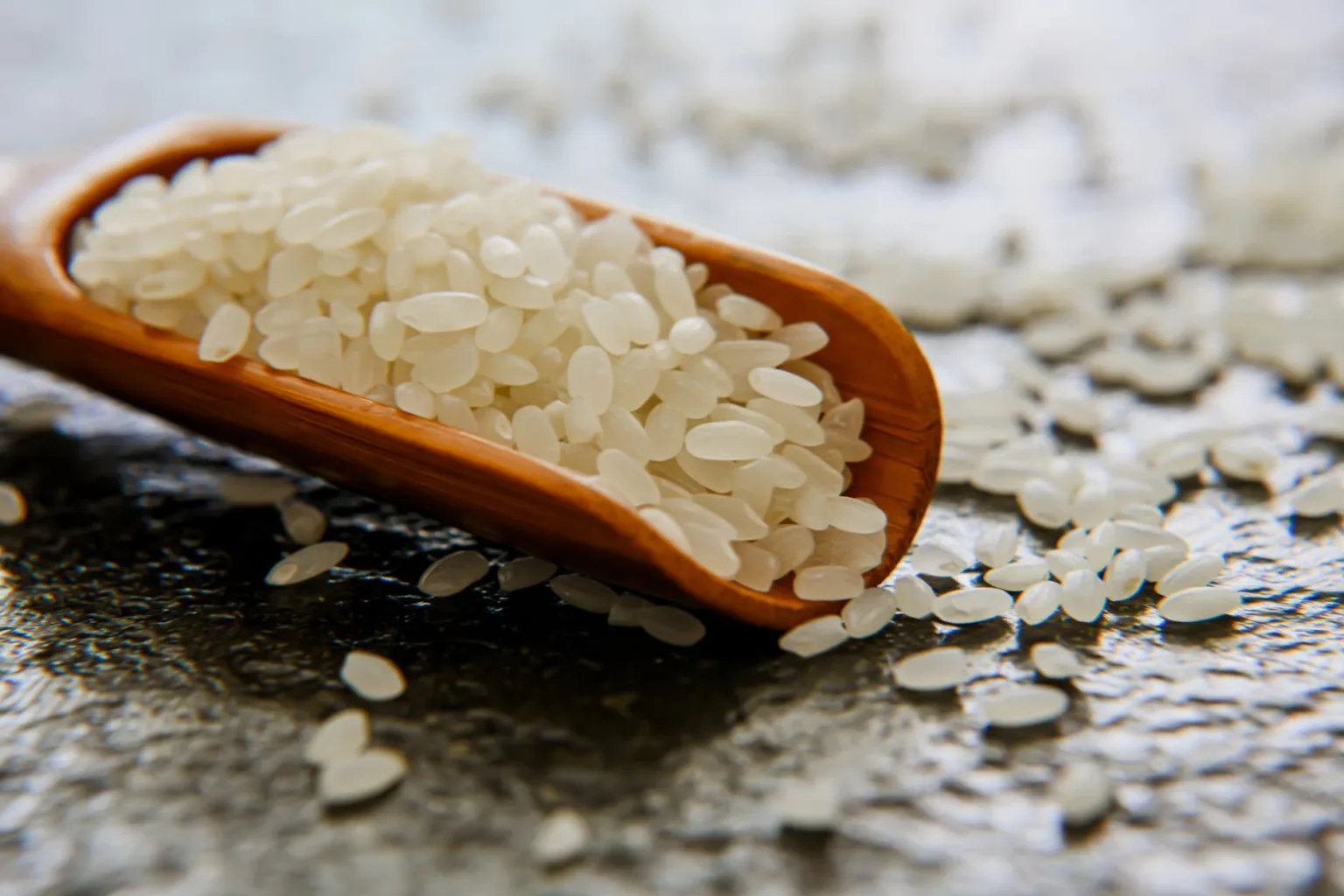
Short-grain white rice is milled white rice with short, rounded or oval grains. It tends to stick together when cooked, partly because of its starch. Not every short-grain rice behaves in the same way: varieties used for sushi, risotto, rice pudding or paella have different applications and results. The grain-size label describes one characteristic, but does not mean every package can be swapped freely in every recipe. Check the variety or intended use on the package and choose according to whether the dish needs a creamy, firm, compact or more separate texture.
When to use it
Choose this rice when a recipe benefits from grains that cling together or from a soft, creamy texture. It can be used for rice pudding and other sweet dishes; some short-grain varieties are also used for sushi or risotto. Paella has particular rice varieties, and medium-grain rice can also be used, so do not assume every short-grain rice will produce the same result. For a side dish where separate grains are desired, long-grain rice is generally a better match for that texture.
How to use it
Follow the package or recipe instructions, since the appropriate liquid and cooking method depend on the rice and dish. For rice pudding, rice can be cooked directly in milk or a plant-based drink; starch released into the liquid helps thicken it. In risotto, recommended varieties contribute a creamy consistency, while sushi calls for grains that adhere. Paella depends on the rice type and recipe: varieties identified for that dish tend to remain firmer and more granular than some other short-grain rice. Do not assume these different uses share the same liquid amounts or cooking times.
Flavour and texture
Short-grain white rice generally has a mild flavor that lets other ingredients stand out. When cooked, it tends to be more cohesive and compact than long-grain rice; some dishes use this quality to create a creamy consistency. The result varies with the variety, liquid and cooking method: paella rice can remain firmer and more granular, while rice pudding is cooked until soft, with the grains still perceptible.
How to choose it
Check the package for both “short-grain” and a specific variety or intended use when the recipe calls for one, such as sushi, risotto or paella rice. The grain-size label alone does not guarantee identical starch levels or texture across products. Make sure the package is intact and that the rice matches the recipe; if the label does not name a variety or use, allow for a result that may differ from a specialized rice.
Storage
The available evidence does not specify a storage duration or precise storage conditions for this ingredient. Check the package and follow its directions rather than applying a time or method from a different kind of rice. Keep the product identified in its packaging, or retain the label information, so you can distinguish it from medium-grain, long-grain or specialty rice later.
Substitutions
Medium-grain rice can replace it in some recipes, but the finished texture may change. Long-grain rice is an option for dishes where more separate grains are wanted; it is not an equivalent replacement when a recipe depends on short-grain rice sticking together. If a recipe specifies sushi, risotto or paella rice, choosing another variety can change the outcome.
Common mistakes
Treating every short-grain rice as the same variety and expecting identical results in sushi, risotto, paella and rice pudding can lead to a different texture than intended. Other common errors are automatically substituting long-grain rice when the recipe needs cohesive grains, or following another product’s cooking directions without checking the package.
Safety and allergens
The available sources provide no specific safety warning or official storage directions for this rice. Follow the package and recipe instructions, and consult an official food-safety source if you need specific handling or storage advice.
Culinary uses
- Base para platos dulces o salados
- Aporta una textura compacta o cremosa según la variedad y la cocción
Recommended techniques
- Cocer en líquido hasta alcanzar la textura deseada
- Cocer directamente en leche o bebida vegetal para arroz con leche
Pairs well with
- Leche o bebida vegetal para preparaciones dulces
- Ingredientes de platos salados, ajustando la variedad a la textura buscada
Frequently asked questions
Does short-grain white rice become sticky?
It tends to cling together when cooked, although the degree of stickiness varies with the variety and preparation.
Can I use it for rice pudding?
Yes. Short-grain rice is used in sweet dishes such as rice pudding and can be cooked directly in milk or a plant-based drink.
Is it the same as sushi rice?
Not necessarily. Sushi rice is generally small-grained and rich in starch, but “short-grain” alone does not identify a specific sushi variety.
Sources and review
Automatically researched, cross-checked and validated content. Sources consulted:
- The Essential Glossary of Cooking Terms for the Culinary Arts - Escoffier escoffier.edu
- Hablemos de arroces - BuleBar bulebar.es
- A PROGRAM FOR extension.usu.edu
- educational content to support healthful lifestyle practices sjsu.edu
- Dictionary of Health Related Terms: English – Spanish hia.berkeley.edu
- Comité Científico aesan.gob.es
- Tipos de arroz, usos culinarios - Pepekitchen pepekitchen.com
- Tipos de arroz: ¿cuántos hay y para qué se usa cada uno? mastershosteleria.com
- - YouTube youtube.com
- Healthy Eating Plan for Weight Management med.uc.edu
- Harvest for Healthy Kids - Radishes wpcdn.web.wsu.edu
- Imagining Sabor repositories.lib.utexas.edu
- Arroz de grano corto, blanco, crudo (¿orgánico?) | Fundación G+E diet-health.info