- Category
- Oils and fats
- State
- Liquid
- Usual unit
- ml
What it is
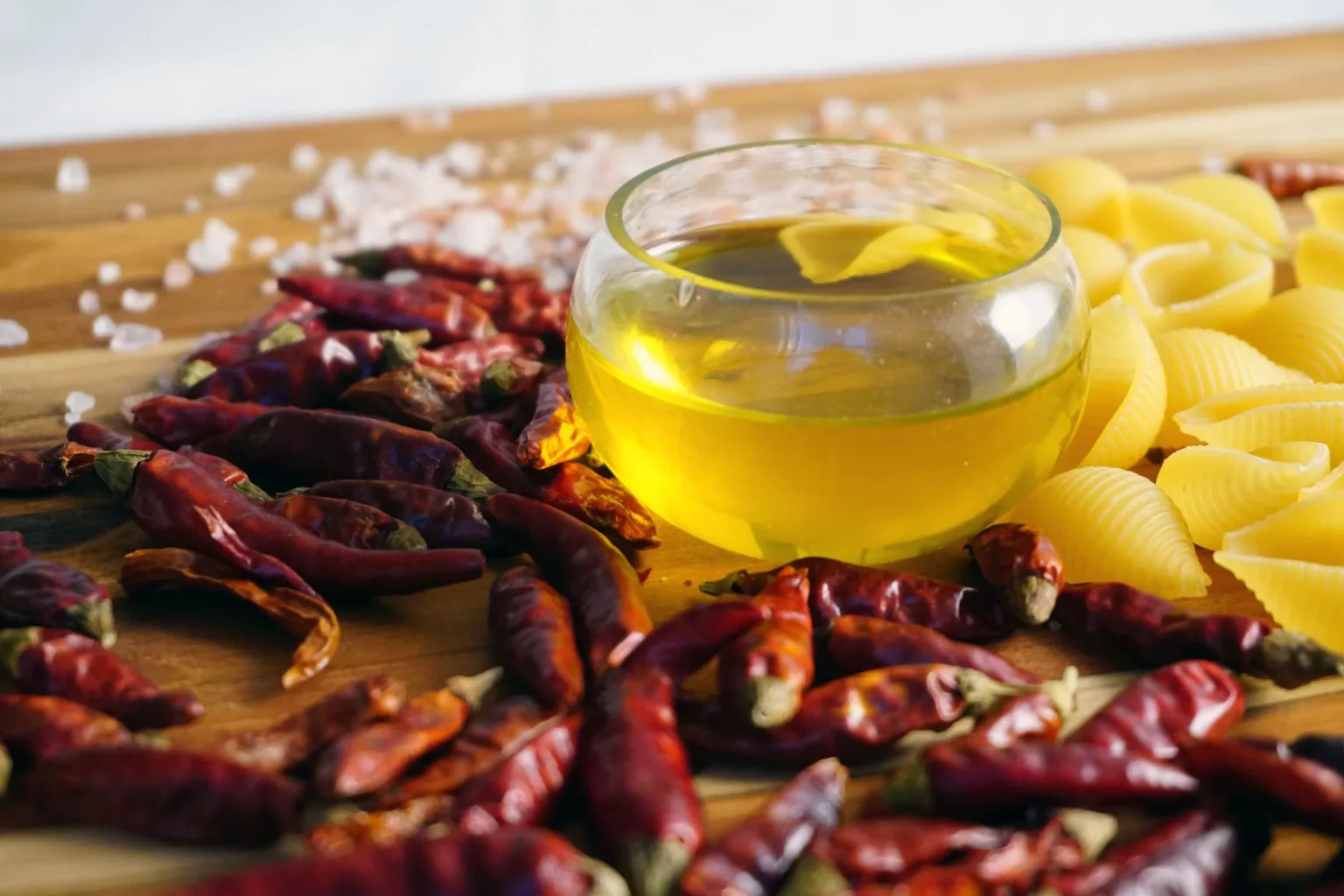
Sichuan chili oil is a seasoned oil associated with Sichuan cooking. A basic version combines oil and chili; some versions add Sichuan pepper, spices, sesame seeds or aromatics such as garlic, ginger and scallion. Products and regional recipes can include other ingredients, so the name does not guarantee one fixed formula. It may be sold with chili pieces settled at the bottom or as a clearer oil. Chili heat should not be confused with the distinctive tingling sensation that Sichuan pepper can contribute.
When to use it
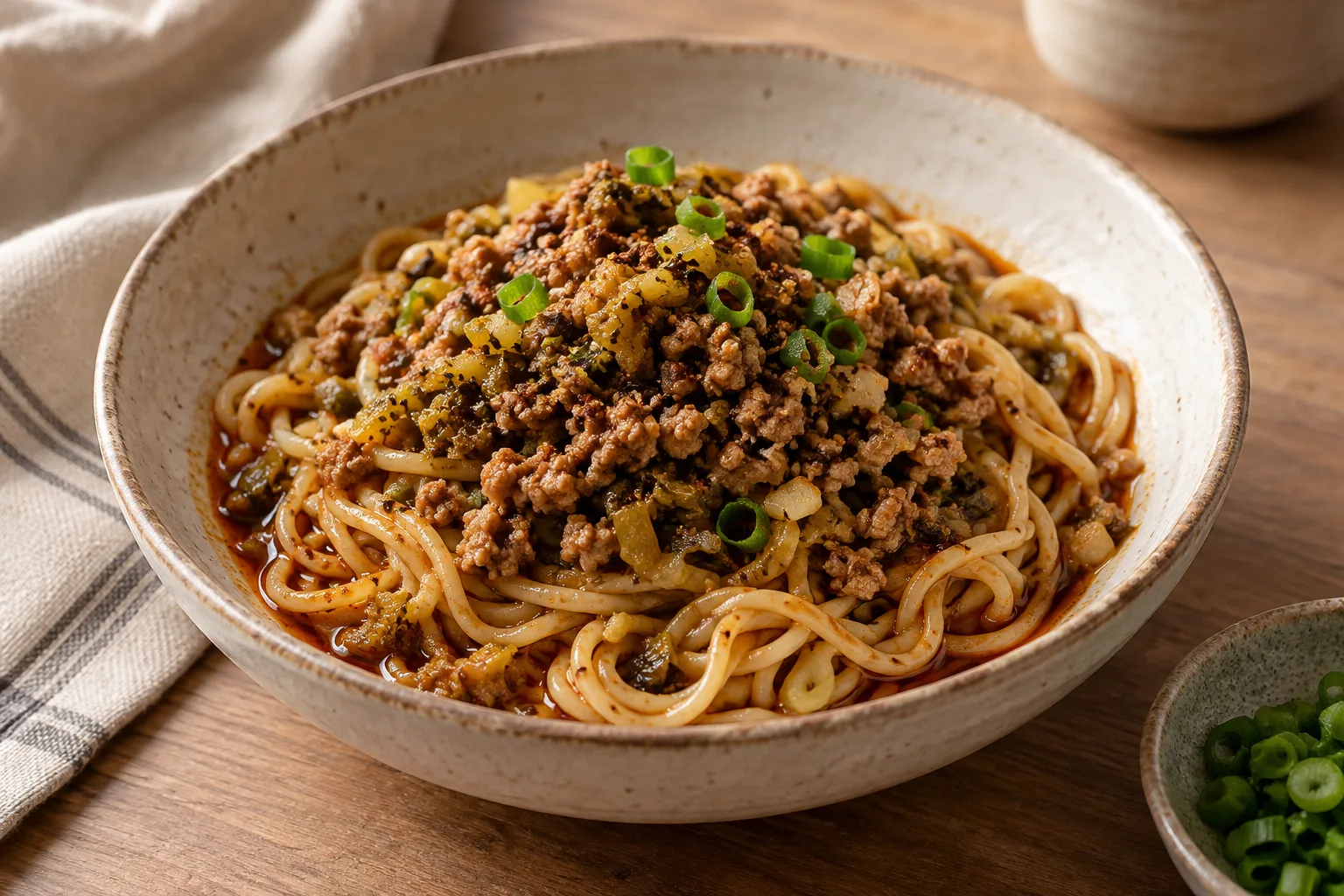
Use it when you want to add heat and aroma to a dish, or to finish food without rebuilding its underlying flavor. It works with noodles, dumplings, wontons, soups and meats, and can also season rice or salads. How much you use and which part you serve matter: oil taken from the surface generally gives less texture than oil stirred with the chili pieces at the bottom. Since recipes and heat levels vary among brands and styles, start with a small amount and adjust after tasting.
How to use it
Stir the product if you want to distribute the chili pieces and other solids; for a milder-textured finish, use some of the surface oil alone if the product allows it. Add a few drops or a drizzle to noodles, dumplings, wontons, soups, meats, rice or salads, then taste before adding more. You can also mix it into a sauce or other preparation as a seasoning. Some homemade recipes pour hot oil over dried chili and spices, but that is a way to make the condiment, not a requirement for using a ready-made product. Check the label and adjust for its ingredients and heat.
Flavour and texture
Chili brings heat and can give the oil a red color; flavor and intensity depend on the chili variety and the proportions of chili and oil. Some versions include spices and aromatics, while Sichuan pepper can add a tingle distinct from chili heat. Solids at the bottom create more texture than oil served on its own. As a result, products sold under the same name can have different flavors and consistencies.
How to choose it
Read the ingredient list because versions can differ in chili type, spices, aromatics and the amount of solids. Check any stated heat level and whether it contains sesame, peanuts, soy or other ingredients you need to avoid. Some products are mostly oil; others retain chili pieces. Choose according to how you plan to use it: a clearer oil is easy to drizzle, while a version with solids provides more texture.
Storage
Follow the storage directions on the package, since commercial and homemade formulas are not necessarily alike. Close the container after use and check the label for refrigeration and shelf-life instructions. Recipes that include fresh aromatics may have different guidance from a basic oil; do not assume every product should be stored in the same way.
Substitutions
Another chili oil or seasoned oil can stand in when your main aim is to add heat, although the flavor will not be identical. For a simple alternative, combine neutral oil with dried chili or chili flakes and adjust to taste; this will not necessarily reproduce the spices or the tingle that some versions get from Sichuan pepper. Add gradually and taste.
Common mistakes
Do not assume all Sichuan chili oils have the same heat or ingredients. Avoid adding a large amount without tasting first, and do not confuse chili heat with the tingle that Sichuan pepper can bring. If you want more texture, check whether solids have settled and stir when appropriate; if you prefer a milder result, use only some of the surface oil.
Safety and allergens
Check the label for the ingredients and storage directions of the specific product. If making it at home, take care when handling hot oil and use a heat-resistant container, as the recipes consulted advise.
Culinary uses
- Condimento picante para servir o terminar platos
- Ingrediente para aportar aceite aromatizado y chile a salsas y preparaciones
Recommended techniques
- Añadir unas gotas o un hilo al final de la preparación
- Mezclar el aceite y, si se desea más intensidad y textura, los trozos de chile del fondo
Pairs well with
- Fideos y noodles, incluidos los dan dan
- Dumplings, wontons y sopas
- Arroz, ensaladas y carnes
Frequently asked questions
Does Sichuan chili oil always contain Sichuan pepper?
Not necessarily. Some versions include Sichuan pepper, while others focus on chili and oil; check the ingredient list.
How can I control the heat when serving it?
Start with a small amount and taste. If the product has solids, using surface oil alone can give less texture than stirring in the chili pieces at the bottom.
What dishes can I use it with?
Add it as a seasoning or finishing touch to noodles, dumplings, wontons, soups, meats, rice or salads.
Estimated nutrition
- Fat
- 98.7 g
- Saturates
- 0 g
- Carbohydrate
- 0 g
- Sugars
- 0 g
- Fibre
- 0 g
- Protein
- 0 g
- Salt
- 0 g
Sources and review
Automatically researched, cross-checked and validated content. Sources consulted:
- ¿Por qué la muerte es origen de miedos y tabúes? doi.org
- The Essential Glossary of Cooking Terms for the Culinary Arts - Escoffier escoffier.edu
- - YouTube youtube.com
- Especia - Wikipedia, la enciclopedia libre es.wikipedia.org
- Gastronomía de Sichuan: descubre una de las variedades más potentes de la cocina china | Gastronosfera gastronosfera.com
- Noticias del Exterior mapa.gob.es
- Aceite picante chino casero - Tips para el mejor chili oil holasoyui.com
- Aceite de chili estilo Chino casero – Kwan Homsai kwanhomsai.com
- Aceite chino y picante de Sichuán | Umami Madrid umami-madrid.com
- - YouTube youtube.com
- **Mejores opciones de Pollo Estilo Sichuan: Análisis y comparativa de productos para cocinar comida asiática** thaibistro.es
- Revista Agropecuaria mapa.gob.es
- Conferencia: ¿Qué es un libro? ¿Qué es leer? una doble genealogía | Anales de la Universidad de Chile doi.org