- Category
- Meat
- State
- Fresh
- Usual unit
- g
What it is
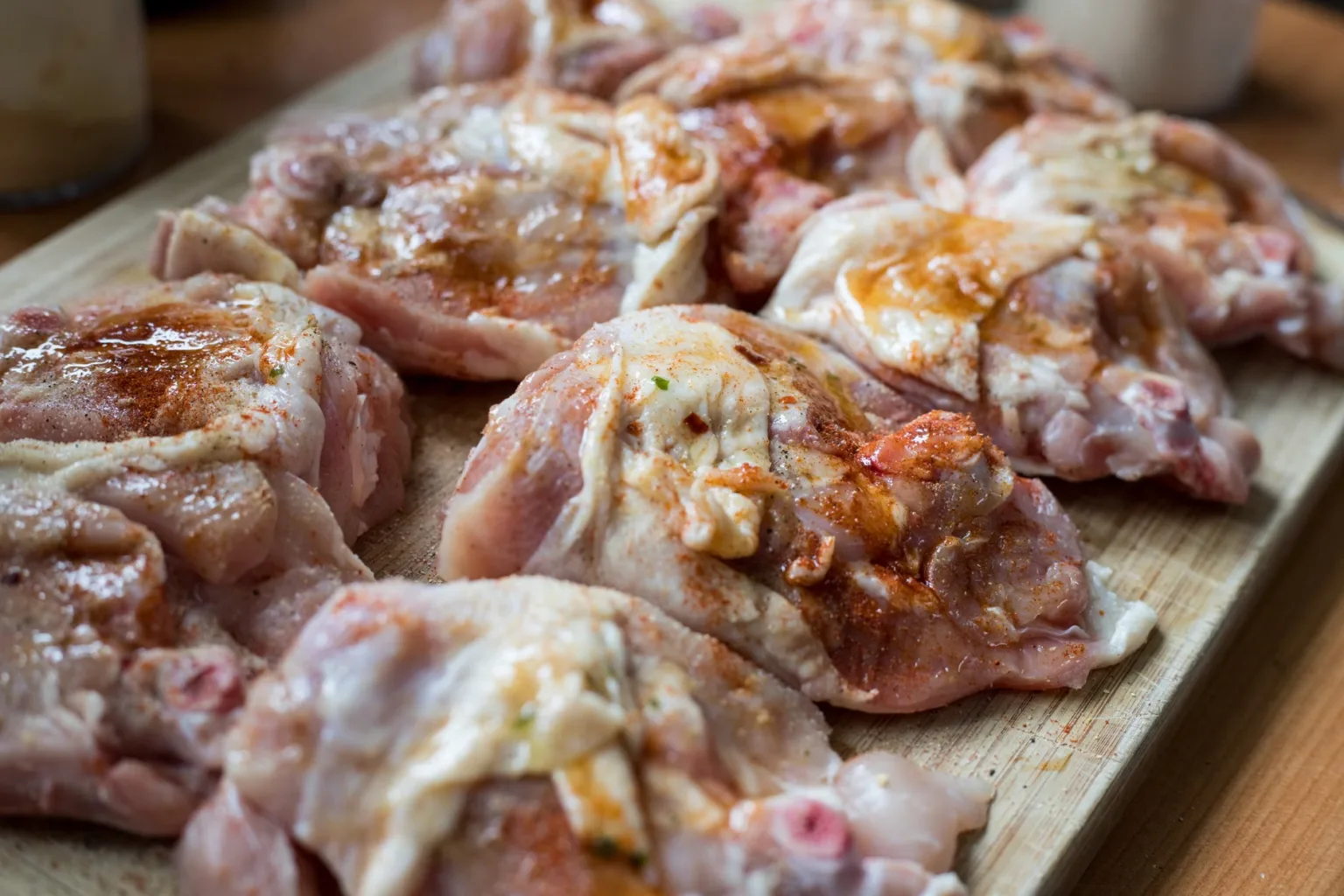
This is chicken meat from the leg area, sold without its bone and skin. Those removed parts make the meat easier to portion, cut and add to a range of recipes. Names for chicken-leg cuts are not always used consistently: some references distinguish the thigh from the lower leg, while others use the terms differently. Check the product description rather than assuming that every shop uses the same name for the same cut. This profile refers specifically to the product described: boneless, skinless chicken thigh meat, not a bone-in portion or a cooked chicken product.
When to use it
Choose it when you want chicken meat that does not need deboning or skin removal before cooking, or when a recipe calls for chicken pieces that can be added directly to a dish. It suits pan-cooked meals, oven dishes, stews, curries and recipes with rice, pasta or vegetables. It is also convenient when you want to cut the meat into evenly sized pieces. Check that the recipe calls for a boneless, skinless cut, since the size and structure of a different portion can affect how it cooks.
How to use it
Check the label to confirm that the chicken is boneless and skinless, and prepare clean utensils and work surfaces for handling it. Cook the pieces whole in a pan, cut them into strips or cubes for a stir-fry, or add them to a stew with vegetables and liquid. They can also be baked or served with sauces, herbs and spices. Recipe examples pair chicken with garlic, lemon, parsley and paprika, as well as yogurt, cumin, oregano or thyme. Match the size of the pieces to the recipe and consult official local food-safety guidance for handling and cooking raw chicken; the available evidence does not establish reliable cooking times or temperatures.
Flavour and texture
It has the familiar flavor of chicken and works with a range of seasonings, herbs and sauces. Its final texture depends on the size of the piece and the cooking method: it can be served as browned pieces or included in moist dishes such as stews. Because it has no skin or bone, it does not contribute those components to a dish. Do not assume that every piece is the same thickness or that one method will always give the same texture.
How to choose it
Read the product description to confirm that it is chicken, boneless and skinless. Names for cuts from the leg are not used identically in every source or market, so rely on those clear features when a regional cut name is ambiguous. Choose a format that suits the recipe: whole pieces for cooking intact, or cut pieces when the recipe calls for them. The available evidence does not establish additional quality criteria or a buying season.
Storage
Follow the storage directions and date on the package, and consult official local food-safety recommendations for raw poultry. This profile does not specify a storage duration, temperature or freezing and thawing method because the supplied evidence does not establish them. Keep the product separate from ready-to-eat foods while handling it, and do not rely on appearance or smell alone to decide whether it is safe.
Substitutions
Chicken breast can replace thigh in some preparations; turkey also appears as an alternative in a recipe for seasoned chicken. These are not identical cuts, and the result can differ, so adapt the cut size and pay attention to cooking. Neither substitution should be treated as an automatic replacement in every recipe.
Common mistakes
Regional differences in thigh-cut names can lead to buying a different portion, so check that the product is boneless and skinless. Another mistake is assuming that a recipe for bone-in chicken applies unchanged to this cut, or that every piece has the same thickness. Do not transfer cooking times from a different preparation without checking the cut and consulting official safety guidance.
Safety and allergens
Handle and cook raw chicken according to official food-safety recommendations in your locality and the package directions. The supplied material contains no specific official guidance, so no temperatures, cooking times or detailed storage methods are stated here.
Culinary uses
- Proteína principal en platos calientes
- Ingrediente para guisos, salteados y rellenos
Recommended techniques
- Dorar o cocinar en sartén
- Hornear o guisar
- Cortar en tiras o dados para salteados y platos de arroz
Pairs well with
- Ajo, limón y hierbas
- Arroz, pasta y verduras
- Yogur y especias para marinadas o salsas
Frequently asked questions
What does boneless and skinless mean?
The chicken is sold without its bone and skin, so you do not need to remove them before using it. Check the product description as well.
Can I cut it before cooking?
Yes. Cut it into strips or cubes for dishes such as stir-fries or recipes with rice, pasta and vegetables. Choose a size that suits the recipe.
Can I substitute chicken breast?
In some recipes, yes, although it is a different cut and the result may change. Adapt the preparation and follow official safe-cooking guidance.
Estimated nutrition
- Fat
- 4.02 g
- Saturates
- 0.89 g
- Carbohydrate
- 0 g
- Sugars
- 0 g
- Fibre
- 0 g
- Protein
- 19.6 g
- Salt
- 0.24 g
Sources and review
Automatically researched, cross-checked and validated content. Sources consulted:
- ¿Por qué la muerte es origen de miedos y tabúes? doi.org
- El muslo de pollo y otras mentiras biológicas de la gastronomía doi.org
- EFECTOS SOBRE LA COMPOSICIÓN Y OXIDACIÓN LI diposit.ub.edu
- Muslos de pollo deshuesados asados en sartén. Dieta.‼️Riquísimos‼️ rokycia.blogspot.com
- Muslos de pollo deshuesado: recetas irresistibles y fáciles cookpad.com
- Partes del Pollo: Contramuslos, jamoncitos, pechugas, espaldilla... aldelis.com
- Muslos de pollo al vacío con salsa pepitoria | Umami Madrid umami-madrid.com
- Cómo cocinar muslos de pollo para que nunca queden secos: 20 métodos comprobados es.qz.com
- - YouTube youtube.com