- Category
- Meat
- State
- Fresh
- Usual unit
- g
What it is
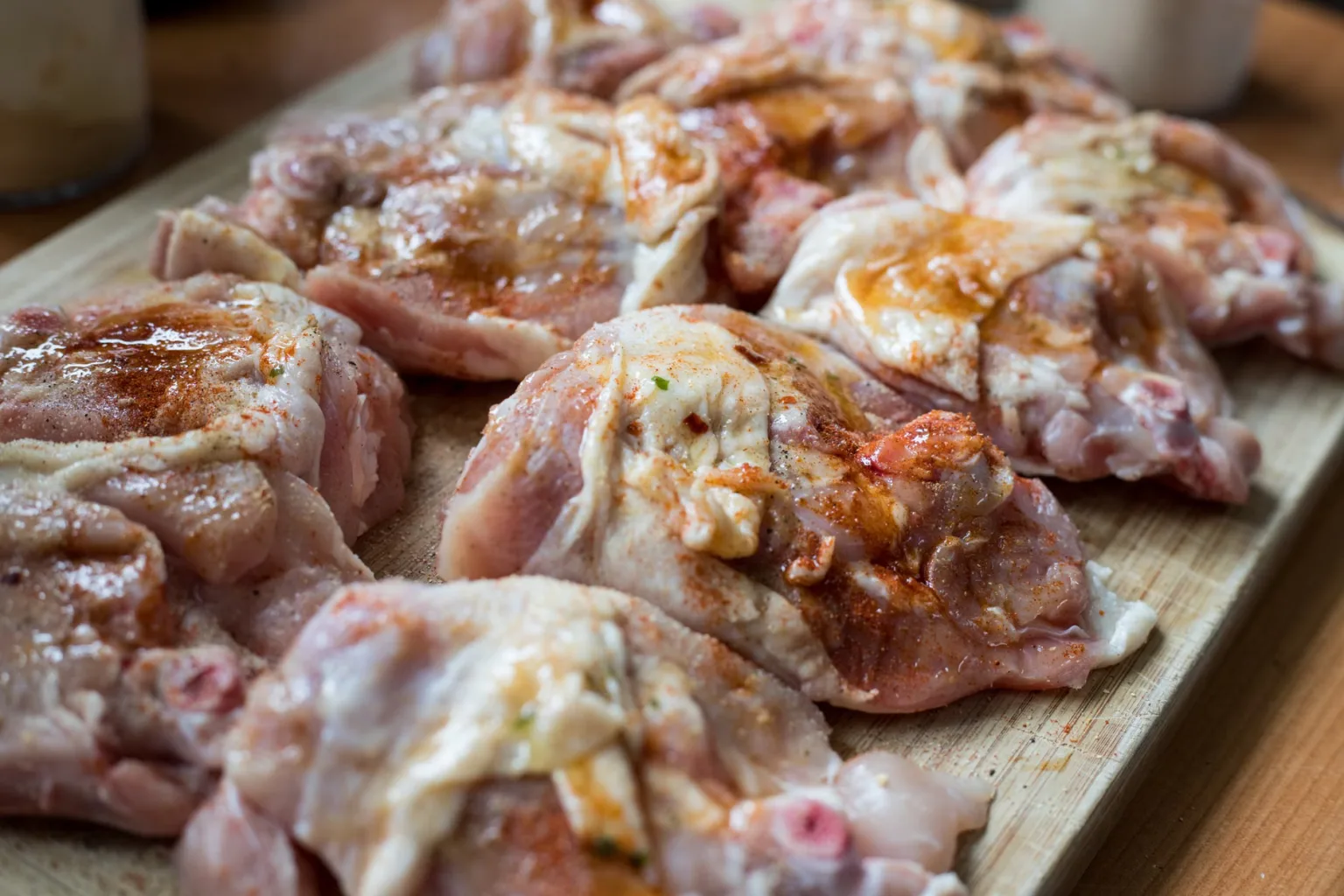
This is chicken meat from the leg, sold without its skin. Names for leg cuts are not entirely consistent: culinary uses of “thigh” and “upper thigh” can refer to different pieces, and one source notes that the everyday name for a chicken thigh may not match its anatomical identification. Check whether the piece is bone-in or boneless and how the seller describes the cut. The evidence also includes a fresh, boneless, skinless thigh product, but that does not mean every item sold as a thigh has the same presentation. Meat from this part of the bird is commonly described as juicy; because this version is skinless, it cannot develop a crisp layer of chicken skin.
When to use it
Choose this cut for a hot meal that suits roasting, stewing or grilling. The available culinary examples pair chicken leg cuts with citrus and herbs, use them in rice dishes, and serve them roasted or in stews. It can be useful when you want chicken with a generally juicy texture, although size and the presence of bone affect how it fits a recipe. If a recipe specifically calls for breast, a bone-in piece or a whole leg, check the product’s form and adapt the method rather than assuming the cuts are interchangeable without adjustment.
How to use it
First check whether the cut is bone-in or boneless and whether it is whole or cut into pieces; those details affect handling and how it fits into a recipe. Season or marinate it with ingredients such as lime, spices or soy sauce, then grill it. It can also be roasted with citrus, garlic or herbs, or used in stews and rice dishes. Documented examples include orange, lemon, thyme, sage, garlic, mushrooms, rice and spinach. If you substitute this cut for another chicken cut, or the reverse, do not assume that they cook identically: check that the meat is cooked according to applicable official food-safety guidance and follow the product instructions.
Flavour and texture
Culinary sources generally describe chicken thighs as juicier and more tender than breast meat, and associate that juiciness with the cut’s fat content. The result can vary with the particular piece, its preparation and whether it is bone-in. A skinless version has no skin layer to turn crisp; its exterior depends on the cooking technique and other ingredients. Citrus and herbs appear as aromatic partners in the recipe examples.
How to choose it
Look for a clear description of the cut and check whether it is bone-in or boneless, whole or cut into pieces. The word “thigh” can vary in culinary usage, so the seller’s description helps distinguish it from the upper thigh or another part of the leg. If you specifically need skinless meat, confirm that this is stated on the label or by the butcher. The evidence includes fresh boneless, skinless products, but does not establish additional visual quality criteria.
Storage
This profile describes a fresh product, but the supplied evidence gives no storage time or temperature. Follow the package directions and current official guidance where you live rather than relying on a generic, unsupported storage period. Handle raw meat carefully, and clean hands, utensils and surfaces after contact, as advised by the university extension source in the evidence.
Substitutions
Chicken breast can replace thigh in some recipes, but it may not give the same juicy texture and may need a different approach. Another chicken cut may also work; check whether it contains bone and adapt the cooking to the piece. For recipes that need skinless meat that is easy to cut into pieces, boneless, skinless upper thigh can be a close alternative, although retail cut names vary.
Common mistakes
Do not assume that “thigh” and “upper thigh” always name the same piece, or that skinless meat is automatically boneless. Another common misstep is swapping breast and thigh without considering how the different cuts affect the recipe. Skinless chicken also cannot produce a crisp skin covering; choose a suitable technique or accompaniment if you want contrast.
Safety and allergens
The supplied evidence contains no cut-specific safety warning. Handle raw meat carefully, clean hands and surfaces after contact, and follow the package directions and local official guidance; the source package does not provide a cooking temperature or storage period for this ingredient.
Culinary uses
- Plato principal
- Ingrediente para guisos y cazuelas
- Relleno o componente de preparaciones con arroz
Recommended techniques
- Asar al horno
- Guisar
- Cocinar a la parrilla
- Marinar antes de cocinar
Pairs well with
- Naranja, limón o lima
- Ajo y tomillo
- Salvia
- Arroz y espinacas
- Salsa de soja
Frequently asked questions
Does skinless chicken thigh always come boneless?
No. Skinless does not tell you whether the bone has been removed. Check the label or ask the seller if you need a boneless cut.
What is the difference between thigh and upper thigh?
Names for chicken leg cuts vary in culinary use. The evidence also notes that the everyday term “thigh” can be anatomically imprecise, so check which piece the seller means.
What flavors go well with it?
Available recipe examples pair it with orange, lemon or lime, garlic, thyme, sage, soy sauce, rice and spinach.
Estimated nutrition
- Fat
- 3.54 g
- Saturates
- 0.88 g
- Carbohydrate
- 0 g
- Sugars
- 0 g
- Fibre
- 0 g
- Protein
- 16.8 g
- Salt
- 0.8 g
Sources and review
Automatically researched, cross-checked and validated content. Sources consulted:
- The Essential Glossary of Cooking Terms for the Culinary Arts - Escoffier escoffier.edu
- Los alimentos como medicina: la dieta antiinflamatoria | Children's Hospital of Philadelphia chop.edu
- Muslos de pollo - Gastronomía Vasca: Escuela de Hostelería Leioa gastronomiavasca.net
- Agencia Española de Seguridad Alimentaria y Nutrición aesan.gob.es
- Dictionary of Health Related Terms: English – Spanish hia.berkeley.edu
- Free Standing, Slide In, and Drop In Electric housing.illinoisstate.edu
- El muslo de pollo y otras mentiras biológicas de la gastronomía doi.org
- Appendix B: Recipes for Disease Prevention – Culinary Medicine opentextbooks.library.arizona.edu
- Healthy Eating Plan for Weight Management med.uc.edu
- Azahares 2024 uafs.edu
- Vamos a Conservar Alimentos: Sopas extension.psu.edu
- - YouTube youtube.com
- Muslos de pollo: cocínalos así y... ¡triunfo seguro! hola.com
- Muslos de pollo sin hueso y sin piel troceados | Carnicerias Asenjo carniceriasasenjo.com