- Category
- Nuts and seeds
- State
- Dry
- Usual unit
- Variable
What it is
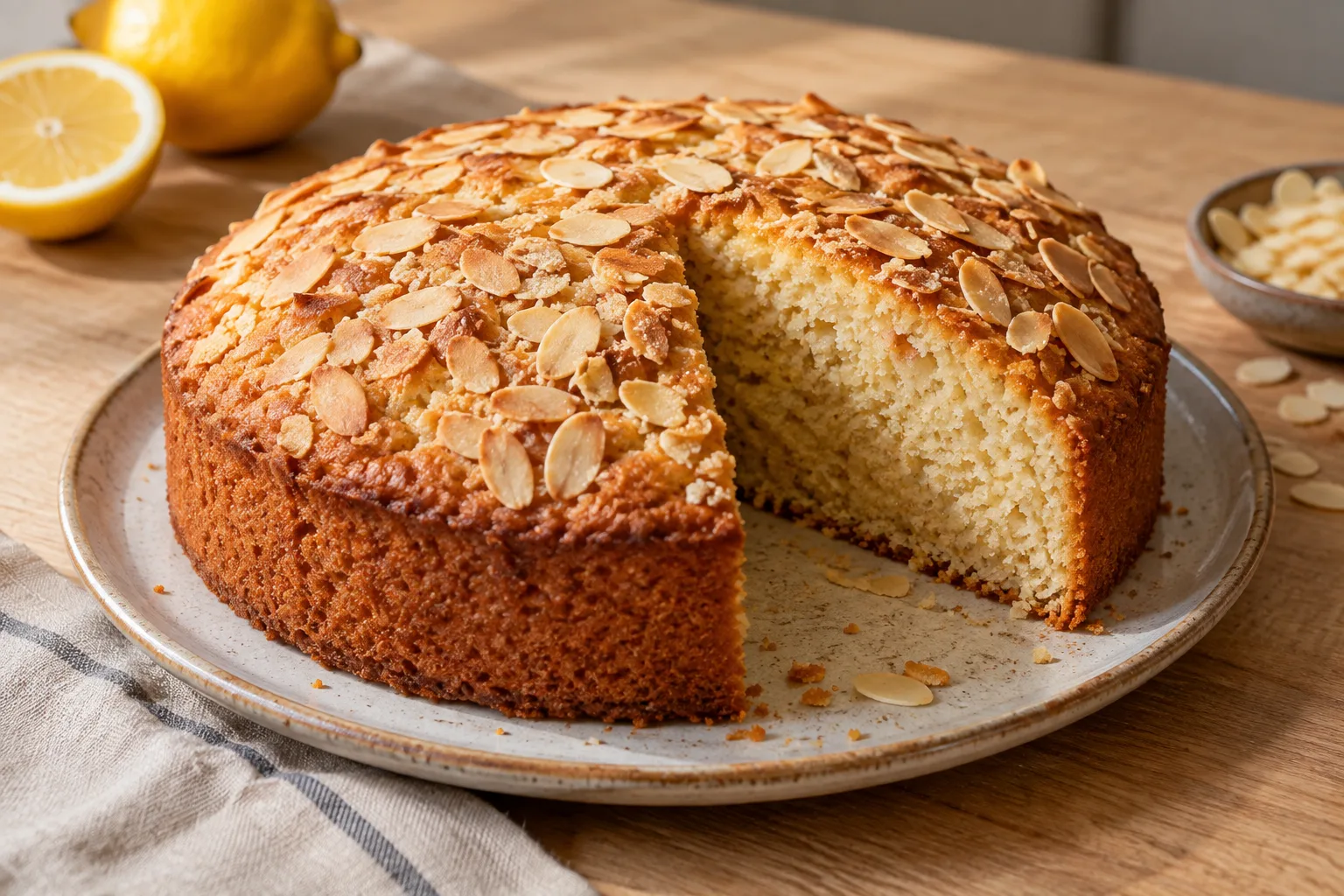
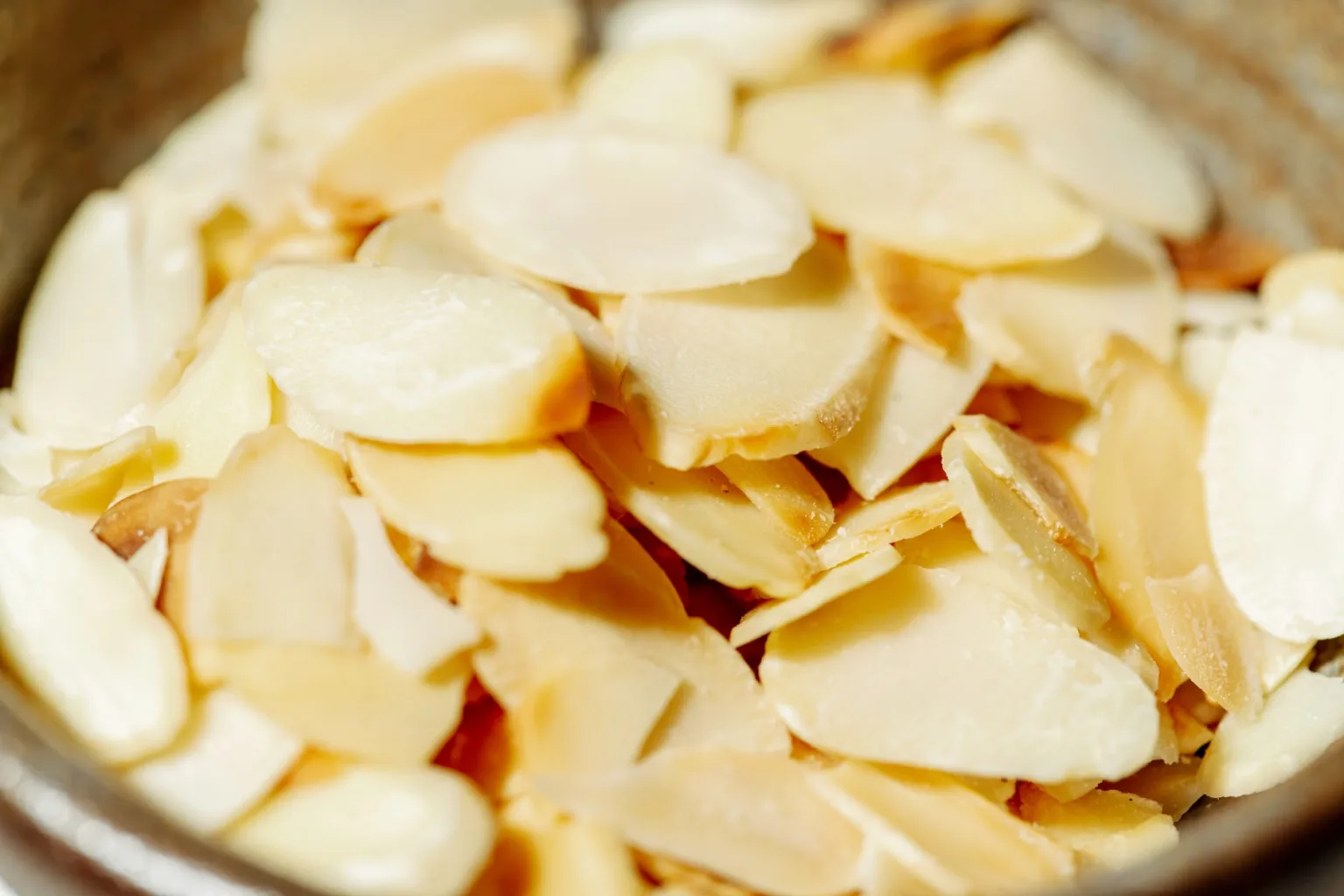
Sliced almonds are almonds cut into thin pieces, usually after peeling. This ready-to-use form keeps the characteristic flavour of almonds and makes them handy as a topping or as an ingredient in fillings and batters. The slices are often ivory-coloured and firm before toasting; toasting brings out a stronger aroma and a crisp texture. They are not the same as ground almonds: slices remain visible in a dish and provide texture rather than blending in as a powder or meal. Products can differ in thickness, size, breakage and origin, so check the packaging if a particular appearance or cut matters for your recipe.
When to use it
Use sliced almonds when you want almond flavour and a light crunch without the size of whole almonds or the uniform texture of ground almonds. They work as a finish for cakes, biscuits, brioche and ice cream, and can add contrast to salads, soups, vegetables and fish dishes. Mixed into a batter or filling, they remain distinct pieces; sprinkled on at the end, they stand out as a topping. Add them raw for a milder flavour, or toast them for a fuller aroma and crunch. Because the slices are thin, keep a close eye on them while toasting so they do not burn.
How to use it
Scatter sliced almonds over salads, yoghurt, soups, vegetable purées or desserts. Add them near serving time if you want to preserve their contrast and crunch. For a toasted flavour, warm them carefully in a pan or oven and watch them throughout: their thin cut means they can burn quickly. Let them cool before using them as a topping. You can also mix them raw into batters or fillings when a recipe calls for pieces of almond. For biscuits or cakes, spread them evenly over the surface; if they go into the oven with the recipe, follow its instructions and keep an eye on browning. You do not need to add fat to toast them.
Flavour and texture
Sliced almonds have the mild, slightly sweet flavour characteristic of almonds. Raw, they are firm and give a delicate crunch; toasted, they develop a more pronounced aroma and a crisper texture. The thickness and consistency of the cut can vary from one product to another, affecting how quickly the slices toast.
How to choose it
Look for clean, ivory-coloured slices with few excessively broken pieces and no unusual odour. Check the package to see whether they are raw or toasted, read the ingredient list and look for allergen information. Almond variety, origin and slice size can differ, so do not assume every pack is the same. If you need visible slices for decoration, choose a product with mostly intact, relatively even pieces.
Storage
Keep the almonds well sealed in a cool, dry place, away from light and strong odours. Slices have plenty of exposed surface, so close the package after each use and avoid leaving it open for long periods. Follow the storage instructions and date on the package, since specific guidance depends on the product. Do not use them if they smell or taste rancid or otherwise unusual.
Substitutions
Chopped almonds can replace sliced almonds when you want to keep the almond flavour, though the appearance and size of the crunch will change. Chopped hazelnuts can offer a different character in a topping, if they suit the recipe and the people eating it. Always check the substitute’s allergen information: switching nuts does not make a dish safe for someone with an allergy.
Common mistakes
The most common toasting mistake is looking away: thin slices brown quickly and can burn. Stay with them and stir if using a pan. Another mistake is using sliced almonds when a recipe needs the even texture of ground almonds, or expecting the slices to stay crisp after mixing them with wet ingredients. Check allergen labelling too, especially for bulk products or products that may contain traces.
Safety and allergens
Almond is an allergen, so anyone allergic to almonds should avoid eating this ingredient. Check the product label for almonds and any additional allergens or traces; information varies by product and presentation. If you are unsure whether a product is safe for someone with an allergy, do not serve it until you have checked with the manufacturer or seller.
Culinary uses
- Cobertura crujiente para platos dulces y salados
- Ingrediente o decoración de repostería
Recommended techniques
- Tostar brevemente, vigilando de cerca porque las láminas finas se queman con facilidad
- Añadir crudas como cobertura o incorporarlas a masas y rellenos
Pairs well with
- Frutas como manzana, melocotón, ciruela y naranja
- Ensaladas, verduras, sopas, pescado y preparaciones de repostería
Frequently asked questions
Can sliced almonds be used without toasting?
Yes. Add them directly as a topping or mix them raw into batters and fillings when the recipe allows. Toasting is optional and gives them a stronger flavour and crisper texture.
How can I toast sliced almonds without burning them?
Toast them carefully in a pan or oven and do not leave them unattended. The slices are thin and can burn quickly. Remove them when they reach the colour you want and let them cool before serving.
Do sliced almonds contain an allergen?
They contain almonds, which must be identified as an allergen. Depending on the product, other allergens or traces may also be present; always check the specific label.
Estimated nutrition
- Fat
- 50 g
- Saturates
- 3.57 g
- Carbohydrate
- 21.4 g
- Sugars
- 3.57 g
- Fibre
- 10.7 g
- Protein
- 21.4 g
- Salt
- 0 g
Sources and review
Automatically researched, cross-checked and validated content. Sources consulted:
- En el etiquetado alimentario hay algunas menciones que son obligatorias eletiquetadocuentamucho.aesan.gob.es
- Client Challenge doi.org
- Almendra: usos, variedades y combinaciones en pastelería pastrypedia.net
- Redescubre la almendra, el fruto seco más popular: sus propiedades, usos en la cocina y cinco recetas para disfrutarla directoalpaladar.com
- Almendra - Wikipedia, la enciclopedia libre es.wikipedia.org
- Almendra, la bomba de salud que es la base de la cocina dulce mediterránea lavanguardia.com
- Almendra procesada, lo que debes saber para conocer este fantástico producto | Almendras de la mancha almendrasdelamancha.com
- Almendras. Origen e Historia de este delicioso fruto seco ladespensadelospostres.com
- Almendras: qué son, propiedades y usos en cocina bonviveur.com
- La Almendra: Un Tesoro Nutricional y Culinario formacionavanzadaeuropea.com
- Aesan - Agencia Española de Seguridad Alimentaria y Nutrición aesan.gob.es
- Almendra laminada - La Salmantina lasalmantina.com
- Almendras, el fruto seco por excelencia - Aperitivos La Ibañesa SL. laibanesa.com
- Doce recetas con almendra laminada | Gastronomía & Cía gastronomiaycia.com
- Filete de almendra alesframa.com
- Almendra laminada Hacendado -【2026】 preciode.es
- Comprar almendra laminada online | Frutas Eloy tienda.frutaseloy.com
- Almendra Laminada Naciónal Secofrut - Frutos secos online - secofrut.com