- Category
- Vegetables
- State
- Fresh
- Usual unit
- unit
What it is
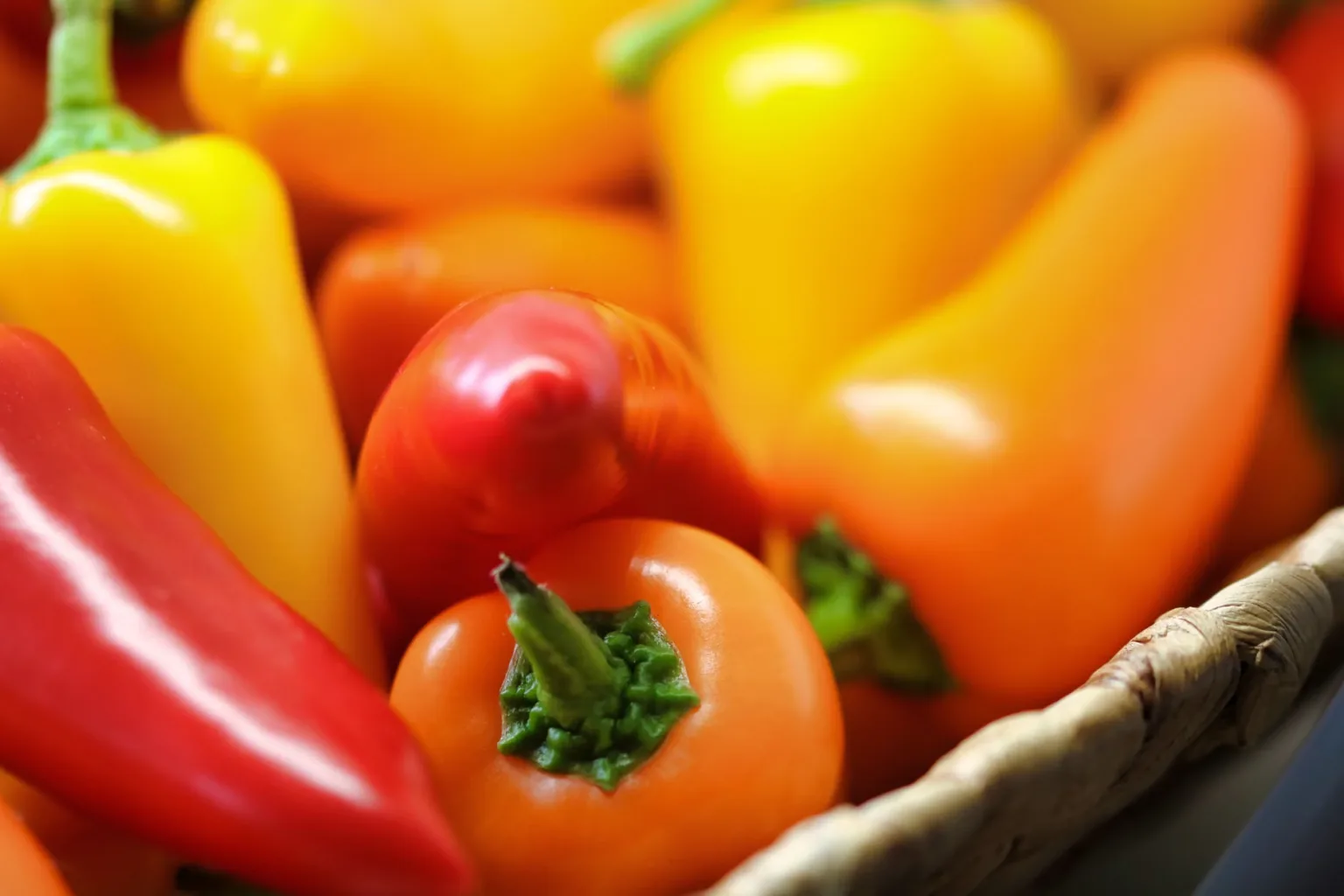
A small bell pepper is a fresh sweet pepper in the bell-pepper group. Peppers belong to the genus Capsicum and the nightshade family; in the kitchen, they are commonly treated as vegetables. Peppers come in different sizes and colors, so “small” describes a format rather than identifying a particular cultivar or flavor. Like other sweet peppers, it can be eaten raw or added to cooked dishes. Color and maturity may affect the flavor: as peppers mature, they tend to become sweeter and milder. The name alone does not establish a precise size, sweetness level, or interior shape.
When to use it
Use it raw when you want a fresh, crisp bite in salads, sandwiches, or wraps, or slice it to serve with a dip. It also suits cooked dishes: it can be stuffed, stir-fried, grilled, or added to soups and stews. Its size may be convenient for individual portions, but the name does not guarantee exact dimensions. Choose a color that suits the flavor you want, keeping in mind that color and maturity can influence sweetness.
How to use it
Wash the pepper under running water before eating or preparing it. For a raw serving, remove the stem and seeds if you wish, cut the pepper into strips or dice, and add it to a salad, sandwich, or wrap; it can also be served with hummus or another dip. To cook it, slice it and stir-fry with onion, add it to a soup or stew, grill it, or use it as a vessel for a filling. Match the cut to the dish, and do not assume that every small pepper has the same sweetness or interior capacity.
Flavour and texture
Raw bell pepper flesh is typically crisp and fresh, giving salads and wraps a crunchy contrast. Flavor depends partly on color and maturity: as peppers mature, they tend to become sweeter and milder. “Small” describes relative size, not a particular flavor, and individual peppers can vary.
How to choose it
Choose peppers that feel firm, have bright color, and have tight, glossy-looking skin. Color can vary and does not by itself show how much room there is for a filling, so inspect each pepper if you plan to stuff it. Since “small” does not set a standard measurement, judge the actual size when buying.
Storage
Keep the pepper unwashed in a plastic bag in the refrigerator; the cited guidance gives storage of up to one week. Wash it under running water before eating or preparing it. Follow any specific storage directions on the product packaging.
Substitutions
Replace it with another sweet bell pepper, whether larger or a different color. Color and maturity can change the sweetness, and size affects how much fits in a recipe, so adjust the amount and cut to suit the dish rather than assuming an exact one-for-one equivalent.
Common mistakes
Do not assume that every small pepper has the same shape, color, or sweetness, or that “small” identifies a particular cultivar. Avoid peppers that feel soft or have damaged skin. For storage, refrigerate them unwashed and wash them before eating or cooking.
Safety and allergens
Wash the pepper under running water before eating or cutting it, and use clean utensils and work surfaces. Follow any specific storage or use directions on the packaging.
Culinary uses
- Fresh, crisp ingredient for salads, wraps and dips
- Sweet vegetable for stuffing, soups, stews and sauces
Recommended techniques
- Serve raw, sliced or diced
- Grill, stir-fry, or cook in soups and stews
Pairs well with
- Hummus or another dip
- Onion in cooked dishes such as fajitas
Frequently asked questions
Is a small bell pepper hot?
The name describes a small sweet bell pepper, but size alone does not identify a specific cultivar. Check the product description if you need to confirm exactly which type you are buying.
Can I eat it raw?
Yes. Slice it for salads, sandwiches, or wraps, or serve it with a dip. Wash it under running water before preparing it.
How should I store it?
Keep it unwashed in a plastic bag in the refrigerator. The cited guidance recommends up to one week; follow any specific directions on the packaging.
Sources and review
Automatically researched, cross-checked and validated content. Sources consulted:
- En el etiquetado alimentario hay algunas menciones que son obligatorias eletiquetadocuentamucho.aesan.gob.es
- Client Challenge doi.org
- The Essential Glossary of Cooking Terms for the Culinary Arts - Escoffier escoffier.edu
- Pimientos: variedades y usos en cocina - CocinoPedia.com cocinopedia.com
- Grow your own peppers | OSU Extension Service extension.oregonstate.edu
- Some Like it Hot! (or Not) ucanr.edu
- Peppers - National Center for Home Food Preservation nchfp.uga.edu
- El Pimiento Y Su Importancia En La Gastronomía Española - Restaurante Romero restaurante-romero.es
- Bell Peppers | UNL Food | Nebraska food.unl.edu
- Ingredientes para la receta: El pimiento — Cuaderno de Cultura Científica culturacientifica.com
- Peppers | Home Vegetable Gardening | Illinois Extension | Illinois extension.illinois.edu
- Bell Peppers - Food Source Information chhs.colostate.edu
- Let's Preserve: Peppers extension.psu.edu
- Tipos de pimientos: todo lo que necesitas saber de este alimento | El arte de comer bien | mentta mentta.com