- Category
- Vegetables
- State
- Fresh
- Usual unit
- unit
What it is
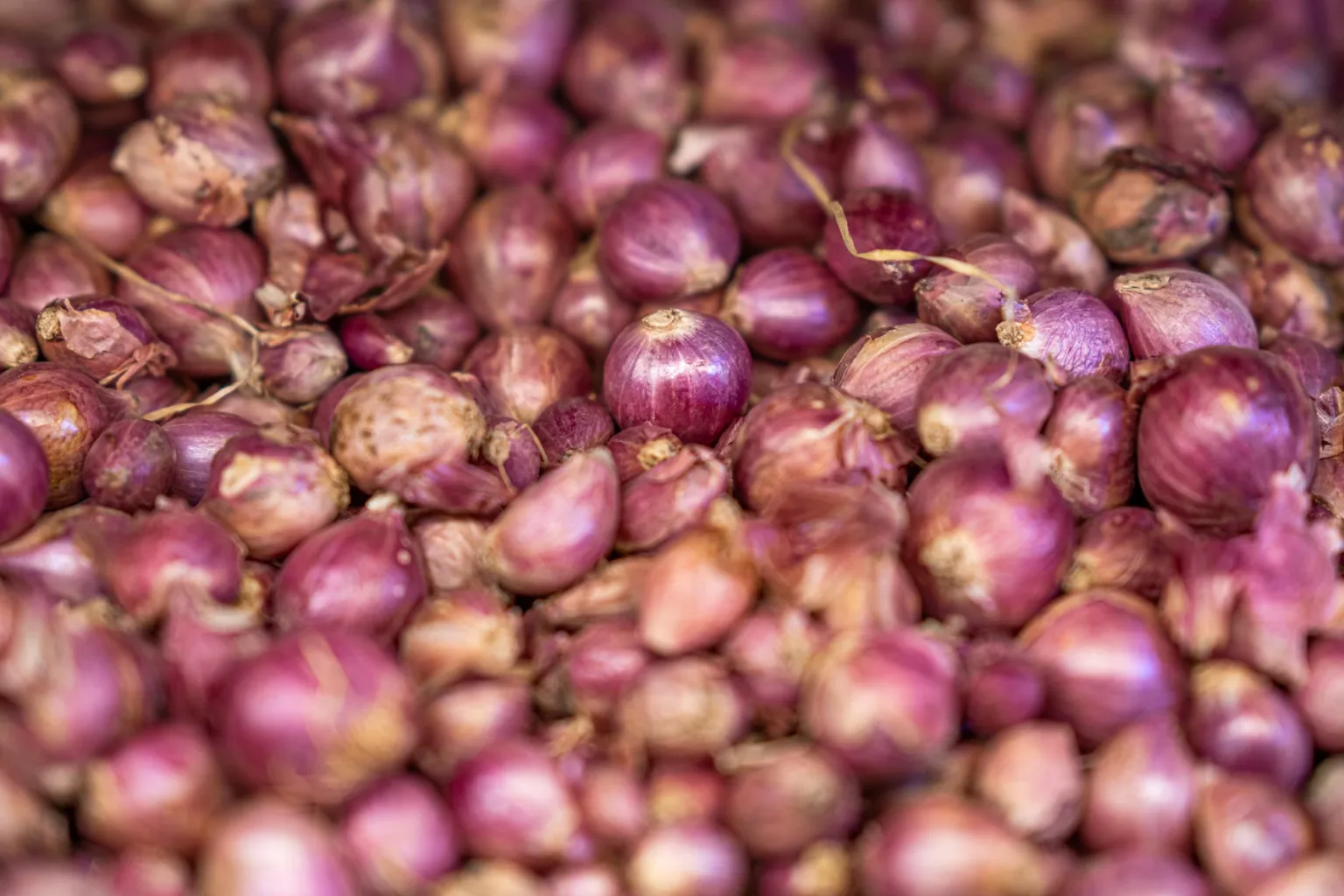
“Small onion” describes size; it does not identify one specific variety. The common onion is the edible bulb of Allium cepa, made up of fleshy layers. White, yellow and red-purple onions are among the varieties, and their flavors and textures differ. As a result, two small onions do not necessarily taste alike. The term should not automatically be taken to mean a shallot or a green onion, which are distinct ingredients described by their own characteristics.
When to use it
Use a small onion when a recipe calls for onion and you want a compact bulb to cut into smaller portions or, when the recipe allows, cook whole. Raw onion adds flavor and texture to salads and other fresh dishes; cooked onion can go into sautés, sauces, soups and stews. Color alone does not guarantee a particular flavor, so consider the variety and the result you want.
How to use it
Remove the outer skin, then slice or chop the bulb to suit the recipe. For a fresh dish, add it raw to a salad or sauce; if you want its presence to be less pronounced, use it in a cooked preparation. It can also be added to a sauté, soup or stew, or roasted with other ingredients. Onions can be prepared in several ways, and their flavor changes with the preparation. If the bulb is too small for easy, even cutting, divide pieces to a similar size so they can be incorporated more evenly.
Flavour and texture
Flavor and texture vary by variety and preparation: some onions are milder or sweeter, while others are more pungent or intense. Raw onion can be crisp; cooking changes both its texture and flavor. Small size alone does not reliably indicate the onion’s color or flavor profile.
How to choose it
Choose bulbs that look intact and firm, without visibly damaged areas. If color or variety matters to your recipe, check whether you are buying a white, yellow or red-purple onion; these are not interchangeable descriptions of flavor. “Small” indicates size, not a specific variety or a guarantee of sweetness.
Storage
The available guidance for onions recommends a cool, dry place with good air circulation and notes that high humidity can encourage mold. To help maintain quality, avoid damp conditions and check the bulbs. No exact storage duration or specific temperature for a small onion is established here.
Substitutions
You can use another onion variety, such as white, yellow or red-purple, bearing in mind that the flavor may change. A shallot, described as mild and aromatic, may suit some preparations, but it is not identical to an onion. Choose according to the flavor and texture you want in the dish.
Common mistakes
Do not assume that every small onion is a particular variety or will taste the same. Nor should small size be confused with green onion or shallot. Choosing a variety without considering whether it will be served raw or cooked can give a different flavor result than expected.
Safety and allergens
The supplied evidence includes no specific safety warning for small onions. Follow the official food-hygiene guidance that applies in your area.
Culinary uses
- Base aromática para sofritos y salsas
- Ingrediente para ensaladas, sopas y guisos
Recommended techniques
- Picar o cortar en rodajas para usar cruda
- Sofreír, cocinar en guisos o asar
Pairs well with
- Sopas y guisos
- Ensaladas, salsas, carnes, pescados y verduras
Frequently asked questions
Is a small onion a specific variety?
Not necessarily. The name describes size; the available evidence does not identify one specific variety from that term alone.
Can it be eaten raw?
Yes. Onion is used raw in salads and other fresh dishes; variety affects its flavor and texture.
How should I store it?
The available guidance for onions recommends a cool, dry place with good air circulation. It does not specify an exact storage duration for a small onion.
Sources and review
Automatically researched, cross-checked and validated content. Sources consulted:
- The Essential Glossary of Cooking Terms for the Culinary Arts - Escoffier escoffier.edu
- La cebolla, ese humilde ingrediente tan fundamental | Gastronosfera gastronosfera.com
- La cebolla, ingrediente básico en la cocina | Recetas Nestlé recetasnestle.com.ar
- Tipos de cebolla: variedades y usos culinarios | Cepaflor cepaflor.com
- What is it to be cosmopolitan? Small contribution to the history of the concet | Intelligere doi.org
- Agencia Española de Seguridad Alimentaria y Nutrición aesan.gob.es
- EFNEP Hispanic Heritage Recipes | Community Nutrition | Extension/College of Agriculture, Health & Natural Resources | University of Connecticut communitynutrition.cahnr.uconn.edu
- Producción de Cebolla extension.psu.edu
- La cebolla, la base de la gastronomía española - Enrique Romay eromay.com
- Vegetable Storage in Root Cellars | Cooperative Extension Service uaf.edu
- Memory Dishes simmonscenter.brown.edu
- onion, green onion, scallion - FoodLink - Purdue Extension extension.purdue.edu
- How to Freeze Onions | UNL Food | Nebraska food.unl.edu
- Digital Commons has sunset | University of Maine Libraries digitalcommons.library.umaine.edu