- Category
- Meat
- State
- Preserved
- Usual unit
- g
What it is
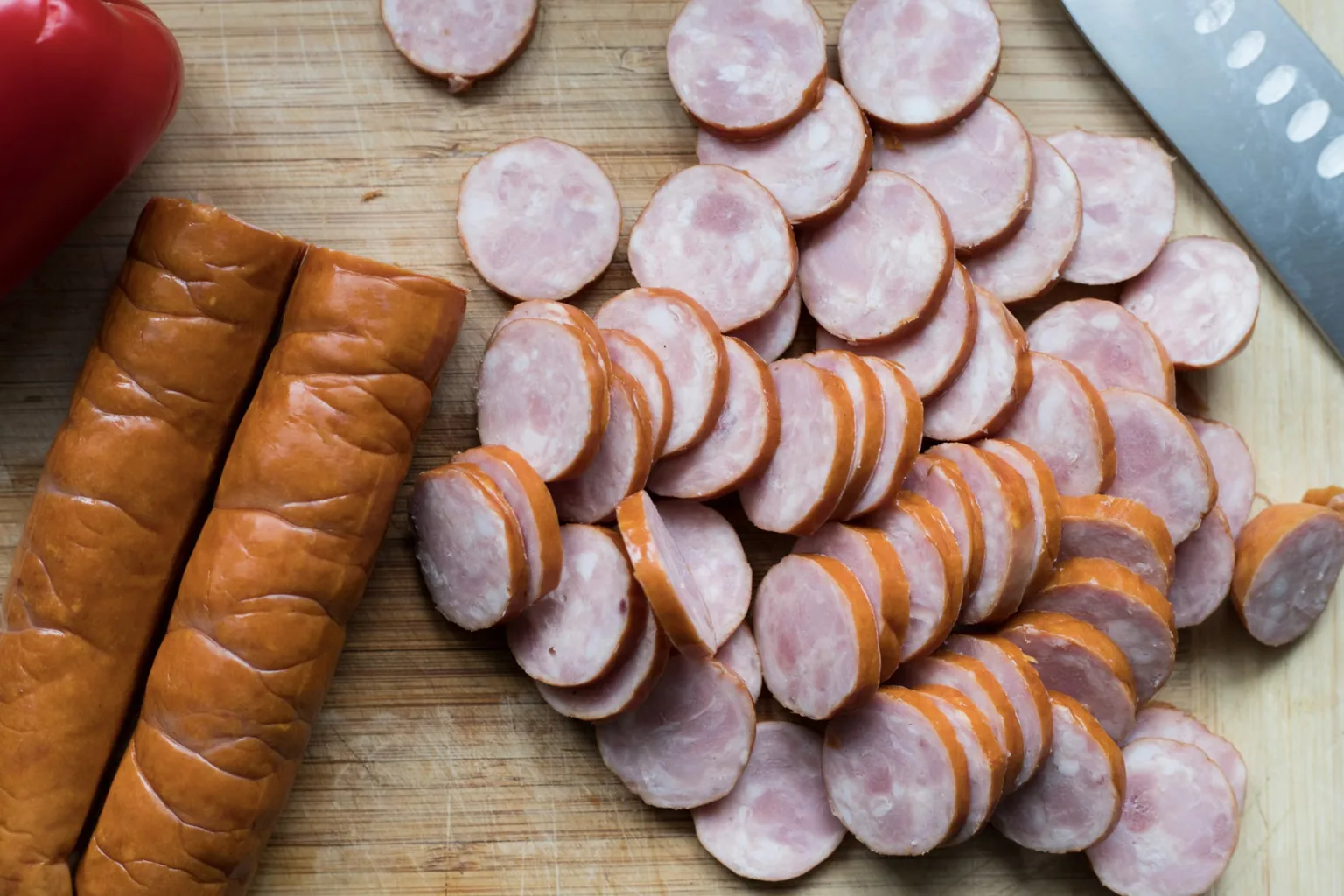
Smoked sausage is a meat sausage that has undergone smoking to develop aroma and flavor. Products vary in meat, size, seasoning and processing; some are also cooked or cured, while others need further cooking. The word “smoked” alone does not establish that a sausage is ready to eat. Check the product name and the maker’s preparation directions before serving, and treat different varieties as distinct products rather than assuming they behave alike.
When to use it
Use it when you want to add a savory, smoky note to soups, stews, bean dishes, rice or skillet meals. Its flavor can be pronounced, so start with a modest amount and taste before adding extra salt or seasoning. It can be the main feature in a simple meal or a smaller accent in a more complex dish. Check the package to find out whether it needs cooking or only reheating.
How to use it
Read the label first: smoked sausages may be cooked, partly cooked or require thorough cooking. Follow the product’s directions rather than assuming that smoking makes it ready to eat. For a simple preparation, slice and gently brown it in a pan or on a grill if the label allows. You can also add it to soups, stews, rice or beans to contribute its flavor. Taste before salting, and avoid prolonged cooking when the product is already cooked and the instructions call only for heating.
Flavour and texture
Its defining feature is a smoky aroma and taste, which can range from subtle to strong depending on the variety. The meat and seasonings also vary, so not every smoked sausage tastes alike. Texture may be firm or more tender and juicy; the sausage style and degree of cooking affect the result.
How to choose it
Check the product name, ingredient list and preparation directions: “smoked” alone does not confirm that a sausage is cooked or ready to eat. Check which meat it contains and whether other listed ingredients matter to you. Choose an intact package and follow its storage instructions.
Storage
Store the product according to its package directions, since storage depends on the variety and whether the package has been opened. After opening, follow the maker’s instructions and keep it protected from contamination. Do not infer a shelf life or assume it can be kept at room temperature simply because it is smoked.
Substitutions
For a smoky profile, try smoked kielbasa or smoked chorizo, bearing in mind that their seasonings and intensity may differ. Adjust the amount and salt to suit the substitute. Neither is guaranteed to match the original in flavor, texture or cooking requirements, so check its package directions.
Common mistakes
The main mistake is assuming every smoked sausage is ready to eat. It is also easy to add too much salt or seasoning before tasting, since the sausage may already have a pronounced flavor. Do not overcook an already-cooked product when the maker’s directions call only for heating; follow the package instructions.
Safety and allergens
Handle the product with clean utensils and surfaces, and prevent contact with ready-to-eat foods unless surfaces have been cleaned after handling meat. Follow the package directions and cook it when instructed; smoking alone does not confirm that it is safe to eat without cooking.
Culinary uses
- Añadir sabor ahumado y cárnico a guisos y sopas
- Servir como ingrediente principal o complemento en platos calientes
Recommended techniques
- Dorar suavemente en sartén o parrilla
- Añadir a sopas y guisos para que aporte sabor
Pairs well with
- Legumbres, como lentejas y alubias
- Cebolla, patata y col o chucrut
Frequently asked questions
Can smoked sausage be eaten without cooking?
It depends on the product. Some varieties are cooked, while others may need cooking; smoking alone does not settle the question. Check the package directions.
How can I use it in a stew?
Slice or chop it and add it according to the product directions. Taste the stew before adding salt, since the sausage may have a strong flavor.
What ingredients pair well with it?
It can pair with beans or lentils, onion, potatoes, cabbage or sauerkraut. Choose accompaniments to suit the sausage’s intensity and seasonings.
Estimated nutrition
- Fat
- 26.8 g
- Saturates
- 8.93 g
- Carbohydrate
- 1.79 g
- Sugars
- 0 g
- Fibre
- 0 g
- Protein
- 14.3 g
- Salt
- 1.78 g
Sources and review
Automatically researched, cross-checked and validated content. Sources consulted:
- Client Challenge doi.org
- Vamos a Conservar Alimentos: Carnes extension.psu.edu
- Tipos de salchichas: variedades y características campofrio.es
- La vuelta al mundo en 55 tipos de salchichas directoalpaladar.com
- Ingredientes de las salchichas: ¿qué contienen? | Consumer consumer.es
- - YouTube youtube.com
- ¡Verificando que no eres un robot! repositori.upf.edu
- La salchicha: un alimento universal que ha marcado la tradición culinaria de todo país y civilización - Picken picken.es
- Tipos de salchichas: variedades y usos en la cocina uncomo.com
- Gastronomía alemana y sus tipos de salchichas – Gastronoming gastronoming.com
- UNIVERSIDAD AGRARIA DEL ECUADOR ELABORACIÓN ... cia.uagraria.edu.ec
- Chorizo - Wikipedia, la enciclopedia libre es.wikipedia.org
- Ingredientes que maridan con salchicha ahumada ✓ basmatic.com
