- Category
- Grains, flour and pasta
- State
- Fresh
- Usual unit
- Variable
What it is
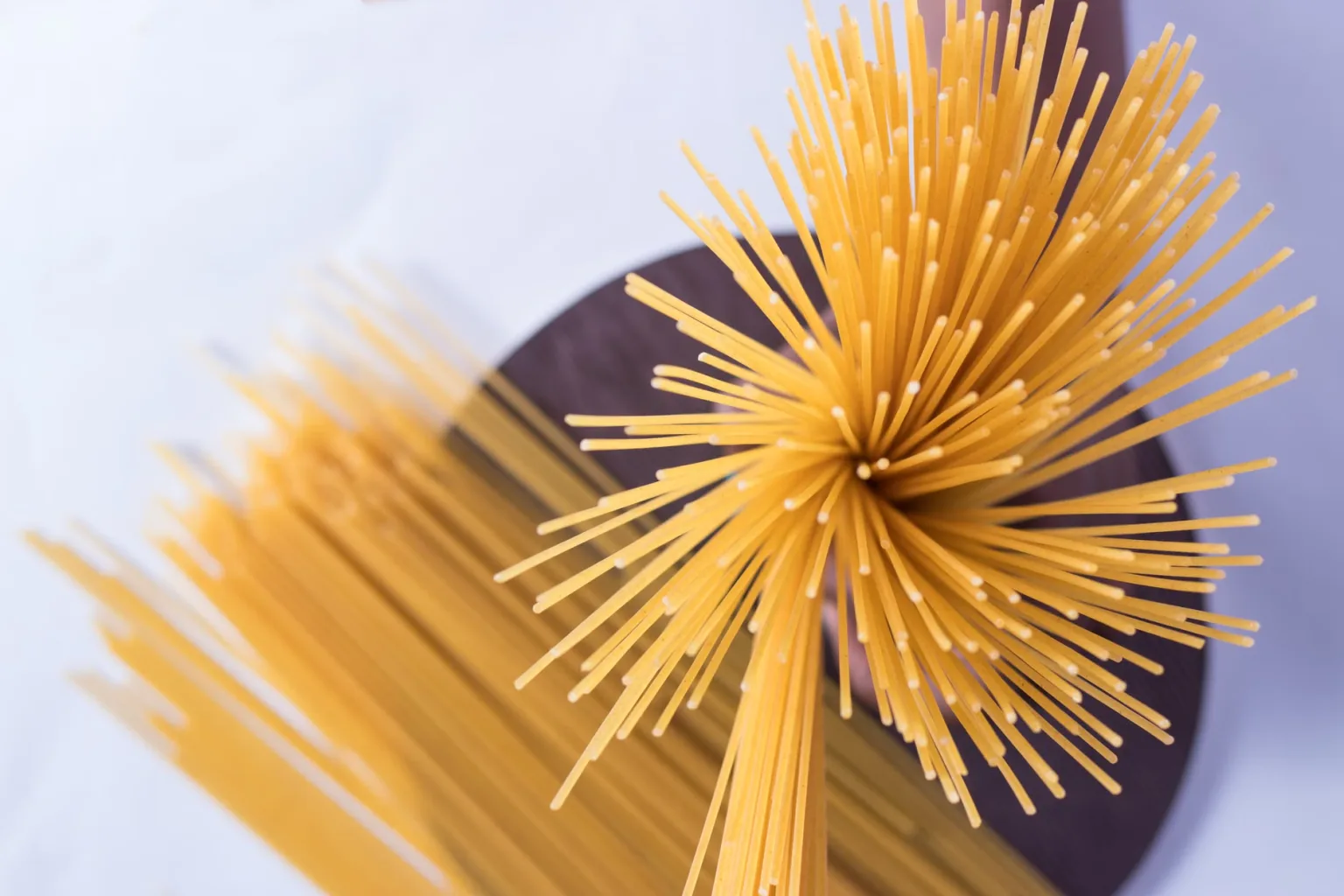
Spaghetti is a long, thin type of pasta with a round cross-section. Common versions are made from wheat flour or semolina and water, although ingredients can vary and some versions include egg. Spaghetti is sold dried and is also available fresh, so the name mainly describes its shape rather than one fixed recipe or storage state. Its long strands can be served with sauces and combined with a range of ingredients. Always check the ingredient list for the specific product, since not all varieties have the same composition.
When to use it
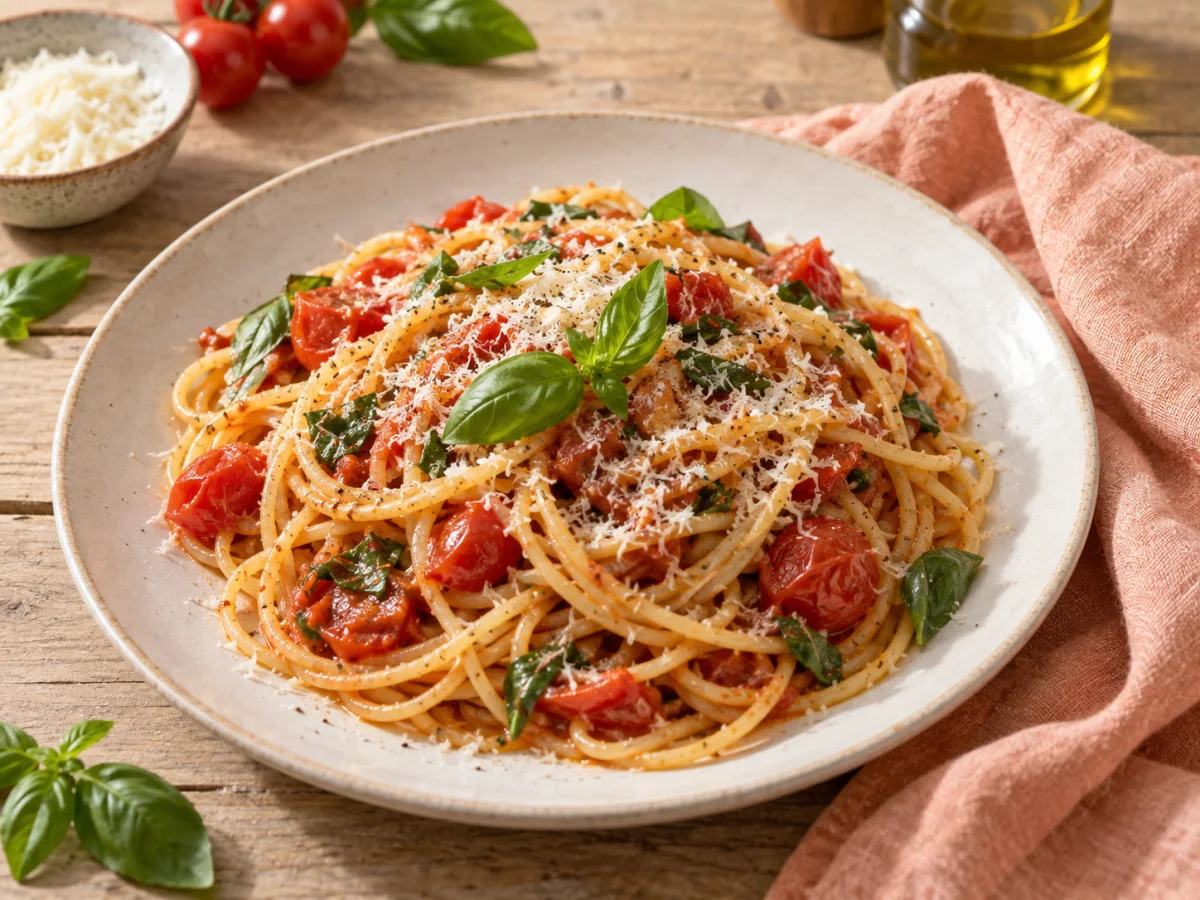
Choose spaghetti when you want long pasta that can be twirled around a fork and mixed with sauce. It works with simple garlic-and-oil preparations, tomato and basil, or cheese and pepper; it is also used in dishes with clams. Its shape suits a range of sauces, but the pasta’s thickness and the sauce’s consistency affect the result. When choosing between dried and fresh varieties, consider the product you have and follow its preparation directions.
How to use it
To cook spaghetti, add it to boiling water and cook it according to the package directions, which can differ by variety and format. Drain it when it reaches the texture you want, then combine it with the sauce. You can also finish the pasta in a pan with the sauce to bring the components together, reserving a little cooking water if the recipe calls for it. Documented pairings include tomato, garlic and oil; cheese and black pepper; and clams. If making fresh pasta at home, the dough can be rolled out and cut into long strands; check the recipe’s ingredients, especially if you need to avoid a particular food.
Flavour and texture
Pasta on its own has a mild flavor, so it usually takes on the character of its sauce and accompanying ingredients. Spaghetti has long strands and a round cross-section; differences in thickness can change the eating experience. When cooked, it can retain some resistance to the bite if an al dente texture is desired. Dried and fresh varieties are not identical, and the final texture depends on the variety and preparation.
How to choose it
Check whether the package contains dried spaghetti or whether you are buying a fresh variety, and read the ingredient list before choosing. Products and recipes can differ: some are made with wheat and water, while others may include egg. If you have an allergy or intolerance, do not rely on the pasta’s name or appearance alone; check the package information and, for unpackaged pasta, ask the seller for allergen information.
Storage
Store the product according to its package directions: dried and fresh pasta may have different requirements. Keep the label available so you can check ingredients, use instructions and any product-specific storage guidance. The available evidence does not establish a universal storage period or temperature for every format; follow the manufacturer’s instructions for the product you bought.
Substitutions
You can use another pasta shape if spaghetti is unavailable, adjusting the sauce and serving method to suit the chosen shape. A long pasta such as vermicelli or pici may play a similar role in some dishes, but its thickness and texture differ. Do not assume a swap preserves the ingredient list: check the composition, especially if you need to avoid wheat or egg.
Common mistakes
Do not assume all spaghetti is the same: dried and fresh versions exist, and some recipes may include egg. Another mistake is ignoring the package directions or assuming every thickness will have the same texture. Combine the pasta and sauce as the recipe directs, and check the product’s ingredients before serving it to someone with an allergy or intolerance.
Safety and allergens
Check the label for ingredients, potential allergens, use instructions and storage guidance, since products can differ. If buying unpackaged pasta or managing an allergy or intolerance, ask the seller for verifiable information. Follow the manufacturer’s directions for cooking and storing the specific variety.
Culinary uses
- Base para platos de pasta
- Vehículo para salsas y otros acompañamientos
Recommended techniques
- Cocer en agua y escurrir
- Mezclar o terminar en sartén con la salsa
- Preparar pasta fresca y cortarla en tiras largas
Pairs well with
- Tomate y albahaca
- Ajo y aceite de oliva
- Queso y pimienta negra
- Almejas
Frequently asked questions
Is spaghetti always made with wheat and water?
Not necessarily. Sources describe wheat-and-water versions and note that some varieties may include egg. Check the ingredient list for the specific product.
Is spaghetti available both fresh and dried?
Yes. Fresh versions and dried, industrially made spaghetti are both described. Follow the preparation and storage directions for the product you have.
What ingredients are commonly paired with spaghetti?
Documented pairings include tomato, garlic and olive oil; cheese and black pepper; and clams. Choose according to the sauce and dish you want to make.
Estimated nutrition
- Fat
- 1.79 g
- Saturates
- 0 g
- Carbohydrate
- 73.2 g
- Sugars
- 3.57 g
- Fibre
- 3.6 g
- Protein
- 12.5 g
- Salt
- 0 g
Sources and review
Automatically researched, cross-checked and validated content. Sources consulted:
- En el etiquetado alimentario hay algunas menciones que son obligatorias eletiquetadocuentamucho.aesan.gob.es
- Client Challenge doi.org
- Revista del comité científico de la aecosan número 24 aesan.gob.es
- Tipos de pasta: cuáles son los más conocidos bonviveur.com
- Espagueti - Wikipedia, la enciclopedia libre es.wikipedia.org
- Los Espaguetis: Descubre la Fascinante Historia y Secretos de Este Plato Universal - RoomLab roomlab.cl
- Dónde se inventaron los espaguetis | Garofalo pasta-garofalo.com
- Origen e historia de los espaguetis - Cocina con Hida hida.es
- 🥇El secreto detrás de los espaguetis: ¡Descubre su ingrediente estrella! reyvinoblanco.com
- Los 9 tipos de pasta que tienes que conocer - Restaurante Lon Gris restaurantelongris.es
- Espaguetis - EcuRed ecured.cu
- La historia del espagueti — Ferrara Trattoria ferraratrattoria.mx
- El Spaghetti: Un clásico de la cocina italiana mugrestaurante.es
- Un cocinero sobre los espaguetis: "Los mejores espaguetis no llevan nata, sino 1 kg de almejas, 2 dientes de ajo y 100 ml de vino blanco" cronicaglobal.elespanol.com
- Recetas diferentes con espaguetis: ¡sal de lo de siempre! hola.com
- Las 34 recetas con espaguetis más fáciles de hacer y ricas nuevoestilo.es
- Algas espagueti de mar | CocinaSinReceta.com cocinasinreceta.com
- Los cocineros coinciden: “Si quieres que los espaguetis queden sabrosos no tires el agua de cocción; resérvala para la salsa” - AS.com as.com