- Category
- Herbs and spices
- State
- Dry
- Usual unit
- teaspoon
What it is
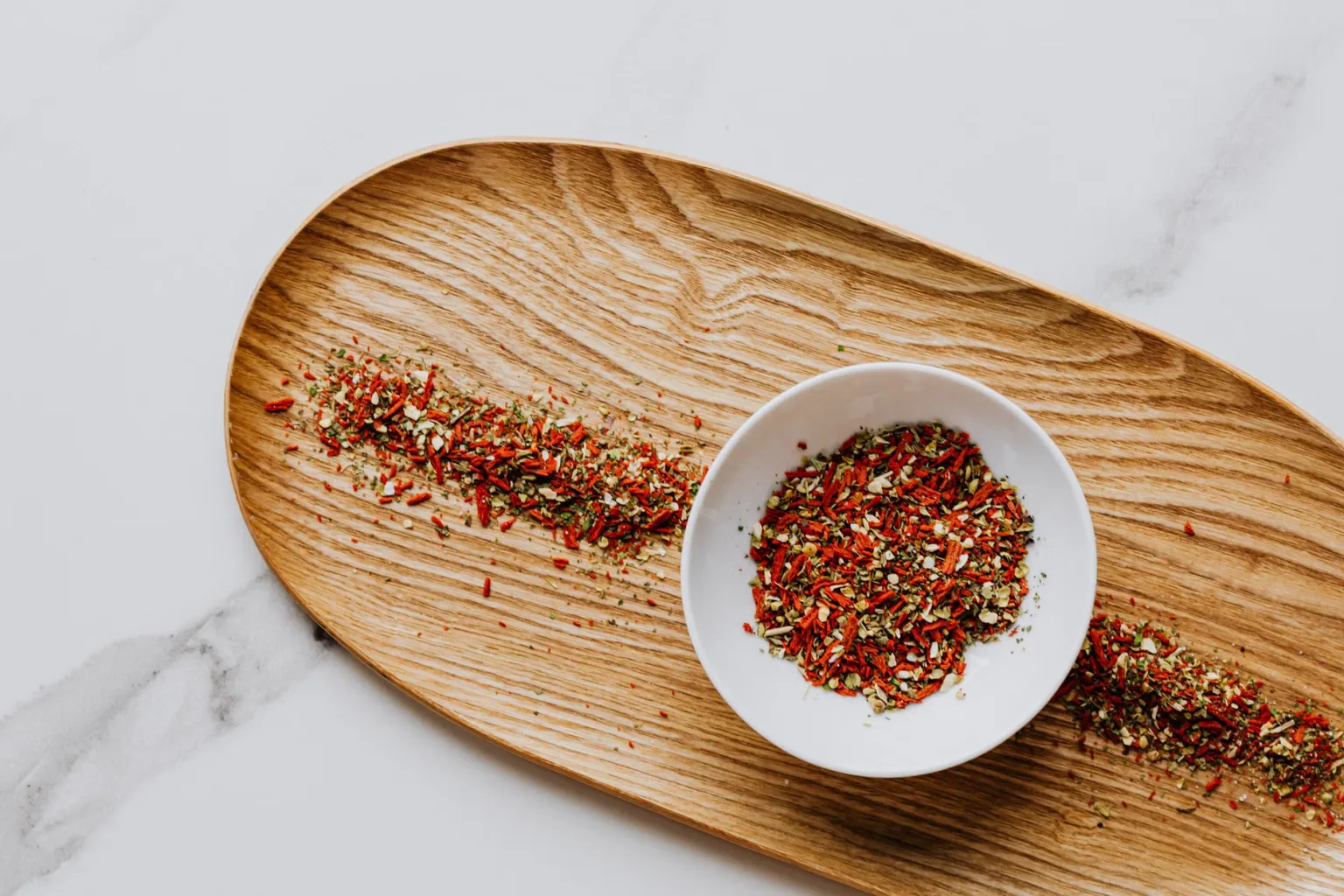
A spice blend is a combination of two or more spices and may also include herbs or other culinary ingredients, depending on the formula. There is no single standard recipe: some blends are warm and aromatic, others herbal or hot, and proportions can differ between recipes, regions and commercial products. A blend may be ground or include whole seeds. It is used in small amounts to add flavour, aroma or colour, bringing together seasonings that would otherwise need to be measured separately. The product name alone does not reveal its exact contents; check the ingredient list to find out what is in a particular blend.
When to use it
Use a blend when you want to season a dish with a defined aromatic profile without measuring each spice separately. It may suit vegetables, legumes, grains, meat, poultry, fish, soups, stews or sauces when its flavour profile works with the other ingredients. Since blends vary considerably, there is no universal quantity: start with a little, taste the dish and adjust. If following a recipe, remember that a similarly named blend may have different ingredients or intensity from the one specified.
How to use it
First read the name and ingredient list to find out whether the blend is herbal, warm, hot or another style; do not assume that products with similar names are identical. Start with a small amount, mix it into the food and taste before adding more. You can add it to a sauce, cooking liquid, stew or marinade, or sprinkle it over a finished dish if the recipe suggests that. Some dry blends can be added to hot oil to release aroma; others, especially ground blends, may burn in intense heat. If the blend contains whole spices, you can briefly toast them before grinding, taking care not to scorch them. Follow the product or recipe directions when available.
Flavour and texture
There is no fixed flavour: it depends on the spices, their proportions and whether they are whole or ground. A blend may be warm, floral, herbal, earthy, sweetly aromatic or hot, and some combine several characteristics. Ground blends are usually powdery; those containing seeds or pieces can be coarser and add small textural flecks.
How to choose it
Choose a blend whose ingredient list and stated flavour profile suit the dish you plan to cook. Check the packaging to see whether it contains salt, chilli heat or other ingredients that could affect the result; do not infer its formula from the name alone. Blends can differ between brands, so compare labels when a recipe depends on a particular composition.
Storage
Store the product according to its packaging instructions and keep the container closed between uses. If no specific storage directions are given, protect it from moisture and contamination, and avoid leaving it open while cooking. The available evidence does not establish one universal shelf life for all blends; do not apply a single storage duration to different formulas and packages.
Substitutions
There is no single substitute for every blend because ingredients and proportions vary. If you know the composition, combine individual spices to approximate its flavour profile. You can also choose another blend that suits the dish, but add it gradually and taste as you go: aroma, heat and intensity may differ.
Common mistakes
Common mistakes include treating every blend as if it had the same formula, adding a large amount without tasting, or assuming a similarly named product will taste the same. Avoid scorching ground spices in a very hot pan, too. Start with a little, check the ingredients and adjust to the dish.
Safety and allergens
Use the food product according to its packaging directions, and do not consume a blend whose identity or ingredients you cannot verify. The available evidence does not provide a specific official warning for every spice blend; ingredients vary, so check the label.
Culinary uses
- Aportar sabor y aroma
- Sazonar platos y crear un perfil de sabor coherente
Recommended techniques
- Añadir a líquidos, salsas o guisos durante la cocción
- Tostar brevemente especias enteras de la mezcla, si las contiene, o hacerlas florecer en aceite
Pairs well with
- Verduras, legumbres y cereales
- Carnes, aves, pescados y sopas
Frequently asked questions
Do all spice blends have the same ingredients?
No. Formulas can vary between regions, recipes and brands. Check the ingredient list on the specific product.
When should I add a spice blend to a dish?
That depends on the blend and recipe. It may go into a sauce or stew, be added to oil or be sprinkled on at the end; begin with a small amount and follow any available directions.
Can I replace a blend with individual spices?
Yes, if you know the flavour profile or ingredients you want. Combine spices to approximate it and adjust gradually, since there is no universal formula.
Estimated nutrition
- Fat
- 0 g
- Saturates
- 0 g
- Carbohydrate
- 0 g
- Sugars
- 0 g
- Protein
- 0 g
- Salt
- 15 g
Sources and review
Automatically researched, cross-checked and validated content. Sources consulted:
- El origen de las especias: historia y sabores auténticos munozypujante.com
- ¿Por qué la muerte es origen de miedos y tabúes? doi.org
- Aplicaciones de la Biotecnología en Seguridad Alimentaria aesan.gob.es
- Guía básica de especias: usos culinarios y propiedades (Parte I) - El Sabor de lo Bueno sabordelobueno.com
- Técnicas sencillas para mejorar las comidas | Food Hero | artículo foodhero.org
- Especia - Wikipedia, la enciclopedia libre es.wikipedia.org
- ¿Qué son las especias? - Blog de La Parada de las Especias comprarespecias.net
- Las mezclas de especias que debes conocer - EN LA COCINA Magazine enlacocina.telemesa.es
- 20 mezclas de especias de todo el mundo y cómo usarlas es.qz.com
- **Especias del Curry: Comparativa de las Mejores Opciones para Preparar Comida Asiática** thaibistro.es
- Técnicas para potenciar el sabor de las especias en platos especiaselexplorador.com
- Cómo combinar especias para potenciar el sabor de tus platos | Hida hida.es