- Category
- Bread and dough
- State
- Dry
- Usual unit
- unit
What it is
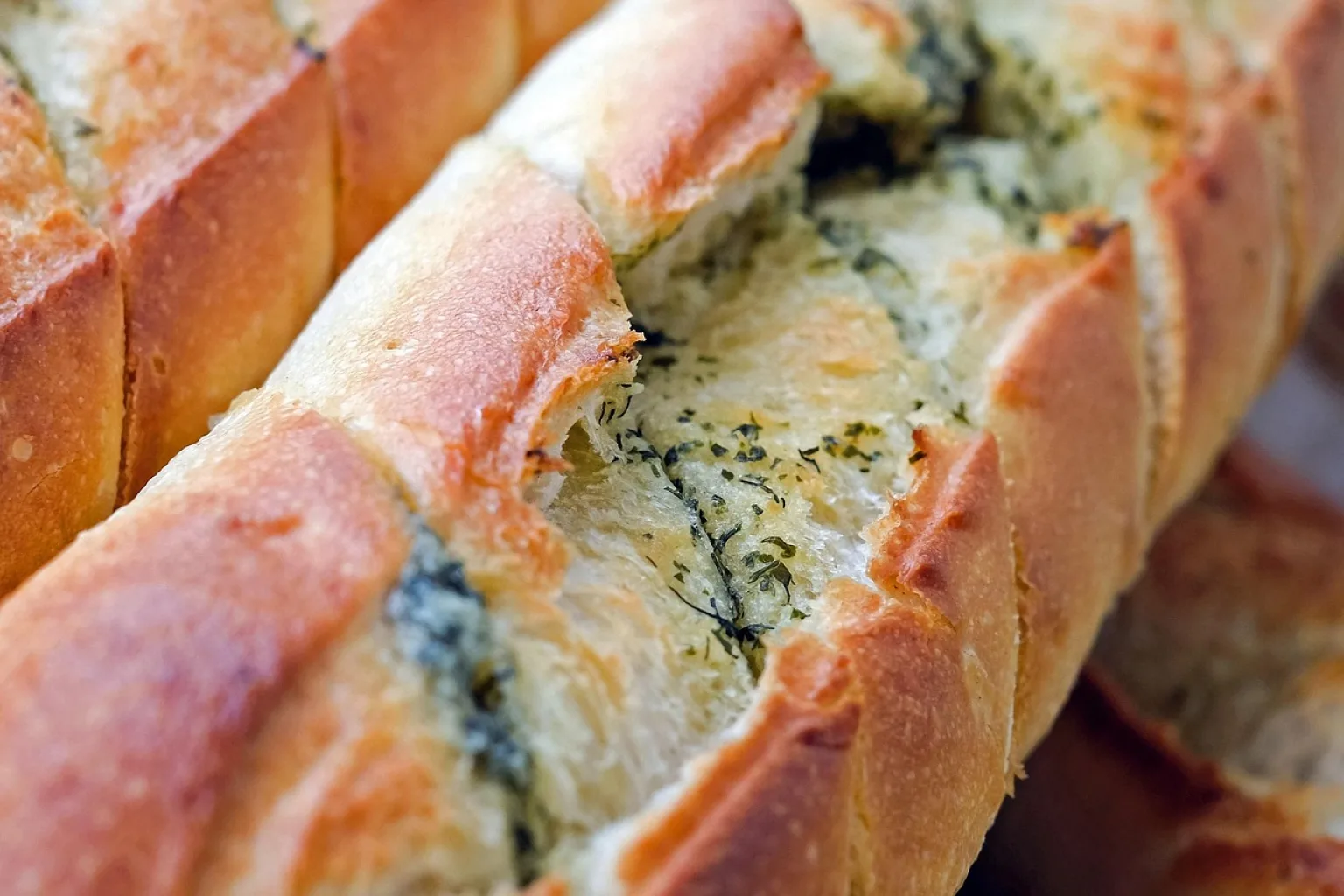
Stale French bread is bread described as French that has lost freshness and become dry or firm. The name “French bread” does not identify one universally defined shape or recipe everywhere, so this profile refers to bread called French in the context where it is bought or cooked, once dry or stale. One documented way to use dry bread is pain perdu: slices are soaked in a mixture of egg, milk and sugar, then fried in butter. The ingredient should not be confused with the prepared dish.
When to use it
Use it when you have dry or stale bread and want to incorporate it into a cooked preparation rather than serve it as is. One documented option is pain perdu, in which bread is soaked in egg, milk and sugar and then fried in butter. The culinary source describes this preparation as having a soft interior and crisp exterior. The available evidence does not establish universal quantities or timings, so do not assume all dry bread will behave in the same way.
How to use it
Cut the bread into slices and prepare a mixture of egg, milk and sugar. Soak the bread in the mixture, then fry it in a pan with butter, turning it to cook both sides. The culinary description of pain perdu notes a soft interior and crisp exterior. Serve it with cinnamon and sugar, fresh fruit, vanilla ice cream or whipped cream. Savory accompaniments such as fried bacon and eggs are also mentioned. The source gives no precise proportions or timings, so adapt the preparation to the bread’s texture rather than assuming every piece will produce the same result.
Flavour and texture
The source describes the bread used for this preparation as dry or stale, but does not establish a specific flavor profile for a universal French bread variety. In pain perdu, soaking and cooking are associated with a soft interior and crisp exterior. The egg, milk and sugar mixture and the chosen accompaniments provide much of the finished dish’s character.
How to choose it
If choosing bread for this use, look for a piece that is dry or firm enough to soak and cook. “French bread” can refer to different breads in different local usages, so check that the product is the kind you have in mind rather than assuming one standard shape or recipe. The available evidence provides no criteria for comparing brands, ingredients or quality.
Storage
The available sources do not specify storage methods, temperatures or shelf life for dry or stale French bread. This profile therefore does not recommend a particular duration or claim that any method extends its keeping time. Check package or seller guidance where available, and do not use bread if its condition is in doubt.
Substitutions
For a bread-saving preparation, the culinary source refers to dry or stale bread without requiring one uniquely French shape. You can use another dry or stale bread, including bread of a different style. The supplied evidence does not establish exact substitution ratios, quantified adjustments or wheat-free alternatives.
Common mistakes
Do not confuse dry bread with the prepared dish pain perdu. Do not assume that every bread called French has the same shape or composition. Avoid promising identical quantities, timings or results for breads with different degrees of dryness; the sources set no such parameters.
Safety and allergens
The available evidence contains no specific official safety alert or handling instructions for this ingredient. If you are unsure about the bread’s condition, do not taste it; discard it, and follow package directions where available.
Culinary uses
- Using up dry or stale bread
- Base for pain perdu or French toast
Recommended techniques
- Soaking in a liquid mixture
- Pan-frying in butter
Pairs well with
- Cinnamon and sugar
- Fresh fruit
- Vanilla ice cream or whipped cream
- Fried bacon and eggs
Frequently asked questions
What does dry or stale mean here?
In this profile, it means bread that has lost freshness and become dry or firm; it can be used in a cooked preparation such as pain perdu.
How can I use it for pain perdu?
Soak it in a mixture of egg, milk and sugar, then fry it in butter, cooking both sides.
What can I serve with it?
Suggested accompaniments include cinnamon and sugar, fresh fruit, vanilla ice cream or whipped cream; fried bacon and eggs are also mentioned as savory options.
Estimated nutrition
- Fat
- 2.42 g
- Saturates
- 0.53 g
- Carbohydrate
- 51.9 g
- Sugars
- 4.62 g
- Fibre
- 2.2 g
- Protein
- 10.8 g
- Salt
- 1.5 g
Sources and review
Automatically researched, cross-checked and validated content. Sources consulted:
- Client Challenge doi.org
- Dictionary of Health Related Terms: English – Spanish hia.berkeley.edu
- Comité Científico aesan.gob.es
- Transnational identity, food and community dr.lib.iastate.edu
- Gastronomy Blog | Page 36 sites.bu.edu
- Coconut Oil • The Nutrition Source nutritionsource.hsph.harvard.edu
- Assessing the Physical and Perceptual Risks of Geologic ... scholarship.miami.edu
- 2022-23 – Journals from Abroad ipojournals.linfield.edu
- My Current Vendor List docs.gato.txst.edu
- Curiosidades sobre el pan francés | Saborearte saborearte.com.mx
- Pan Francés – Justfoodlovers justfoodlovers.com
- Clasificación de pan Francés según sus propiedades ... scielo.cl