- Category
- Meat
- State
- Fresh
- Usual unit
- g
What it is
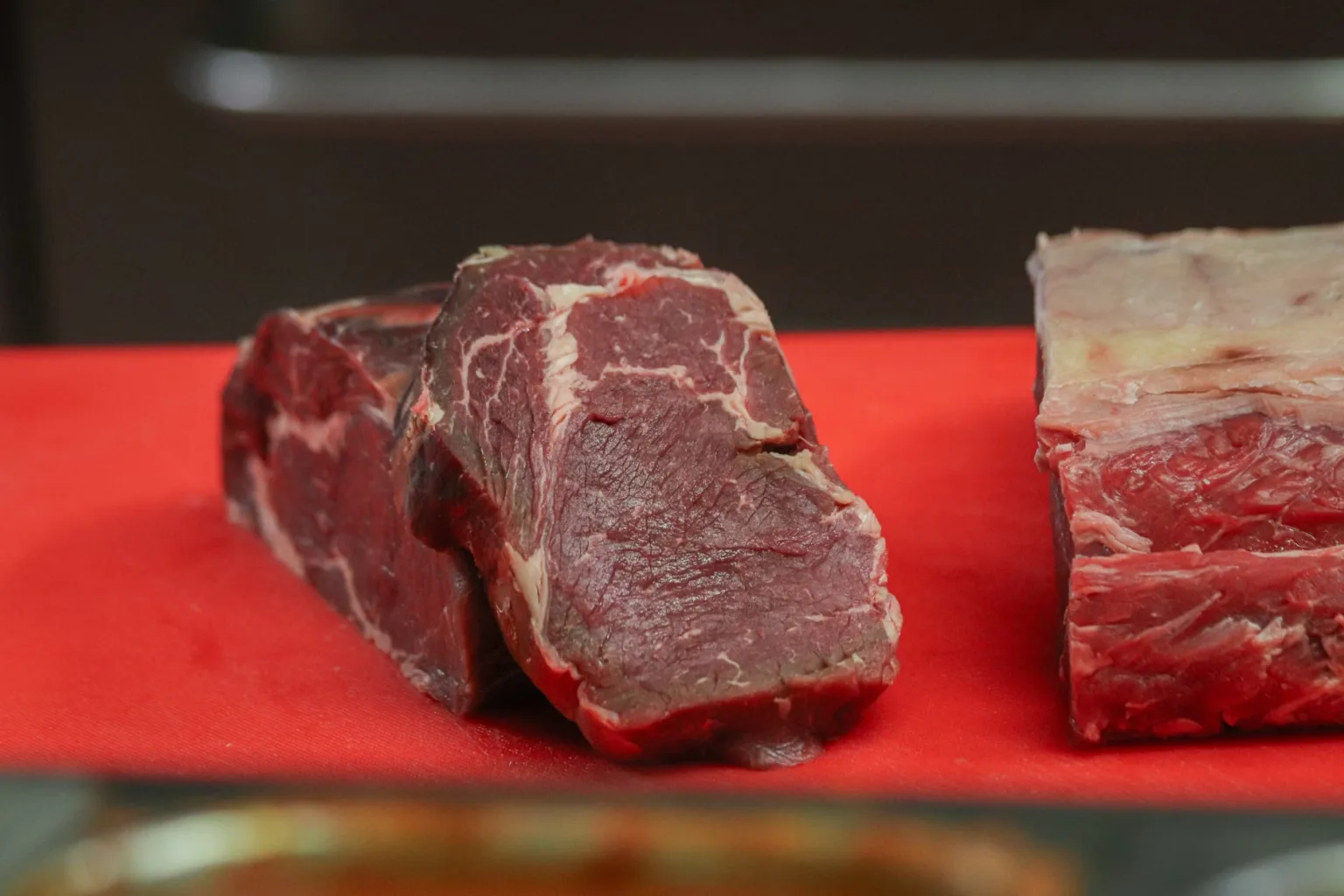
Stewing beef is a cooking description rather than a guarantee of one particular cut. Depending on the product and butcher, it may come from different parts of the animal and be sold cubed or as a piece to cut yourself. Shin and chuck are among the cuts used for stews. Because cuts differ in texture, they may not become tender at the same rate. This meat is best suited to moist, prolonged cooking; do not assume every pack contains the same cut or will cook in exactly the same way.
When to use it
Choose stewing beef for a pot-cooked dish in which the meat cooks slowly with broth, water, or another liquid, such as a stew or braise. It works in recipes with vegetables, potatoes, and aromatics cooked alongside the meat or added as the recipe directs. If you want a quick-cooking dish or meat to serve rare, the label alone does not guarantee a suitable cut. Check what cut is being sold and choose a recipe intended for it.
How to use it
If the beef comes as a larger piece, cut it into similarly sized chunks to encourage even cooking; if it is already cubed, check whether the pieces need trimming or sizing. You can brown it in a pot before adding vegetables and liquid, or follow a recipe that skips browning. Cook it covered over low heat, or use a slow cooker according to its directions and a reliable recipe. The meat should become tender, but the time depends on the cut, chunk size, and equipment, so there is no single time that fits every product. Do not rinse raw meat; wash your hands after handling it.
Flavour and texture
Flavor and texture depend on the cut and cooking method. In a stew, the beef contributes depth to the cooking liquid and can become tender after prolonged moist cooking. Cuts such as shin and chuck are used for this purpose, but they are not identical and may not soften at the same rate. Vegetables, broth, and seasonings also shape the finished dish.
How to choose it
Ask which cut is sold as stewing beef, especially if your recipe depends on a particular texture or cooking approach; the label can cover different cuts, including shin and chuck. At a butcher, you can ask for evenly sized pieces to encourage more uniform cooking. Choose properly refrigerated meat and check the package information and date. The available evidence does not establish universal visual tests for judging freshness.
Storage
Treat the beef as perishable: keep it refrigerated and follow the package’s storage directions and date. Handle it with clean hands and prevent its juices from touching ready-to-eat foods. If you plan to freeze or preserve it another way, use reliable food-safety guidance suitable for meat rather than improvising a preservation method. The available evidence does not support one storage time for every package and condition.
Substitutions
To keep the dish beef-based, substitute another cut suited to stewing, such as shin or chuck, while allowing for differences in texture and cooking time. Some recipes also use stewing pork, but the flavor and cooking needs will change. Adapt the method to the chosen cut and check that the meat is tender before serving.
Common mistakes
Assuming all cuts sold for stewing are interchangeable can lead to different results: shin and chuck, for example, have different structures. Another mistake is relying on a fixed cooking time without considering chunk size and equipment, or using too little liquid and letting the dish dry out. Do not rinse raw beef; handle it hygienically.
Safety and allergens
Keep the beef refrigerated, wash your hands after handling it, and prevent raw meat from contacting ready-to-eat foods. Cook it using a reliable recipe and the equipment instructions; the evidence provided does not establish a specific internal temperature for this profile.
Culinary uses
- Base de guisos y estofados de cocción prolongada
- Aporte de sabor y sustancia a platos de olla
Recommended techniques
- Estofar a fuego lento en una olla tapada
- Dorar la carne antes de cocerla en líquido
- Cocinar en olla de cocción lenta
Pairs well with
- Cebolla, ajo y zanahoria
- Patata, apio y caldo de carne
- Laurel, romero y pimienta
Frequently asked questions
Which cuts may be sold as stewing beef?
The label can cover different beef cuts. Shin and chuck are among those used in stews, so ask which cut is in the pack if you need to adapt a recipe.
Should I brown stewing beef first?
Browning before adding liquid is one option, but some recipes do not call for it. Follow the method for the dish you are making.
Can I cook it in a slow cooker?
Yes. Stew recipes use slow cookers. Follow a reliable recipe and the appliance instructions, since cooking time depends on the cut and equipment.
Sources and review
Automatically researched, cross-checked and validated content. Sources consulted:
- Agencia Española de Seguridad Alimentaria y Nutrición aesan.gob.es
- Duke University Dissertation Template dukespace.lib.duke.edu
- Estofado de ternera, una receta tradicional y deliciosa | Receta de Sergio recetasdecocina.elmundo.es
- Glimpses of an 18th century Colonial Kitchen in Manila archium.ateneo.edu
- razas de - ganado mapa.gob.es
- Comprobando su navegador doi.org
- Estofado de Ternera En Olla de Cocción Lenta | Extension extension.unh.edu
- Estofado - Spend Smart Eat Smart spendsmart.extension.iastate.edu
- Conservación de alimentos en el hogar: Carne, pescado y aves | Extensión de la UMN es.extension.umn.edu
- Referencias gastronomicas en DQ II ehumanista.ucsb.edu
- Recetarios manuscritos de la España moderna scholar.uc.edu
- Cuál es la mejor carne para guisar y estofar - Grupo Miguel Vergara miguelvergara.com
- - YouTube youtube.com
- ¿Cuál es la Mejor Carne para Guisar? | Las Viandas de Julián lasviandasdejulian.es