- Category
- Herbs and spices
- State
- Dry
- Usual unit
- tablespoon
What it is
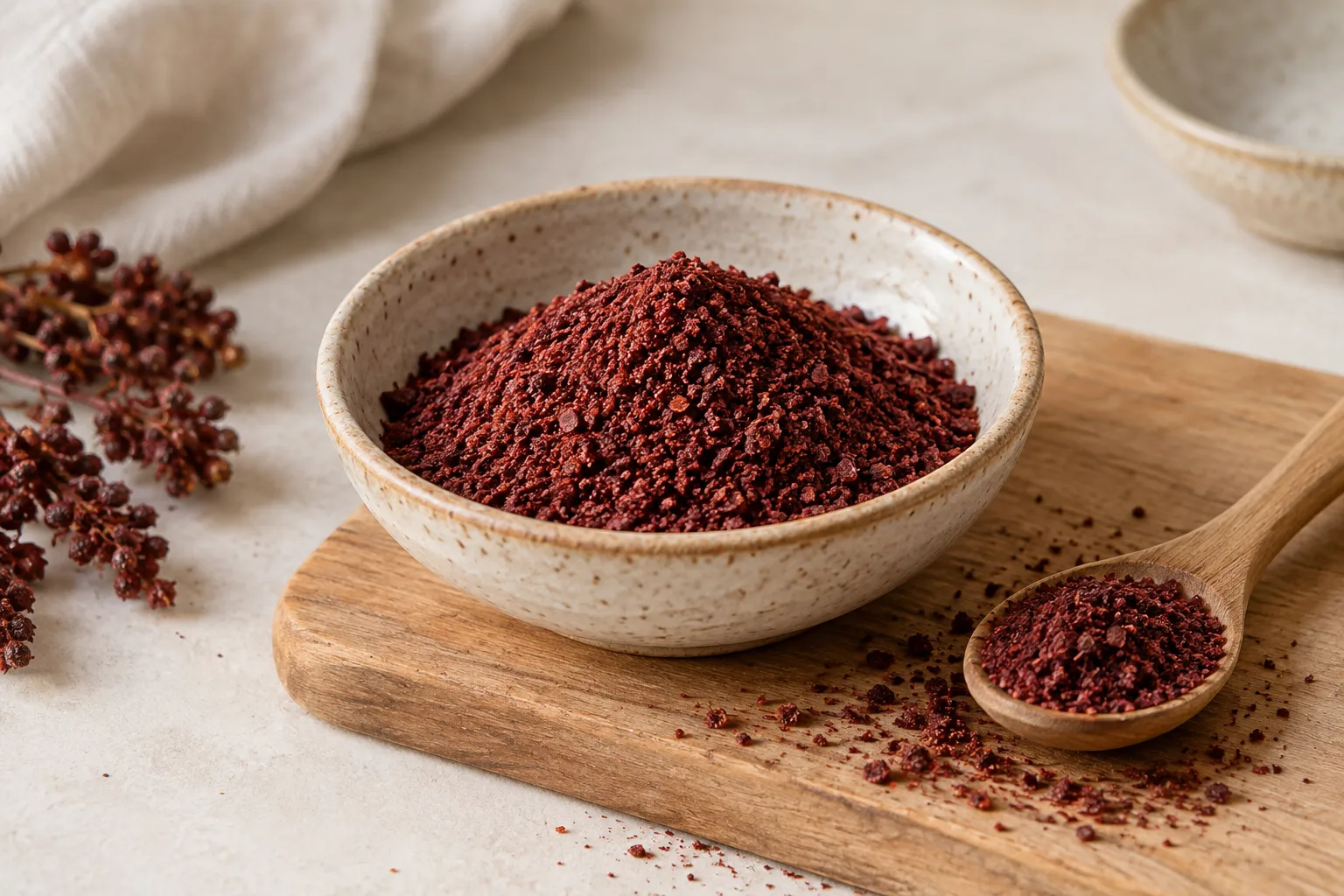
Sumac sold as a culinary spice comes from fruits of plants in the Rhus genus and is commonly sold dried and ground. The food product is typically reddish, ranging from brick red to burgundy; appearance and flavor intensity can vary from one product to another. Its flavor is generally tangy and somewhat fruity, with notes reminiscent of citrus. It is a seasoning, not an exact replacement for lemon or vinegar: sumac adds acidity and aroma, but not their juice or moisture. Sumac may also be an ingredient in za’atar, a seasoning blend that contains other ingredients. For cooking, choose sumac sold and labeled as an edible spice rather than gathering wild plants.
When to use it
Use sumac when a dish needs a tangy, aromatic note without extra liquid, especially in salads, hummus, roasted vegetables, or savory dishes with yogurt. It can also add contrast to chicken, lamb, or fish and brighten red onion, tomato, or cucumber. If a recipe calls for lemon juice or vinegar to provide moisture, marinate food, or make a dressing, sumac alone will not do that job. You can still add it for flavor, but account separately for the liquid and acidity the recipe needs.
How to use it
Start with a pinch and adjust to taste: the level of acidity and grind size vary between products. Sprinkle it over salads, hummus, eggplant, roasted vegetables, or a savory yogurt dish just before serving. For a dressing or marinade, mix it with oil and the other ingredients; if the recipe also needs moisture or liquid acidity, add lemon juice or vinegar separately. Sumac can be included in seasoning blends such as za’atar, bearing in mind that the blend contributes additional flavors. Taste the dish before seasoning again so the acidity does not overwhelm it.
Flavour and texture
Sumac is described as tangy, with fruity and citrus-like notes and sometimes a slightly bitter or astringent edge. It does not taste exactly like lemon: sumac gives a drier, more seasoned kind of acidity without adding juice or moisture. It is often sold ground, with a texture that may be fine or slightly coarse and a color ranging from brick red to burgundy.
How to choose it
Choose a packaged product clearly labeled as an edible culinary spice. Dried, ground sumac is a common form, and products can vary in color, texture, and degree of acidity. Do not gather or eat a wild plant based only on the appearance of red berries: plants called sumac include species that are not the edible seasoning.
Storage
Keep sumac dry in a clean, tightly closed container, away from moisture and strong odors. Check the package directions and do not use the product if it is damp, contaminated, or looks unusual. The available evidence does not support a specific storage duration, so follow the manufacturer’s date and instructions.
Substitutions
Lemon juice or vinegar can provide acidity, but they add liquid and taste different; neither is an exact substitute. Use them when the recipe also needs moisture, and adjust to taste. Za’atar can offer a seasoned alternative, but it is not a direct replacement for sumac because it is a blend with other ingredients.
Common mistakes
Do not expect sumac to provide juice like lemon or to replace all the liquid in a dressing or marinade. Adding too much at once can make a dish overly tangy, and color or grind size alone does not tell you how much a recipe needs. Begin with a pinch, taste, and adjust.
Safety and allergens
Buy sumac labeled as an edible spice and avoid eating unidentified wild plants. No specific official safety warning for the culinary product is available here; as with any spice, check the label and avoid the product if it appears contaminated or spoiled.
Culinary uses
- Especia ácida para sazonar
- Acabado aromático y colorido
Recommended techniques
- Espolvorear al final
- Incorporar en aliños y marinadas
- Mezclar en salsas y dips
Pairs well with
- Tomate, pepino y cebolla roja
- Hummus, yogur y berenjena
- Pollo, cordero y pescado
- Aceite de oliva, sésamo y hierbas
Frequently asked questions
What does sumac taste like?
It has a tangy, aromatic flavor, often described as fruity and citrus-like. It does not taste exactly like lemon and does not provide lemon juice.
How do you use sumac?
Sprinkle it over salads, hummus, and vegetables, or mix it into dressings, marinades, and sauces. Start with a pinch and taste before adding more.
Can sumac replace lemon or vinegar?
It can contribute acidity, but it is not an exact replacement: lemon and vinegar also add liquid and have different flavor profiles.
Estimated nutrition
- Fat
- 10.9 g
- Saturates
- 1.56 g
- Carbohydrate
- 9.35 g
- Sugars
- 2.49 g
- Fibre
- 2.5 g
- Protein
- 10.9 g
- Salt
- 0.24 g
Sources and review
Automatically researched, cross-checked and validated content. Sources consulted:
- Client Challenge doi.org
- Food - Thematic Lists - Research Guides at University of Nebraska Kearney (UNK) guides.library.unk.edu
- 4-H FCS Skill-a-thon Foods and Cooking ID texas4-h.tamu.edu
- Memoria II: Propuesta de indicadores mapa.gob.es
- Plant-Based Culinary Arts | Institute of Culinary Education ice.edu
- Professional Chef Instructors - Escoffier escoffier.edu
- Cooking Up Something Special | Inspiring Impact giving.upenn.edu
- Food and Cuisine - Palestine - LibGuides at Skyline College guides.skylinecollege.edu
- Foodway Practices among Arab Americans in Columbus, ... etd.ohiolink.edu
- Zumaque o sumac, la especia imprescindible de Oriente Medio: qué es, a qué sabe y cómo usarla en la cocina directoalpaladar.com
- Zumaque: qué es, propiedades y uso en la cocina bonviveur.com
- Zumaque, la especia rojiza que conquista la cocina gourmet | Excelencias Gourmet static.excelenciasgourmet.com
- El Zumaque, una especia desconocida pero con gran potencial culinario | Hostelería Salamanca hosteleriasalamanca.es
- Zumaque. ¿Qué es? Propiedades y usos en la cocina abc.es
- Usos de la planta del zumaque – Botanical-online botanical-online.com