- Category
- Sauces and condiments
- State
- Liquid
- Usual unit
- teaspoon
What it is
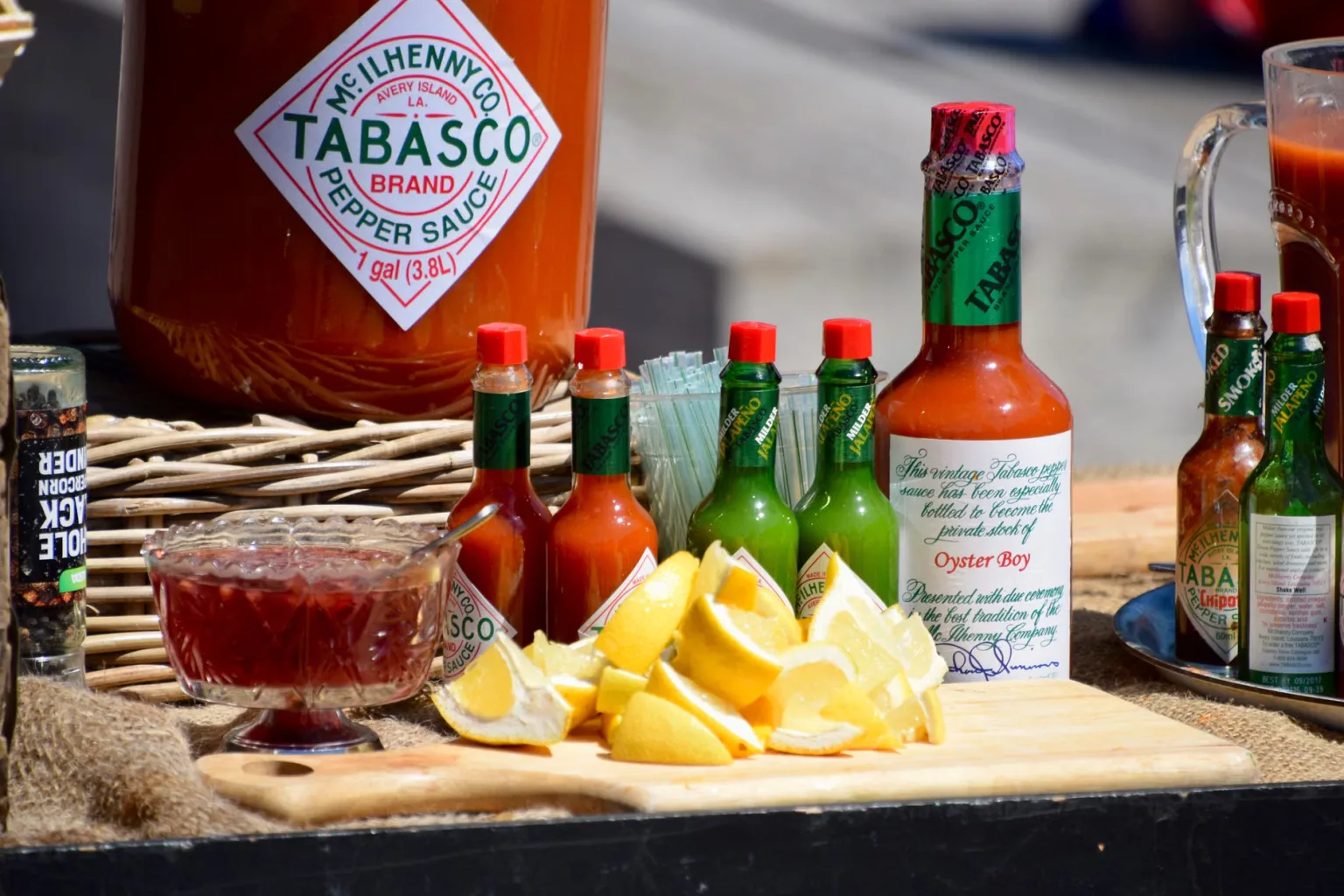
Tabasco is the name of a brand and its well-known bottled hot sauce; this profile is about the sauce, not fresh chili peppers. The classic red sauce is described as a liquid condiment made with chili pepper, vinegar and salt; another description of the sauce also lists water. The brand sells different versions, so ingredients and flavor can vary from one product to another. It is used in small amounts to season or intensify dishes and should not automatically be treated as interchangeable with every similarly named chili sauce.
When to use it
Use it when a dish can benefit from some heat and acidity: serve it at the table so diners can adjust the amount, or stir a little into a sauce and taste before seasoning further. Its documented uses include chicken dishes and meat, as well as an accompaniment to oysters. Since the brand’s different versions are not necessarily alike, start with a small amount, especially if you are unfamiliar with the particular variety.
How to use it
Shake or pour the product only as directed on its label. Add a few drops directly to a dish or stir a small amount into a sauce, then taste before adding more. Hot sauce can also season chicken dishes such as wings and accompany oysters or meat. If adding it during cooking, do so gradually: this lets you adjust the heat and acidity without allowing them to overwhelm the other flavors. To substitute, use another hot sauce and adjust the amount to its intensity and flavor.
Flavour and texture
It is a liquid chili sauce with a hot, vinegary profile; its acidity can brighten other flavors, while perceived heat varies among versions. Products from the same brand may differ in ingredients and character, so do not assume that every variety has the same flavor or strength.
How to choose it
Check the full variety name and read the product’s ingredient list: the range includes more than one sauce, and descriptions of the classic red recipe do not necessarily apply to every product. Choose an intact bottle and check the manufacturer’s information, including storage directions and any date shown.
Storage
No specific, verified storage recommendation for every variety and package is available here. Follow the label, keep the container closed as directed by the manufacturer, and observe printed dates and cautions. Do not assume that every version either requires or does not require refrigeration.
Substitutions
Another liquid hot sauce or a fermented hot sauce can be used, but its flavor, acidity and heat may differ. Start with less than you would use of the original, taste, and adjust. The result will not necessarily be identical.
Common mistakes
Adding a large amount before tasting can make heat or acidity dominate the dish. Another mistake is assuming that all Tabasco varieties have the same ingredients and flavor. Add it gradually and check the label on the specific bottle.
Safety and allergens
Avoid touching your eyes after handling hot sauce, and wash your hands if the product gets on them. Read the label for the ingredients and variety-specific directions; do not use a bottle if the container or product appears abnormal.
Culinary uses
- Condimento picante para servir en la mesa
- Ingrediente para aportar picor y acidez a salsas y platos
Recommended techniques
- Añadir unas gotas al final y probar antes de agregar más
- Mezclar en una salsa o preparación para distribuir el sabor
Pairs well with
- Alitas y otros platos de pollo
- Ostras y platos de marisco
- Carnes
Frequently asked questions
Is Tabasco sauce the same as a Tabasco pepper?
No. This profile is about a bottled liquid hot sauce. A pepper is a different ingredient, although some descriptions of the sauce link it with that type of chili.
How can I control the heat?
Add a few drops, mix or taste the dish, and add more only if needed. Varieties can differ in intensity.
What can I use instead?
Another liquid or fermented hot sauce may work, although its acidity, flavor and heat will not necessarily be the same.
Sources and review
Automatically researched, cross-checked and validated content. Sources consulted:
- Client Challenge doi.org
- The Essential Glossary of Cooking Terms for the Culinary Arts - Escoffier escoffier.edu
- Food Storage Guide Answers the Question . . . | NDSU Agriculture ndsu.edu
- Tabasco Sauce: Can it take the heat of global warming? - Technology and Operations Management aiinstitute.hbs.edu
- Easy Hot Sauce - National Center for Home Food Preservation nchfp.uga.edu
- Lesson 5: Food Choices | EVO sites.northwestern.edu
- Pamela C. Allison Cookbook Collection M2016.01 | UNC Asheville unca.edu
- Spicy Chicken Wings | ICE Culinary ice.edu
- Salsa Tabasco: Ingredientes, Variedades e Historia abarrotes.es
- - YouTube youtube.com
- Tabasco - Gastronomía Vasca: Escuela de Hostelería Leioa gastronomiavasca.net
- Salsa Tabasco: Variedades, picor y comprar en Argentina locosxelpicante.com
- GastroWiki - Blog sobre Gastronomía gastroalianza.es