- Category
- Fruit
- State
- Fresh
- Usual unit
- unidad
What it is
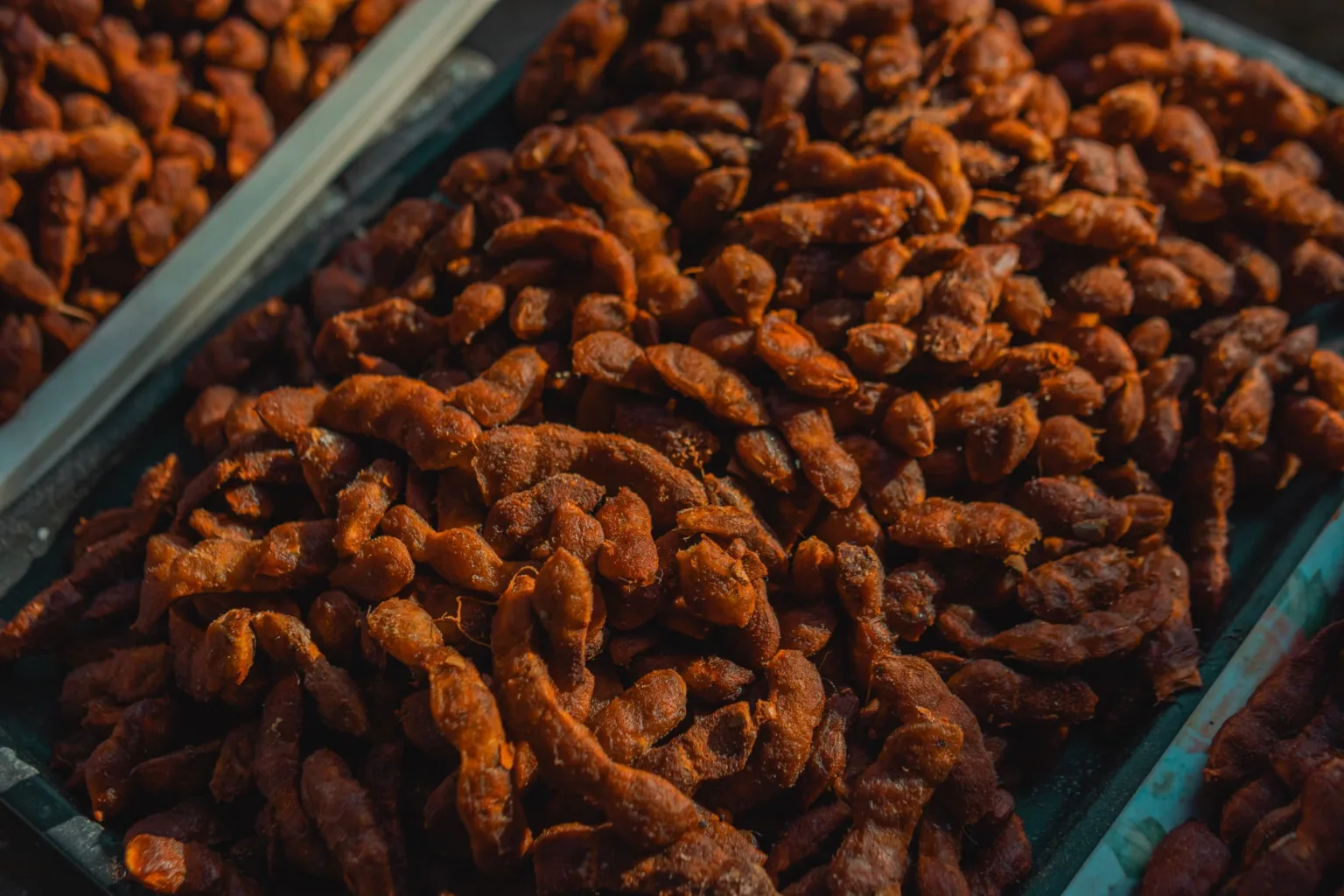
Tamarind is the fruit of a tree in the Fabaceae family. It grows inside a brown pod containing dense, sticky pulp, fibers, and seeds. The pulp is the part commonly used in cooking. Its flavor combines sour and sweet notes, and can change with ripeness: less-ripe pulp tends to be more acidic, while ripe pulp tends to be sweeter. Tamarind is available in whole pods and as prepared pulp, paste, or extract, so check the product format before using it in a recipe.
When to use it
Use tamarind when a dish needs acidity with a sweet note and a distinctive flavor, rather than only a simple citrus lift. Its pulp can be added to sauces, chutneys, drinks, vinaigrettes, soups, and stews, and is also used with meat, fish, or legumes. For a dipping sauce, it works with ingredients such as soy sauce, rice vinegar, ginger, and cilantro. Tamarind can be assertive, so begin with a small amount, taste the dish, and add more only if needed.
How to use it
If you are starting with a pod, crack it open and separate the pulp from the shell. Remove fibers and any seeds that separate easily. For a smoother preparation, soften the pulp in warm water and strain it; the resulting liquid can be added to sauces, dressings, or stews. If using paste or extract, mix it into the other ingredients and adjust the amount to suit that product. Tamarind can be combined with sweet, acidic, spiced, or savory ingredients. Add it gradually, mix thoroughly, and taste as you go to balance the finished dish.
Flavour and texture
The pulp is dense, fibrous, and sticky, with a strong, distinctive sweet-sour flavor. The balance of sweetness and acidity can vary with ripeness: less-ripe pulp tends to be more acidic, while ripe pulp tends to be sweeter. Whole pods may contain seeds and fibers that should be removed when preparing the pulp.
How to choose it
Tamarind is sold in whole pods and in prepared forms such as pulp, paste, or extract. Choose a format that fits the task: pods require you to separate the pulp, while paste is more direct to add to a recipe. Check the package to see whether the product is concentrated or ready to use; flavor and intensity can differ between products.
Storage
Storage depends on the format. For packaged products, follow the label, especially after opening, because instructions can differ from one product to another. Whole pods and commercial paste are not interchangeable when it comes to handling and storage. If you make a sauce or chutney at home, do not assume that tamarind alone makes it safe to keep at room temperature.
Substitutions
Lime juice with a little brown sugar can imitate some of tamarind's sweet-sour contrast, but it will not reproduce its flavor exactly. Tamarind paste or extract can stand in for pod pulp if you adjust the amount to the product format. In either case, add the substitute gradually and taste before adjusting the balance.
Common mistakes
Adding too much tamarind at the start can allow its strong flavor to overpower a dish. Another mistake is leaving seeds or fibers in the pulp when a smooth texture is wanted. Do not assume paste and extract have the same concentration; taste and adjust according to the product and recipe.
Safety and allergens
Follow package directions for commercial products. For homemade chutneys or preserves, use a tested preservation recipe and follow its preparation and processing steps; do not improvise a preservation method based on tamarind's acidity.
Culinary uses
- Aportar acidez agridulce a salsas y aderezos
- Dar sabor a bebidas, chutneys y guisos
Recommended techniques
- Ablandar la pulpa en agua templada y colarla para retirar fibras y semillas
- Incorporar pasta de tamarindo a salsas y mezclar hasta integrarla
Pairs well with
- Salsa de soja, vinagre de arroz, miel, jengibre y cilantro
- Coco y marisco
- Carnes, pescado, legumbres y verduras
Frequently asked questions
Which part of tamarind is used?
The pulp inside the pod is the part commonly used. Separate it from the pod and remove fibers and seeds during preparation.
How do I prepare pulp from a pod?
Soften the pulp in warm water and strain it for a smoother preparation, removing remaining fibers or seeds.
What can I use if I do not have tamarind?
Lime juice with a little brown sugar can provide a similar sweet-sour contrast, although it will not taste exactly like tamarind.
Estimated nutrition
- Fat
- 0 g
- Saturates
- 0 g
- Carbohydrate
- 64.3 g
- Sugars
- 57.1 g
- Fibre
- 3.6 g
- Protein
- 3.57 g
- Salt
- 0.09 g
Sources and review
Automatically researched, cross-checked and validated content. Sources consulted:
- Client Challenge doi.org
- The Essential Glossary of Cooking Terms for the Culinary Arts - Escoffier escoffier.edu
- News Archives - Nutrition Coordinating Center (NCC) ncc.umn.edu
- Pacific Food Guide | Tamarind manoa.hawaii.edu
- "Packaging Film Impact on Food Organoleptic Properties: An Experimental" by Stefano Tamarindo and Carine Pastore repository.rit.edu
- Recipe: Coconut Shrimp with Tamarind Dipping Sauce | Institute of Culinary Education ice.edu
- Preservation Principles in Chutney - National Center for Home Food Preservation nchfp.uga.edu
- Alumni in the News: June 2025 | Culinary Institute of America ciachef.edu
- An Ecological Approach to African American Adolescent Food ... scholarworks.waldenu.edu
- Tamarindo. Qué es, propiedades y cómo usarlo en la cocina para dar un toque exótico abc.es
- Tamarindo | Gastronomía & Cía gastronomiaycia.com
- Tamarindo: Qué es, cómo sabe, para qué sirve, y sus beneficios - FarmaZara Blog - Salud, Belleza, Dieta y Nutrición farmazara.es
- Tamarindo: mucho más que chutneys | CocinaSinReceta.com cocinasinreceta.com
- Tamarindo: una palabra que cruzó océanos y se hizo Caribe - Eva Bravo ebravo.es
- Tamarindo: qué es, propiedades y cómo tomarlo bonviveur.com