- Category
- Fruit
- State
- Fresh
- Usual unit
- g
What it is
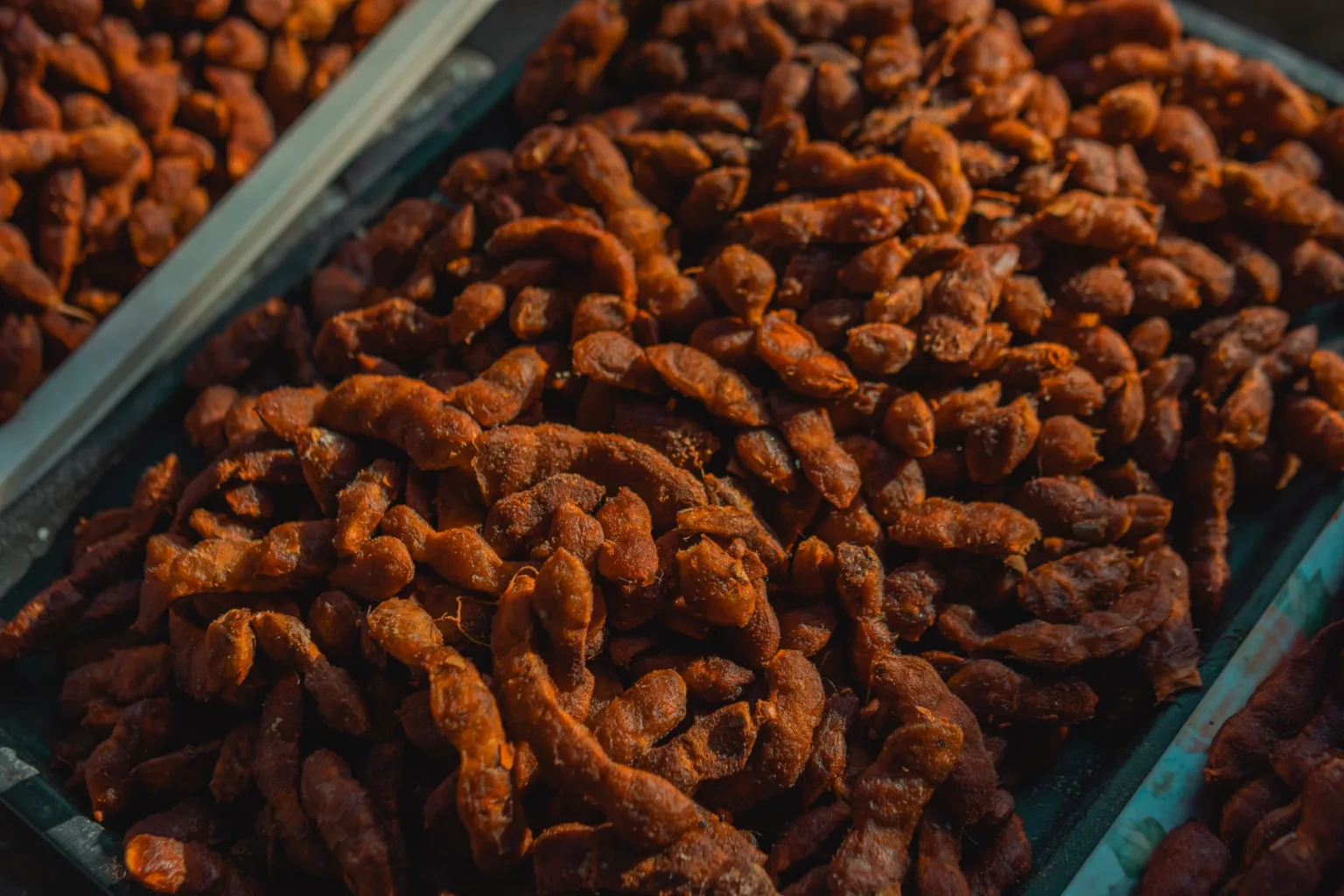
Tamarind pulp comes from the fruit of Tamarindus indica, which grows inside brown pods. The brown, dense flesh surrounds large seeds and contains fibers that can be removed before cooking. The flavor can vary with maturity: less-ripe pulp tends to be more sour, while ripe pulp becomes sweeter. Tamarind is used in several forms, including extracted pulp, paste, and purée, so its consistency and the amount of water it needs can differ. It is used to bring acidity and a sweet-sour character to a dish rather than a neutral fruit flavor.
When to use it
Choose tamarind pulp when a dish needs concentrated acidity with a sweet counterpoint, such as a sauce, curry, chutney, soup, stew, or marinade. It can also add character to drinks and sweets. Since flavor intensity varies with maturity and product form, start with a modest amount and adjust as you cook. If you want a smooth mixture, knead the pulp with water and strain out the seeds and fibers. Ready-to-use tamarind purée is a convenient option when you want to skip that step.
How to use it
When starting with a pod, remove the hard shell and visible fibers, then separate the pulp from the seeds before adding it to a recipe. To extract its flavor, work the pulp in water until it softens; strain the mixture if you want a liquid without seeds and fibers. Use that liquid to season curries, rice, fish or meat dishes, soups, and sauces. You can also combine the pulp with other ingredients to make a marinade or a paste for grilling. For drinks and sweets, combine tamarind with sugar to suit the flavor you want. If using commercial paste or purée, check its consistency and dilute it only if the recipe calls for it.
Flavour and texture
Tamarind has an intense sweet-sour flavor. Acidity can be more pronounced in less-ripe pulp, while sweetness increases as the fruit ripens. Extracted pulp is usually brown, dense, sticky, and somewhat fibrous, with seeds embedded in it. Kneading it with water produces an aromatic, acidic liquid; the final texture depends on how much it is diluted and whether it is strained. Commercial paste and purée may have a different consistency from pulp removed directly from the pod.
How to choose it
If buying pods, look for ones that feel full and heavy; this can indicate a good amount of pulp. The flesh is often attached to seeds and fibers, so allow for the work of cleaning it. Tamarind paste and purée are also available. Seedless purée can be convenient when you want to add tamarind directly to a sauce or marinade. Check the product form and consistency so you know whether it needs water or straining.
Storage
The available guidance recommends keeping pulp in a clean, covered container in a cool place. It does not give a specific duration or temperature, so follow the package directions for purchased paste or purée and do not assume every form stores the same way. Keep the container clean and closed between uses. If you make a mixture with water, handle it with clean utensils and follow ordinary food-safety practices.
Substitutions
Tamarind paste can be mixed with water to make a liquid for a recipe; adjust the dilution to the consistency needed. Commercial seedless tamarind purée can also replace prepared pulp and makes it easier to cook without removing seeds and fibers. These options retain tamarind's character, but their intensity and consistency can differ, so adjust the amount gradually.
Common mistakes
Do not leave seeds, shell, or tough fibers in the pulp if you want a smooth sauce or drink; remove unwanted parts and strain hydrated pulp. Do not assume every pulp has the same balance of sourness and sweetness, since maturity and product form matter. Begin with a modest amount, taste, and adjust. When swapping pulp for paste or purée, account for differences in texture and concentration.
Safety and allergens
Remove seeds, shell, and tough fibers before serving the pulp if you want to avoid hard pieces in the dish. Some people may have an allergic reaction to tamarind; if you have a known allergy or are unsure about a previous reaction, avoid eating it until you have appropriate guidance.
Culinary uses
- Aportar acidez y un equilibrio agridulce
- Dar profundidad a salsas, curris y marinadas
- Aromatizar bebidas y preparaciones dulces
Recommended techniques
- Ablandar la pulpa en agua y colarla para obtener un líquido o concentrado
- Mezclar la pulpa con otros ingredientes para preparar salsas o marinadas
- Cocerla en chutneys, sopas, guisos o bebidas
Pairs well with
- Chiles y especias
- Pescado, marisco, pollo o cerdo
- Arroz y fideos
- Azúcar en bebidas y dulces
Frequently asked questions
What does tamarind pulp taste like?
It has an intense sweet-sour flavor. Less-ripe pulp can taste more sour, while sweetness increases as it ripens.
How do I prepare pulp from a pod?
Remove the shell and fibers, separate the pulp from the seeds, and knead it with water. Strain the mixture for a smoother liquid.
What dishes can I use it in?
Use it to season sauces, curries, chutneys, soups, stews, rice, fish or meat dishes, marinades, drinks, and sweets.
Estimated nutrition
- Fat
- 0 g
- Saturates
- 0 g
- Carbohydrate
- 20 g
- Sugars
- 70 g
- Fibre
- 10 g
- Protein
- 0 g
- Salt
- 0 g
Sources and review
Automatically researched, cross-checked and validated content. Sources consulted:
- ¿Por qué la muerte es origen de miedos y tabúes? doi.org
- Discovering the Tamarind | CIA Culinary School ciachef.edu
- Pacific Food Guide | Tamarind manoa.hawaii.edu
- Tamarindo | Gastronomía & Cía gastronomiaycia.com
- Tamarindo: qué es, propiedades y cómo tomarlo bonviveur.com
- filling gender gaps: determining how traditional knowledge of experts.esf.edu
- Studies on the Preparation and Shelf-Life of Soursop, ... revistas.upr.edu
- Medicinal Spices Exhibit - UCLA Biomedical Library: History & Special Collections unitproj.library.ucla.edu
- Ponche de Navidad 19- (Christmas Punch) - lacocina.utsa.edu
- Evaluación de tratamiento térmico post-envasado y ... bdigital.zamorano.edu
- Tamarindo: qué es, propiedades, beneficios y cómo hacer con esta fruta tropical una salsa exquisita directoalpaladar.com
- Descubre las ricas propiedades del tamarindo | Recetas Nestlé recetasnestle.com.ec
- Todo sobre el Tamarindo - Marielita marielita.es
- Tamarindo: Qué es, cómo sabe, para qué sirve, y sus beneficios - FarmaZara Blog - Salud, Belleza, Dieta y Nutrición farmazara.es