- Category
- Vegetables
- State
- Fresh
- Usual unit
- leaves
What it is
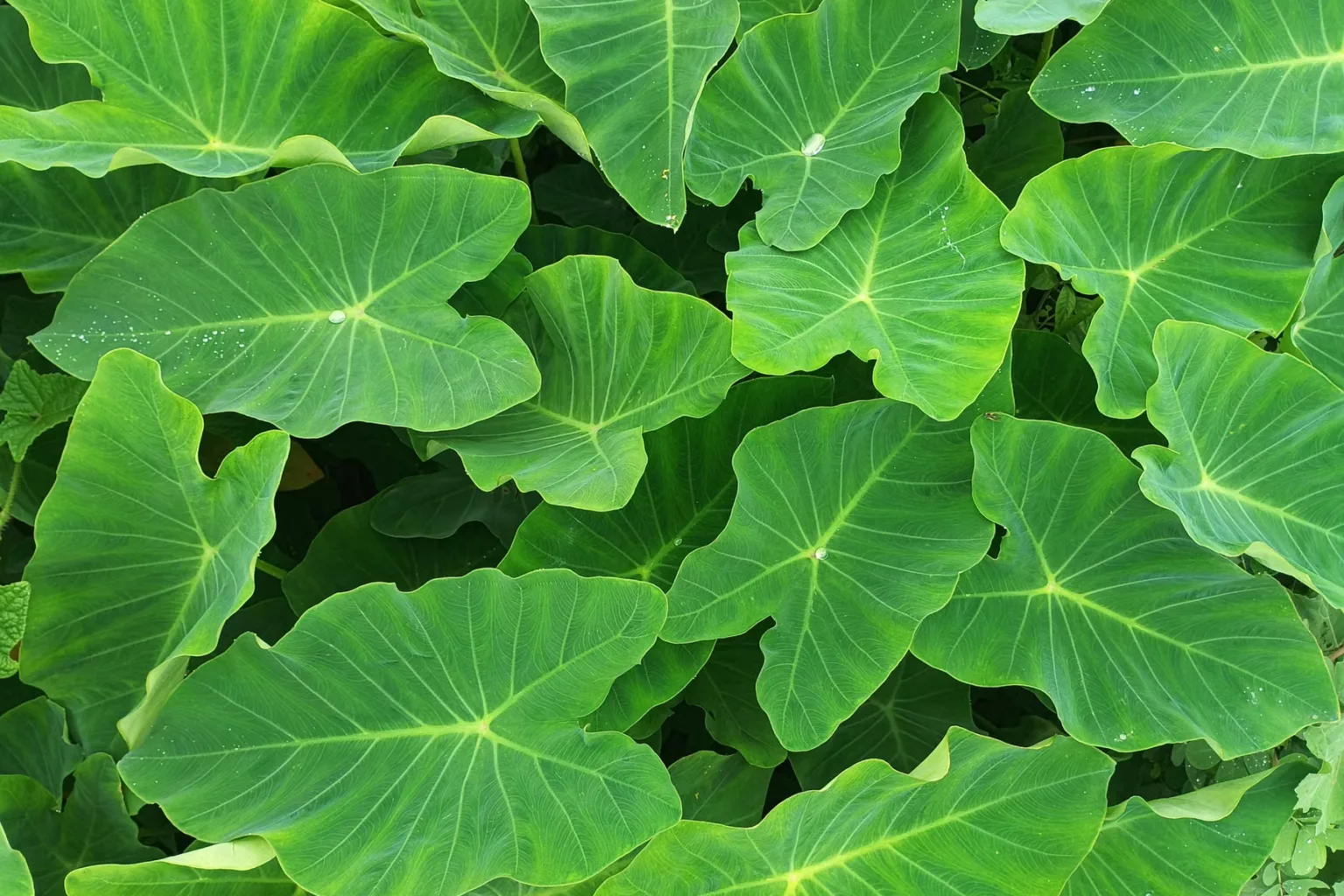
Taro leaves are the large leaves of the plant commonly called taro, identified by one source as Colocasia esculenta, in the arum family, Araceae. The common name “elephant ear” also applies to plants from several genera, so appearance alone cannot confirm that a leaf is edible. Leaves intended for food are used cooked as a vegetable and can also wrap food. The university horticulture source consulted warns that the leaves contain calcium oxalate crystals that can irritate the skin and says they must be cooked before eating. This profile refers to leaves identified as taro for food use, not to any ornamental plant that looks similar.
When to use it
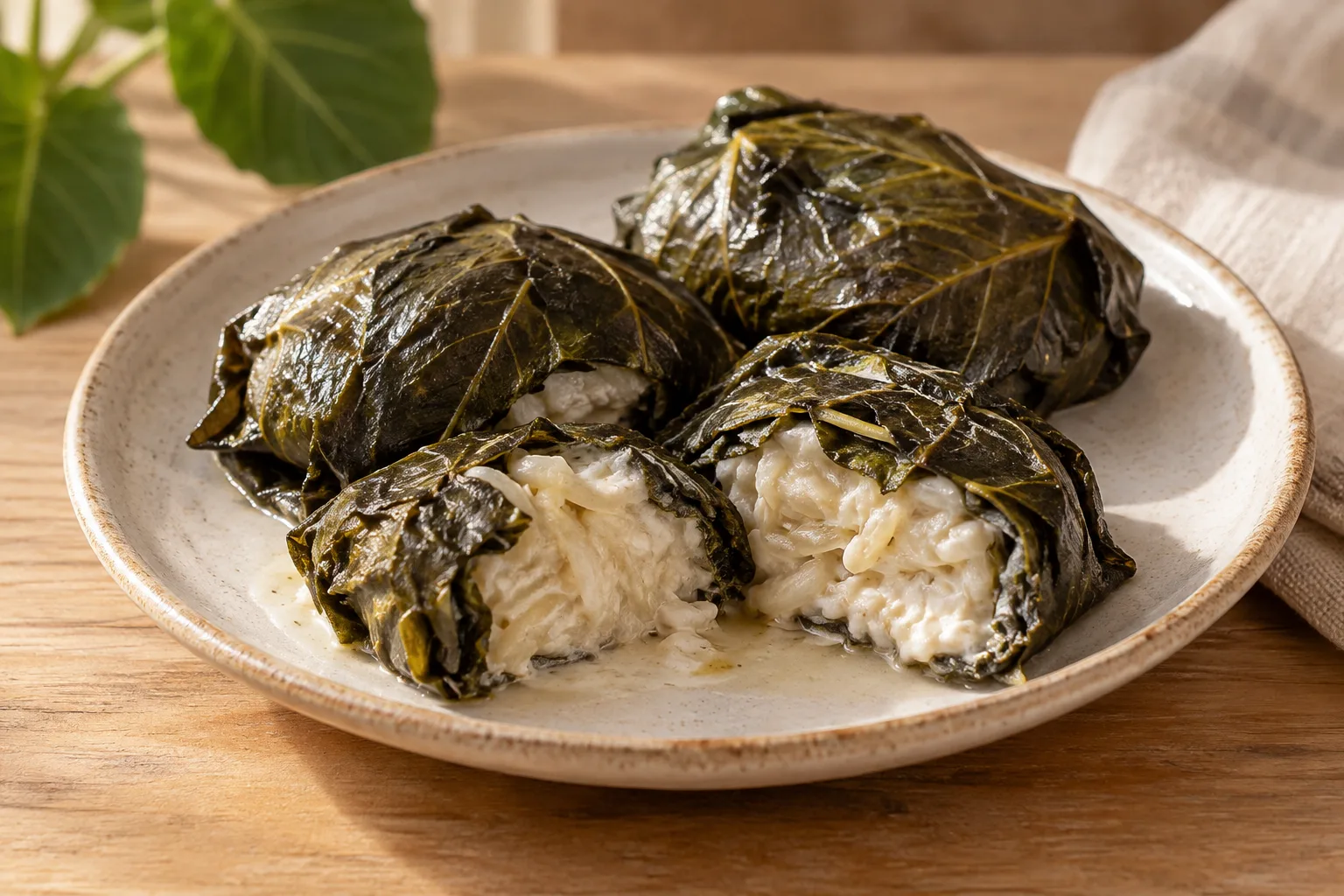
Use them when a recipe calls for a cooked leafy vegetable or when you want to wrap food in a leaf. A culinary source describes preparing them like mustard or turnip greens and also mentions their use as wrappers. Coconut cream and tropical fruits are among the pairings cited. Since the sources say the leaves must be cooked before eating, do not use them raw in salads or serve them uncooked. Choose leaves sold for food, and do not rely on their shape alone to identify them.
How to use it
First confirm that the leaves are identified as edible taro, rather than coming from a similar-looking ornamental plant. Remove damaged parts and follow a reliable recipe for taro leaves. Sources describe cooking them like other leafy greens, such as mustard or turnip greens; they also mention boiling them, serving them with coconut cream, or combining them with tropical fruits. Another option is to use them to wrap food. The available information does not establish a cooking time, temperature, or single method. Do not taste them raw or assume brief heating is enough: cook them according to reliable instructions for this ingredient.
Flavour and texture
The consulted sources focus on how the leaves are used and do not provide a detailed, consistent sensory description. One culinary source presents them as a cooked leafy vegetable and mentions coconut cream and tropical fruits as accompaniments or combinations. There is not enough evidence to assign them a precise flavor or universal texture: these qualities may vary with variety and preparation, details the available sources do not establish.
How to choose it
Choose leaves explicitly sold for food and labeled as taro leaves. “Elephant ear” can refer to plants from several genera, some of which look alike, so appearance alone does not confirm that a leaf is suitable for cooking. The consulted sources do not give detailed criteria for color, size, firmness, or freshness; specific visual buying tests therefore cannot be recommended. If the identification is unclear, ask the seller and do not harvest an ornamental plant for cooking.
Storage
The available sources do not state how long fresh taro leaves last or establish specific refrigeration, freezing, or preservation conditions. A shelf life or method cannot be recommended without adding unsupported details. When buying them, follow the seller’s or package’s directions and prepare the leaves using a reliable recipe. Do not apply storage instructions for taro corms to the leaves: they are different parts of the plant.
Substitutions
For a recipe using cooked leafy greens, mustard or turnip greens can serve as culinary alternatives, since a source describes preparing taro leaves in a similar way. They are not identical substitutes, and the flavor and result may differ. This suggestion applies only to cooked leafy-green dishes. If you use taro leaves, substitution does not remove the need to cook them before eating.
Common mistakes
Do not eat the leaves raw or assume that every plant with elephant-ear-like leaves is edible taro. The common name applies to plants from several genera, and a university source warns that the leaves contain irritating calcium oxalate crystals. Another mistake is improvising a cooking time or temperature: the sources do not establish universal parameters. Confirm the identification and follow a reliable recipe for taro leaves.
Safety and allergens
Do not eat taro leaves raw. A university horticulture source says the leaves of these plants contain calcium oxalate crystals that can irritate the skin and must be cooked before eating. Use only leaves identified as suitable for food. The supplied sources do not specify a universal cooking time or temperature; follow a reliable recipe for preparation.
Culinary uses
- Cooked leafy vegetable
- Food wrapper
Recommended techniques
- Boil or simmer as part of a trusted recipe
- Prepare like other cooked leafy greens
- Use as a wrapper for food
Pairs well with
- Coconut cream
- Tropical fruits
Frequently asked questions
Can taro leaves be eaten raw?
No. The university source consulted says they contain calcium oxalate crystals and must be cooked before eating.
How are taro leaves used in cooking?
They can be cooked like other leafy greens or used to wrap food. Sources also mention serving them with coconut cream or combining them with tropical fruits.
Can I identify taro just by the shape of its leaves?
That is not reliable. “Elephant ear” applies to plants from several genera, so leaf shape alone does not confirm that a plant is edible taro.
Estimated nutrition
- Fat
- 0.74 g
- Saturates
- 0.15 g
- Carbohydrate
- 6.7 g
- Sugars
- 3.01 g
- Fibre
- 3.7 g
- Protein
- 4.98 g
- Salt
- 0.01 g
Sources and review
Automatically researched, cross-checked and validated content. Sources consulted:
- ¿Por qué la muerte es origen de miedos y tabúes? doi.org
- Patterns and processes in crop domestication faculty.washington.edu
- A Recipe for Memory: Hispanic Heritage as Told Through Cultural Dishes news.sunyempire.edu
- Elephant Ears (Colocasia, Alocasia, and Xanthosoma) – Wisconsin Horticulture hort.extension.wisc.edu
- Baltimore Terminal Market Vegetables Prices (BP_FV020) downloads.usda.library.cornell.edu
- ANNEX II Note presidency.ucsb.edu
- Recipes | The Ozarks | Smithsonian Folklife Festival festival.si.edu
- Taro | www.cocinista.es cocinista.es
- El taro joseanalija.com
- Taro, ñame o malanga: los tubérculos peludos | CocinaSinReceta.com cocinasinreceta.com
- Taro | HerbaZest herbazest.com