- Category
- Grains, flour and pasta
- State
- Other
- Usual unit
- g
What it is
Tenkasu is a crispy ingredient made from small fragments of fried tempura batter. Traditionally, it is collected from the bits of batter that detach and remain in the oil while tempura is fried; it can also be made by dropping small amounts of batter into oil. It is also known as agedama. The pieces can be irregular in shape, and their role is to add texture and a mild fried flavor rather than to act as a main ingredient. Tenkasu is sold ready-made in packets and can also be prepared at home when making tempura. The exact ingredients depend on the product or batter used, so check the package if you need to know its composition.
When to use it
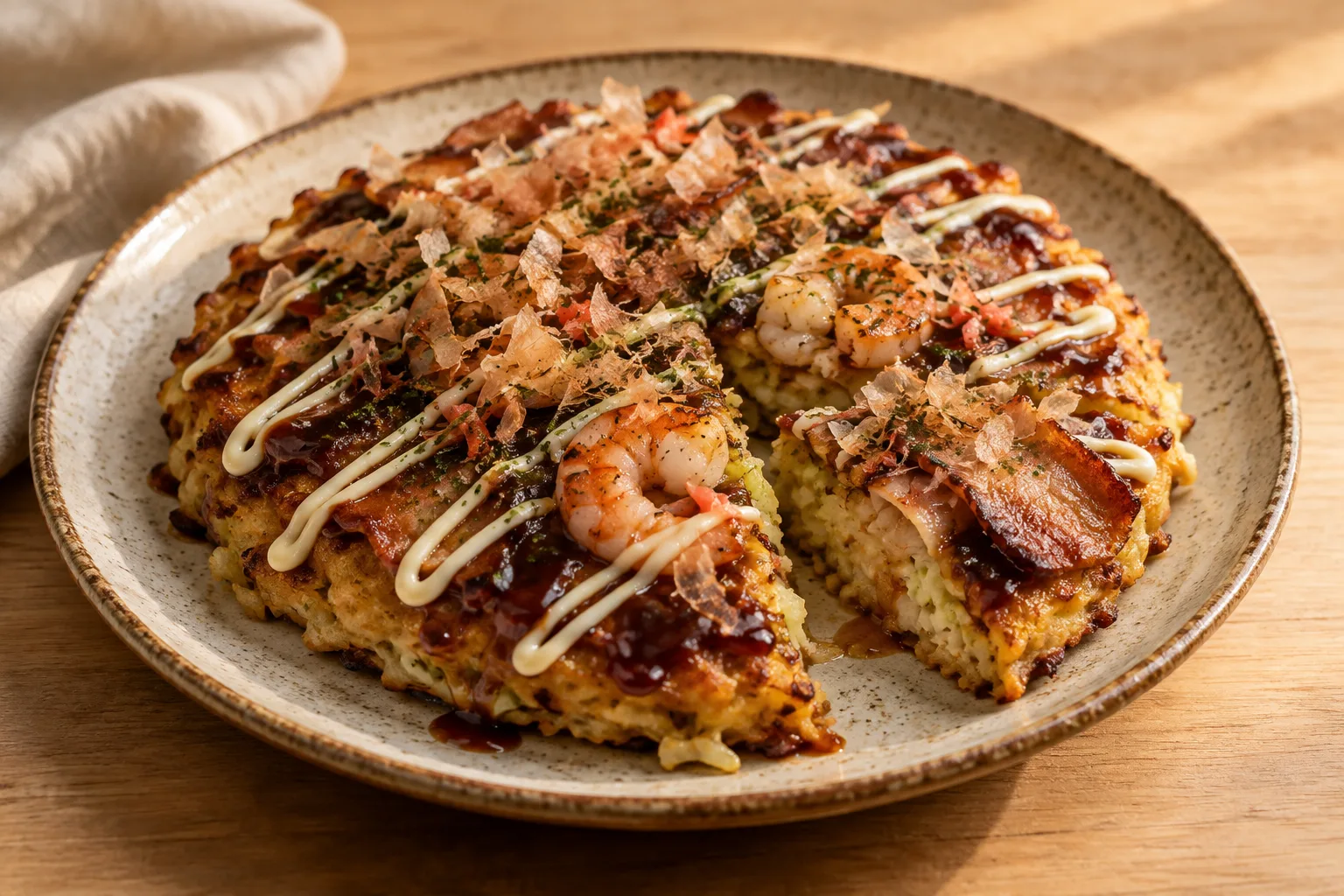
Use tenkasu when you want to add a crisp contrast to soft foods or dishes with broth. It is commonly used on takoyaki and okonomiyaki, and also works with udon or soba, soups, rice, and salads. In a hot or moist dish, it changes texture on contact with liquid and may soften; for the most noticeable crunch, add it at the end, just before eating. You can also mix it into okonomiyaki or takoyaki batter before cooking so the pieces are distributed through each bite.
How to use it
Add tenkasu as a topping at the end of cooking and serve promptly if you want to retain more of its crisp texture. Scatter it over takoyaki, okonomiyaki, noodles, rice, soups, or salads; in dishes with broth, contact with liquid will gradually soften it. You can also mix it into okonomiyaki or takoyaki batter before cooking, distributing the pieces throughout the dish. To make tenkasu at home while preparing tempura, drop small amounts of batter into the oil and collect the pieces once fried. Drain them on absorbent paper and, before storing, let them cool and dry completely before putting them in an airtight container.
Flavour and texture
Tenkasu has a mild fried flavor, sometimes slightly salty, and a light, crispy texture. Its small, irregular pieces contrast with silky noodles, rice, tender batter, and broth. When left on moist food or immersed in soup, it gradually softens, so when you add it has a strong effect on the final texture.
How to choose it
Look for packaged tenkasu at Japanese or specialty food shops, and check that the package is intact. Read the ingredient list and allergen information, since the batter may contain wheat flour and formulations can vary. If you are new to it, start with a small amount to judge how much crunch and fried flavor it adds to your dish.
Storage
Follow the package directions for store-bought tenkasu and reseal the packet between uses to help protect its texture. For homemade tenkasu, let the pieces cool and dry completely before storing them in an airtight container; moisture can make them lose their crunch. No universal storage duration is given here, since it depends on the product and how it was prepared.
Substitutions
For a close alternative, fry small drops of tempura batter and drain them; they may not have the same size or shape as packaged tenkasu. If you mainly want a crispy element, croutons can be used in soups or creamy dishes, though their flavor and texture will differ. Adjust the amount to suit the dish, and add the substitute at the end when you want it to stay crisp.
Common mistakes
Do not add it too early if you want it to stay crisp: broth, sauces, and other moist ingredients soften it. Do not expect it to replace a main ingredient; it works chiefly as a textural and flavorful addition. Avoid assuming every product has the same recipe: check the label, especially for wheat or other ingredients you need to avoid.
Safety and allergens
Check the ingredient and allergen information before eating, especially if you need to avoid wheat or gluten. For packaged products, follow the manufacturer's directions.
Culinary uses
- Cobertura crujiente
- Ingrediente para añadir textura a masas y platos
Recommended techniques
- Espolvorear justo antes de servir
- Incorporar a masas antes de cocinarlas
Pairs well with
- Takoyaki y okonomiyaki
- Udon, soba, sopas y cuencos de arroz
Frequently asked questions
What does tenkasu mean?
It is the name for small, crispy pieces of fried tempura batter; they are also called agedama.
What dishes can I use it in?
It is used with takoyaki and okonomiyaki, and can also be added to udon, soba, soups, rice, and salads.
How can I keep it crispy?
Add it just before serving and eating. If it comes into contact with broth or sauce, it will gradually soften.
Sources and review
Automatically researched, cross-checked and validated content. Sources consulted:
- ¿Por qué la muerte es origen de miedos y tabúes? doi.org
- Client Challenge doi.org
- Técnicas de cocina moderna y vanguardista | Fish Solutions : Pescanova Fish Solutions fishsolutions.pescanova.es
- Eating a Moment - Reed Magazine - Reed College reed.edu
- Tenkasu. Qué es, para qué se usa y cómo sacarle partido en casa abc.es
- Todo sobre el Tenkasu directoajapon.com
- Qué es el tenkasu, cómo se hace las bolitas crujientes típicas de la cocina japonesa y en qué platos se usa directoalpaladar.com
- Tenkasu o tenkatsu, qué es y como se hace cocinista.es
- Tenkasu - Wikipedia, la enciclopedia libre es.wikipedia.org
- - YouTube youtube.com
- Tenkasu (cocina japonesa) es.gastronomiac.com
- Cocinar al estilo japonés: las técnicas básicas – iRASSHAi irasshai.co
- Flor de lubina - Receta de Samuel Naviera | aquanaria aquanaria.com