- Category
- Dairy and eggs
- State
- Canned
- Usual unit
- ml
What it is
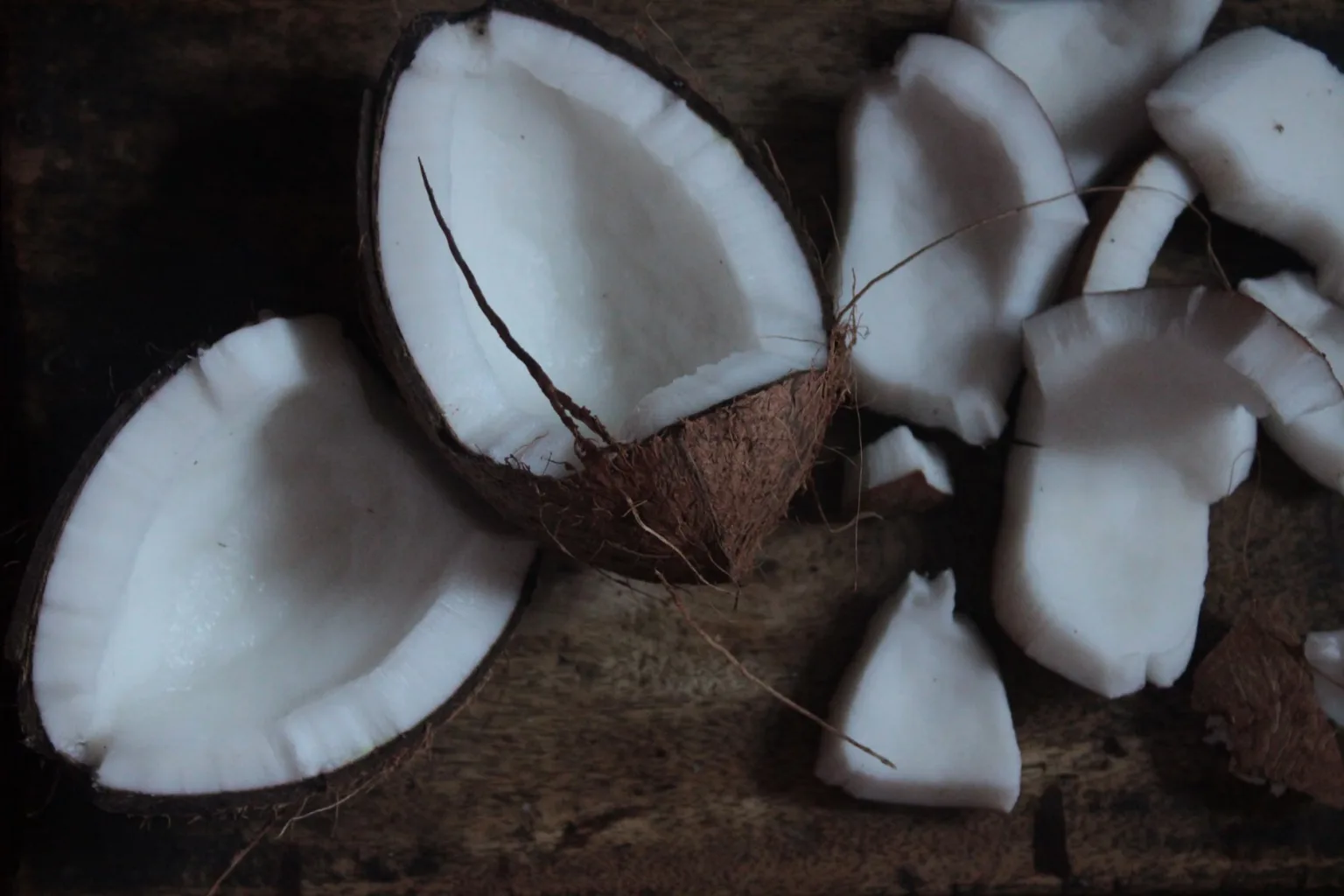
Thick coconut milk is made by combining grated or crushed mature coconut flesh with water and straining or filtering the mixture. In traditional preparation, the first extraction is thicker; later extractions, made with added water, are thinner. Commercial products can be creamy or visibly separated, and labels do not use terms such as milk, cream and coconut cream consistently. Check the product name and ingredient list rather than relying on the word “cream” alone. Coconut milk is not coconut water, the liquid naturally found inside the fruit, and it is not necessarily the lighter coconut drink sold in cartons. It is also different from sweetened cream of coconut, which is used for particular dessert and cocktail applications.
When to use it
Choose thick coconut milk when you want to add body and a creamy texture to curries, soups or sauces, or when you want coconut flavor to come through in rice, fish or seafood dishes. It can also be used in desserts and drinks, bearing in mind that commercial products vary in thickness and composition. For a recipe that depends on a rich consistency, check that you have unsweetened culinary coconut milk or cream rather than a light coconut drink or sweetened cream of coconut. A lighter product can change both the body and intensity of the finished dish; the product name alone does not guarantee the same texture from one brand to another.
How to use it
Read the label before opening the package so you can distinguish culinary coconut milk or cream from coconut drink and sweetened cream of coconut. If you find a thick layer and a thinner liquid, separation can be normal in products without stabilizers and does not, by itself, show that the product has spoiled. Shake the closed container or stir the contents thoroughly to combine them before measuring; some labels specifically recommend shaking. Add it to curries, soups or sauces for creaminess, or use it in rice, fish and seafood dishes. It can also be incorporated into desserts and drinks. Canned coconut milk may look solid and become liquid with heat. Adjust the amount to the consistency your recipe needs, because products vary in their coconut-to-water proportions and thickness.
Flavour and texture
It has a recognizable coconut flavor and a creamy, rich mouthfeel; strength and thickness depend on the coconut-to-water proportion and the product. Some cans have a thick or solid layer separated from a thinner liquid. Mixing combines the phases, while heat can liquefy the contents. Lighter versions generally provide less body than thick coconut milk.
How to choose it
Check the product name, ingredient list and package format: culinary coconut milk or cream is not the same as coconut drink, coconut water or sweetened cream of coconut. Commercial names do not always clearly distinguish milk from cream, and consistency is not standardized across products. If you want a pronounced, thick result, compare ingredient lists and the coconut extract percentage when stated, and look for any instruction to shake before use.
Storage
Follow the storage directions printed on the package, since the available evidence does not establish one universal storage period for every brand and format. Before opening, store it according to the manufacturer’s instructions. After opening, consult the label for handling and storage guidance rather than assuming a time limit from appearance alone. If the contents have separated, combine the phases before judging the texture, as separation can be normal.
Substitutions
For a less thick result, use a lighter coconut milk and expect less body. A coconut drink may work in preparations where a lighter texture is acceptable, but it is not an identical substitute for thick culinary coconut milk. Sweetened cream of coconut is also not a direct replacement in savory dishes because it adds sweetness and has a different intended use.
Common mistakes
Confusing culinary coconut milk with coconut water, a light coconut drink or sweetened cream of coconut can significantly change a recipe. Another mistake is assuming that a separated or uneven-looking product has spoiled without checking the label: separation can occur in coconut milk without stabilizers. Shake or stir as directed, and remember that thickness varies between brands.
Safety and allergens
Follow the package’s handling and storage directions. The available sources provide no specific official safety warning for this ingredient; do not use a package that is damaged or a product with clear signs of spoilage.
Culinary uses
- Base cremosa para sopas, curris y salsas
- Aporta sabor a coco y cuerpo a platos de arroz y preparaciones dulces
Recommended techniques
- Agitar o mezclar antes de usar para volver a integrar las fases separadas
- Incorporar a sopas, curris o salsas; la leche de coco en lata puede pasar de sólida a líquida con calor
Pairs well with
- Curris y sopas
- Arroz, pescado y mariscos
- Postres de fruta y chocolate
Frequently asked questions
Is thick coconut milk the same as coconut water?
No. Coconut milk is made by crushing coconut flesh with water; coconut water is the liquid naturally found inside the fruit.
Why has my coconut milk separated into thick and thin layers?
Some products separate naturally, particularly when they do not contain stabilizers. Shake or stir to combine the contents and follow the package directions.
Can I replace thick coconut milk with coconut drink?
You can if a lighter result is acceptable, but the products are not equivalent and the dish will have less body.
Estimated nutrition
- Fat
- 2.7 g
- Saturates
- 1.68 g
- Carbohydrate
- 21.2 g
- Sugars
- 20.8 g
- Fibre
- 0.3 g
- Protein
- 3.05 g
- Salt
- 0.28 g
Sources and review
Automatically researched, cross-checked and validated content. Sources consulted:
- ¿Por qué la muerte es origen de miedos y tabúes? doi.org
- La leche de coco a examen - Formacion en Gastronomia formacionengastronomia.com
- Qué es la leche de coco, cómo utilizarla en cocina y siete recetas en la que brilla directoalpaladar.com
- La Leche de Coco: Un Ingrediente Esencial en Tu Cocina Profesional - Rodrigo Alimentación rodrigoalimentacion.com
- GESTIÓN INTEGRAL DE CUENCAS Y ASENTAMIENTOS ... digitalrepository.unm.edu
- Ideas para Vivir Saludable s3.wp.wsu.edu
- Glosario Bilingüe de Términos Educativos aps.edu
- la lucha p-w-islandoraweb01.library.ucla.edu
- Leche de coco - Wikipedia, la enciclopedia libre es.wikipedia.org
- - YouTube youtube.com
- Leche de coco | JUST SPICES® | JUST SPICES ® justspices.es