- Category
- Dairy and eggs
- State
- Paste
- Usual unit
- g
What it is
Thick dulce de leche for baking, also called pastry-style dulce de leche, is a firmer, more concentrated variety than classic or table dulce de leche. Its texture makes it useful in pastry where a filling or decoration needs to hold its shape. Products are not necessarily identical: some formulations include thickening ingredients such as glucose or starch to create a firmer consistency. Treat “for baking” or “pastry-style” as a guide to intended use and texture, and check the specific product label. It is a sweet milk-based paste rather than a pourable sauce; its characteristic role is to add both flavor and structure to sweet preparations.
When to use it
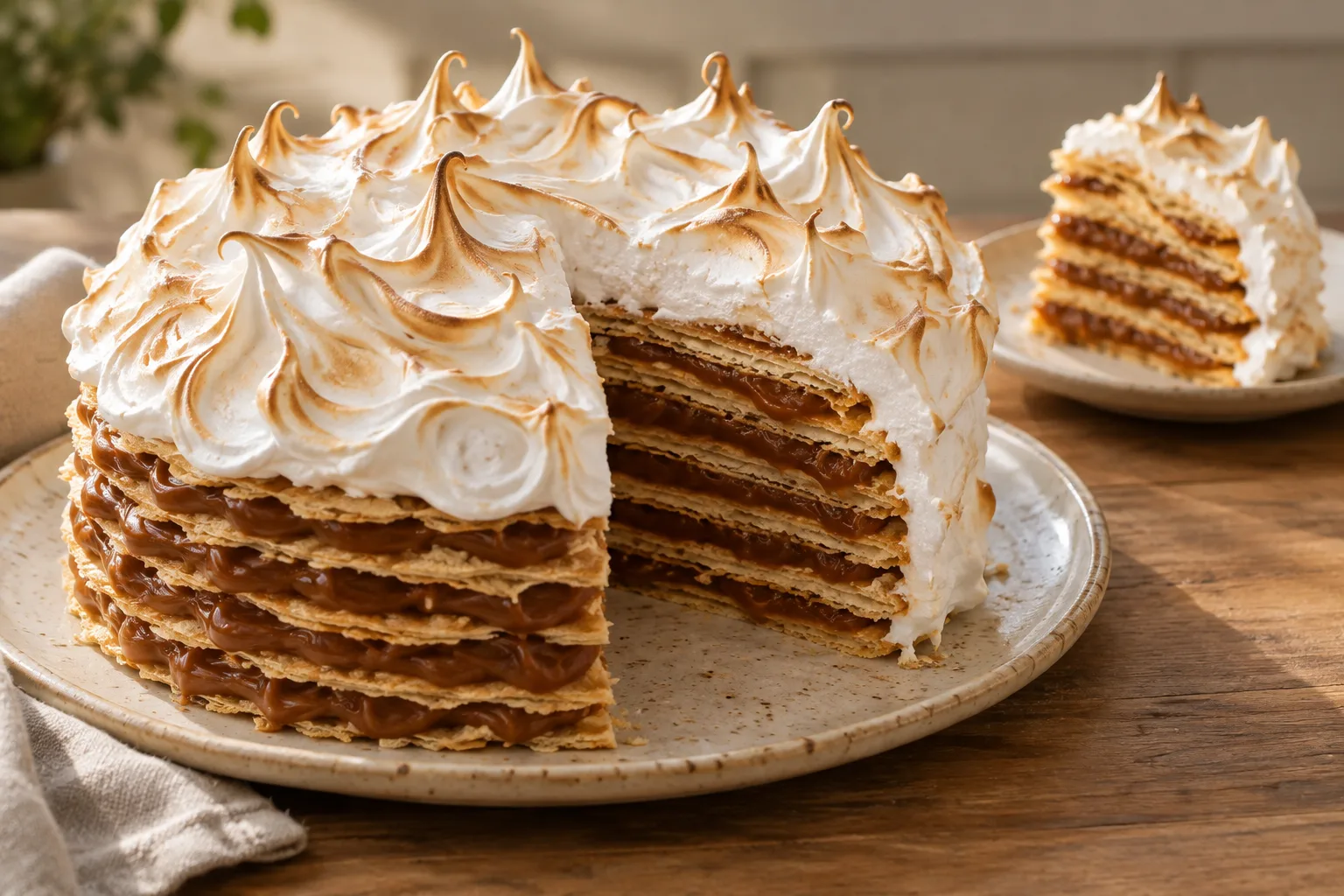
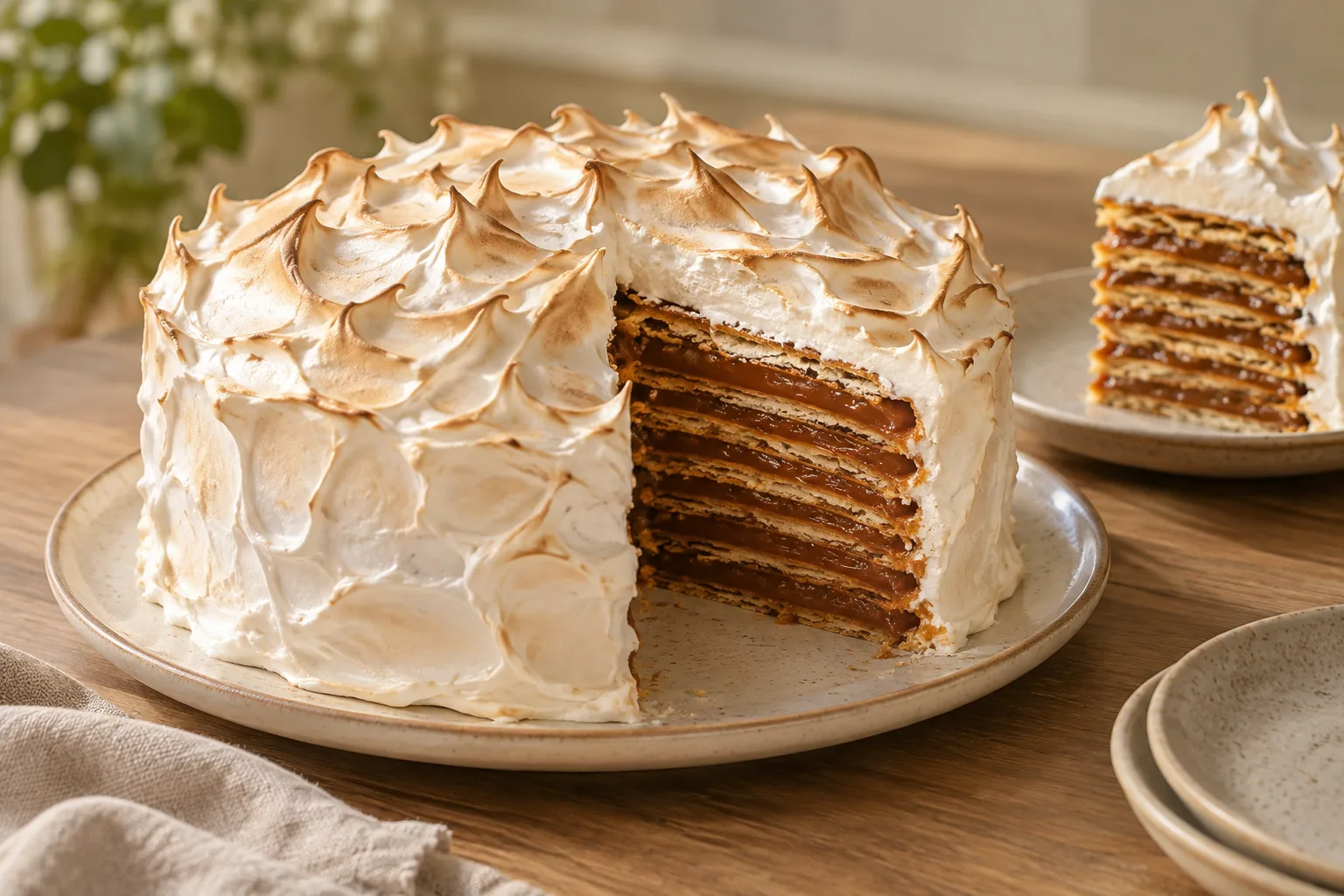
Choose this variety when you want a filling to stay in place as you assemble or cut a dessert, such as alfajores, cake layers or filled pastries. It is also useful for piping shapes and decorations, or for making ribbons of dulce de leche in ice cream. For spreading on toast or making a fluid sauce, classic dulce de leche is often a better fit because it is less firm. Choose according to the result you want: the pastry variety gives more body, but not every brand has exactly the same consistency.
How to use it
Use thick dulce de leche directly as a filling for alfajores, cakes, sponge cakes and other sweet pastries; spread a layer that can be enclosed or covered without spilling out. Its texture also makes it suitable for piping rosettes, swirls or decorative lines. In ice cream, add it as ribbons to keep distinct streaks rather than mixing it in completely. Check the product’s firmness before you begin and follow the recipe instructions, since brands and formulations can differ. If you need a more fluid result, consider that classic dulce de leche is less firm rather than assuming the pastry variety will behave like a sauce.
Flavour and texture
It has the sweet, milky, caramel-like flavor associated with dulce de leche. Compared with the classic variety, it is usually denser, more concentrated and firmer, and may look more opaque. Its body helps fillings and decorations hold their shape, though the result depends on each product’s formulation.
How to choose it
Look for “pastry-style,” “for baking” or an equivalent description on the package to identify a variety intended for fillings and pastry work. Check that the product suits your planned use, and remember that some formulations include thickening ingredients. If you need a firm paste for piping or filling, do not choose by the generic name “dulce de leche” alone: classic and pastry varieties can have different consistencies.
Storage
Keep the product well sealed after use and follow the storage instructions on its package. The available guidance for this variety recommends keeping it sealed; there is no universal shelf life or single temperature instruction here that can be applied to every brand. Once opened, check the label for product-specific storage directions.
Substitutions
Classic dulce de leche can replace it in some fillings, but it is usually less firm and may run more; adjust the recipe to the texture and result you have. Cajeta is another milk-sweet in the same broad family, but the milk used and its flavor or consistency may differ. Neither substitute guarantees an identical result.
Common mistakes
Treating pastry-style dulce de leche like a thin sauce can make a preparation too dense. Another mistake is assuming all brands have the same firmness or that the classic variety will behave the same way in a filling or decoration. Check the label and account for the product’s texture before assembling your dessert.
Safety and allergens
This product is milk-based. If you have a milk allergy, avoid it unless the label confirms it is suitable for you; also check the package information and follow its storage instructions.
Culinary uses
- Relleno firme para productos de pastelería
- Cobertura y decoración de postres; vetas en helados
Recommended techniques
- Rellenar capas, alfajores y masas
- Aplicar con manga para decorar
- Formar vetas en helados
Pairs well with
- Alfajores y galletas
- Tortas y bizcochos
- Helados
Frequently asked questions
How is it different from classic dulce de leche?
The pastry variety is usually more concentrated and firm, while classic dulce de leche is lighter and more spreadable. The firmer type is chosen for fillings and decorations that need to hold their shape.
What can I use it for?
Use it to fill alfajores, cakes and sweet pastries, or pipe it as a decoration. It can also be added to ice cream as ribbons.
Do all brands have the same consistency?
Not necessarily. Formulations can vary, and some products include thickening ingredients. Check the label and consider the firmness of the product you buy.
Sources and review
Automatically researched, cross-checked and validated content. Sources consulted:
- ¿Por qué la muerte es origen de miedos y tabúes? doi.org
- Duke University Dissertation Template dukespace.lib.duke.edu
- elBulli: un nuevo lenguaje en la gastronomía repositorio.ucjc.edu
- Dulce de leche – Confiture de lait | Techniques de l'Ingénieur doi.org
- la lucha p-w-islandoraweb01.library.ucla.edu
- facultad de pregrado repositorio.unitec.edu
- Tipos de dulce de leche: variedades, usos en la cocina y versatilidad gourmet - MrTango mrtango.es
- Dulce de leche: 7 puntos esenciales sobre su origen, historia, usos, beneficios y curiosidades - Tropicalia Alimentación tropicaliaonline.com
- Dulce de leche - Wikipedia, la enciclopedia libre es.wikipedia.org
- Dulce de leche: el postre de Latinoamérica | Recetas Nestlé recetasnestle.com.ar
- ¿De dónde viene el dulce de leche? Origen e historia | Gastronosfera gastronosfera.com
- Dulce de leche repostero: diferencias y aplicaciones saborescreativos.com
- Receta Dulce de leche【¿Cómo se hace el dulce de leche?】 deliargentina.com
- - YouTube youtube.com