- Category
- Meat
- State
- Fresh
- Usual unit
- g
What it is
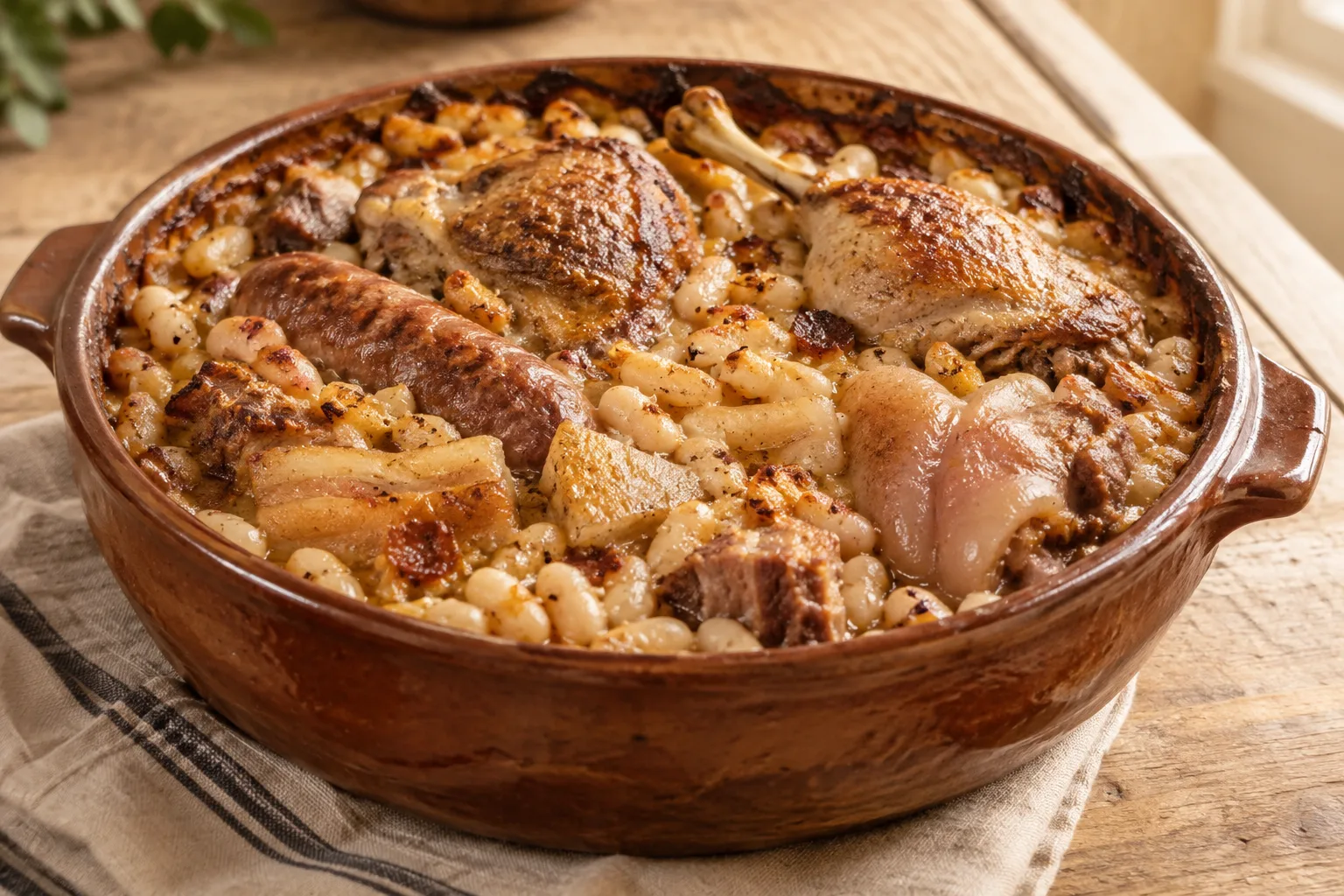
Toulouse sausage is a fresh sausage associated with the French city of Toulouse. The available description characterizes it as minced pork mixed with water, salt, sugar, and pepper, then stuffed into a casing. It is often sold in a coiled link. Recipes and presentation may vary by producer, so check the label rather than assuming every sausage has exactly the same ingredients. It is known as an ingredient in Toulouse cassoulet, a white-bean stew that may also include duck confit and other meats. It is also served grilled. This is not a cured sausage intended to be eaten as-is: the consulted description presents it as raw and says it is cooked before consumption.
When to use it
Use it when you want to add a fresh pork sausage to a hearty hot dish. Its most characteristic use in the consulted sources is cassoulet, with white beans and duck confit; local recipes vary in their other ingredients. It also works as a main item grilled or cooked on a griddle, and it can be fried or oven-cooked. Choose the method to suit the dish: in a stew it joins the other ingredients, while grilled it can be served on its own or with a side. Always check the package directions, since sausage specifications can differ between producers.
How to use it
Keep the sausage raw until cooking and follow the package directions. You can grill or barbecue it, cook it on a griddle, fry it, or bake it; the consulted sources list these as ways to prepare it. For cassoulet, include it as one of the meat components alongside white beans; duck confit and other ingredients are common in Toulouse versions, though recipes vary. You can also serve it as a main dish with a simple side. Do not treat it as a cured sausage or assume it is ready to eat without cooking: the available description identifies it as fresh and raw before preparation. For cooking and storage, give priority to the label and the seller’s instructions.
Flavour and texture
The consulted description gives Toulouse sausage a straightforward pork profile seasoned with salt and pepper; another source also mentions garlic, so recipes may differ. The casing shapes it as a sausage, while the minced meat gives it the texture of a fresh sausage. Do not assume every version has the same thickness, seasoning, or ingredients. In cassoulet it shares the dish with beans and other meats; grilled, it serves as a meat portion in its own right.
How to choose it
Look for the product name and read the label to confirm that you are buying a fresh sausage rather than a cured one, and to check its ingredients. The consulted description mentions coiled links, but not every producer has to present them that way. A local tourism source mentions Label Rouge products in supermarkets and artisan sausages at producer markets; this is shopping context, not a guarantee of availability or quality for every product. If a recipe depends on a particular ingredient list, check the label.
Storage
The available evidence does not establish a universal storage period or temperature. One general description says the sausage should not be kept for more than a week, but that statement is not enough to set a rule for every product and package. Check the use-by date and storage directions from the maker or seller, keep it as directed, and use it by the stated date. Do not assume it can be stored like a cured sausage: it is described as fresh.
Substitutions
Fresh butifarra is a close alternative, as the source compares it with Toulouse sausage. Aragón-style longaniza is also described as similar. Neither is identical: seasoning, shape, and ingredients may differ, so check the label and adjust the dish’s seasoning. In cassoulet, a similar-style fresh pork sausage can serve a comparable role, although the sources do not establish an exact substitute.
Common mistakes
Do not confuse this fresh sausage with a cured sausage that is ready to eat. Do not assume every version has the same ingredients: the available descriptions do not fully agree on the seasonings. Nor should you treat one cassoulet recipe as the only valid version; the local tourism source says recipes vary by cook. If substituting butifarra or longaniza, allow for differences in flavor and ingredients.
Safety and allergens
It is described as a fresh sausage that is raw before cooking; do not eat it raw. Follow the package or seller’s cooking and storage directions. The supplied evidence does not include a specific official temperature or storage recommendation.
Culinary uses
- Ingrediente de cassoulet
- Salchicha para asar y servir como plato principal
Recommended techniques
- A la parrilla o a la brasa
- A la plancha o frita
- Al horno
Pairs well with
- Alubias blancas y confit de pato, especialmente en cassoulet
- Ajo, cebolla y panceta en preparaciones de cassoulet
Frequently asked questions
Is Toulouse sausage eaten raw?
Do not treat it as a cured, ready-to-eat sausage. The available description identifies it as fresh and raw before cooking; follow the package directions.
What dishes use Toulouse sausage?
Its best-known use in the consulted sources is Toulouse cassoulet. It can also be grilled, griddled, fried, or cooked in the oven.
What can I use instead?
Fresh butifarra and Aragón-style longaniza are cited as similar sausages. They are not identical, so check their ingredients and seasoning.
Sources and review
Automatically researched, cross-checked and validated content. Sources consulted:
- ¿Por qué la muerte es origen de miedos y tabúes? doi.org
- The Essential Glossary of Cooking Terms for the Culinary Arts - Escoffier escoffier.edu
- Tesis Septiembre 2017 repositorio.ucam.edu
- Noticias del exterior mapa.gob.es
- The Distributional Consequences of Large Devaluations fordschool.umich.edu
- 120 aiu.edu
- La Ignota Lingua de Hildegarda de Bingen repositori.upf.edu
- Alianzas Antimodernas: Estudios del Cine Español del ... academicworks.cuny.edu
- Salchicha de Toulouse - Wikipedia, la enciclopedia libre es.wikipedia.org
- Salchicha de Toulouse: platos, usos y origen menuella.com
- Las especialidades culinarias de Toulouse - Toulouse Tourisme toulouse-tourisme.com
- Gastronomía Toulouse: 15 platos típicos que comer y especialidades viajarfrancia.com