- Category
- Meat
- State
- Fresh
- Usual unit
- unit
What it is
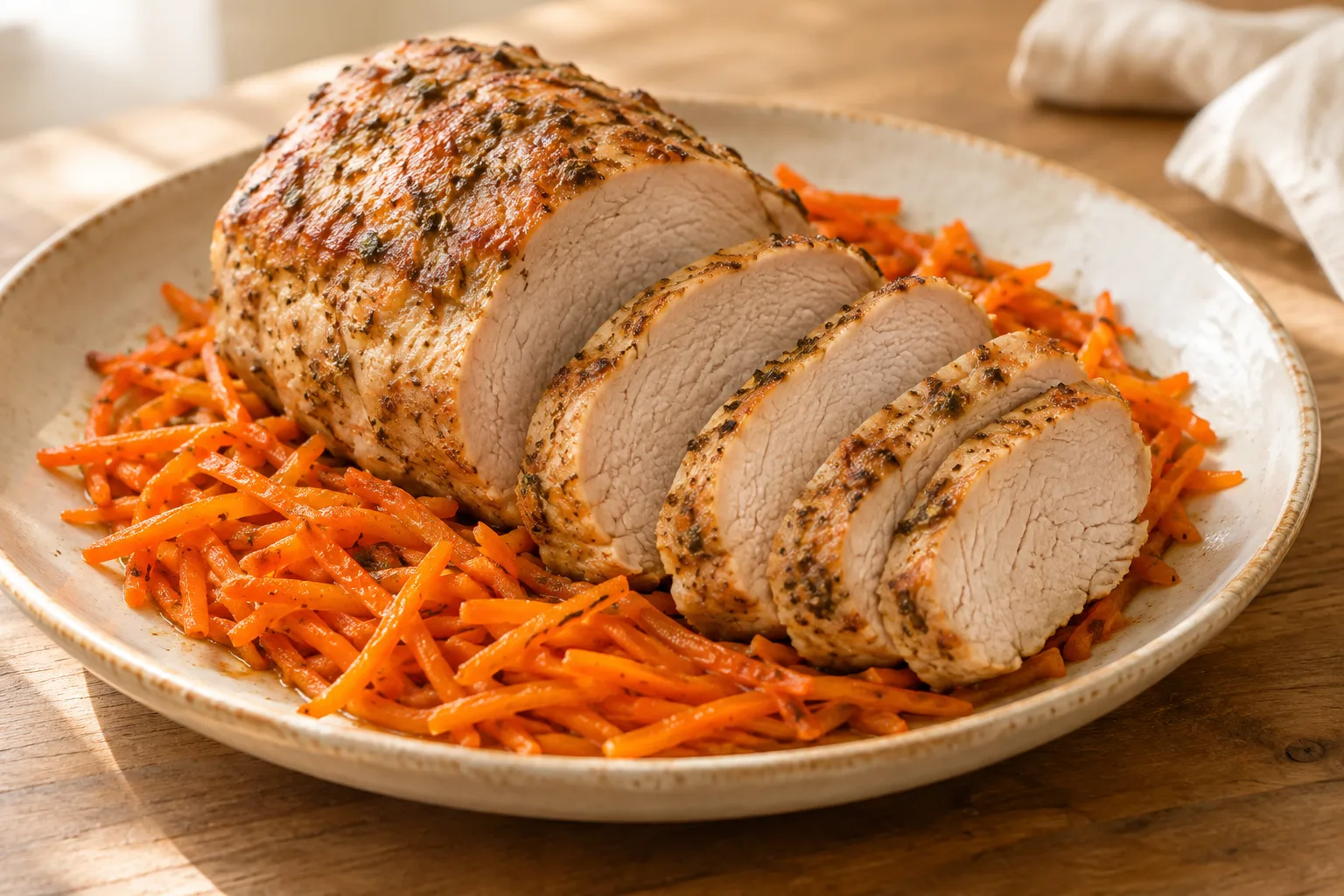
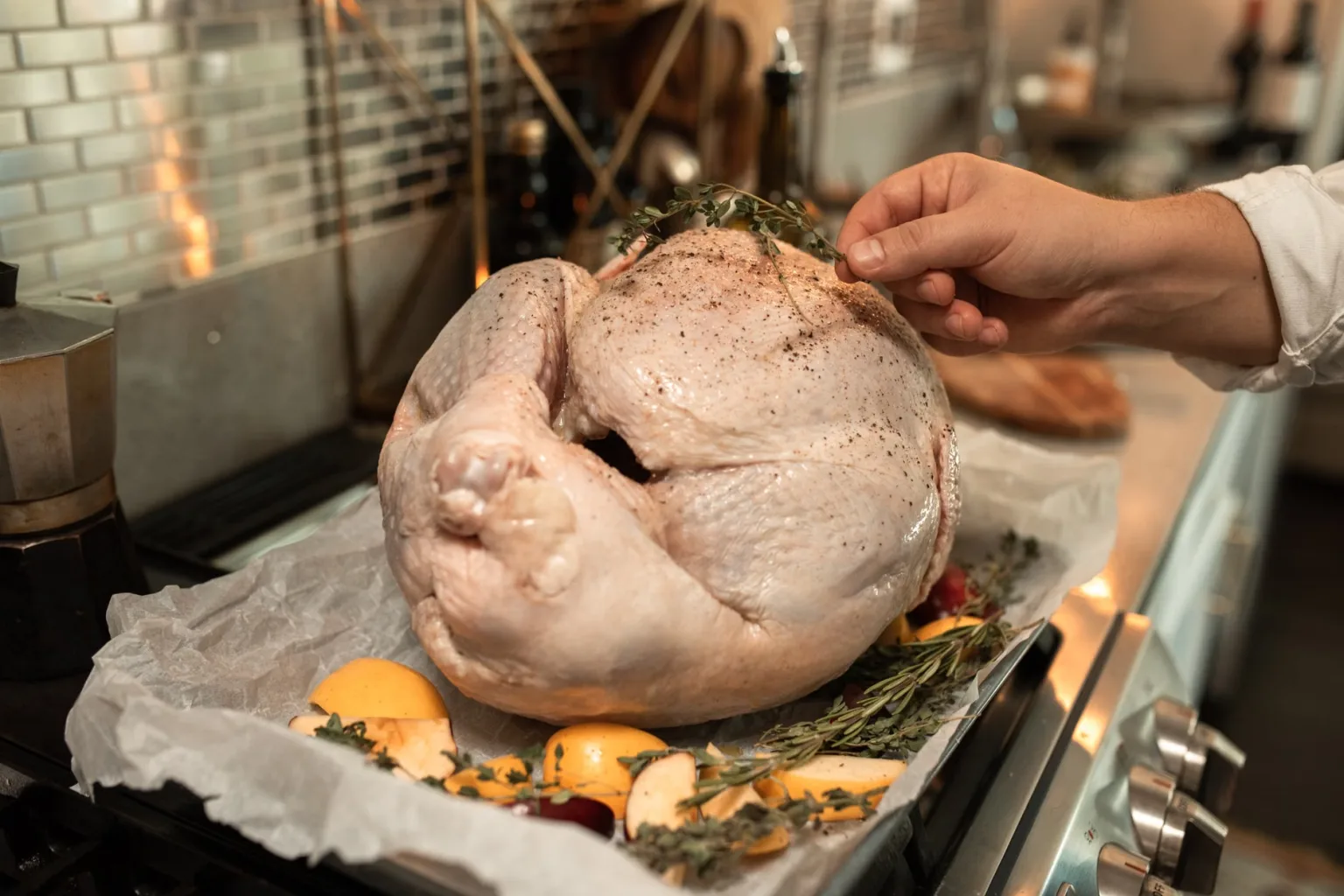
Turkey round roast is poultry formed into a compact cylinder so it can be cooked whole and served in slices. The name does not guarantee one standard recipe or composition. Some versions are made from a whole turkey breast held together with string or netting; others are prepared meat products made with turkey pieces, brine, seasonings or other ingredients. Stuffed versions are also available. Do not assume that every roast contains only turkey or is unseasoned: check the product name, ingredient list and allergen information. Depending on the product and seller, it may be sold fresh or frozen.
When to use it
Choose it when you want a centrepiece that can be cooked whole and served in neat slices, for an everyday meal or a special table. A plain breast version works with browning and cooking alongside vegetables and sauce; stuffed or seasoned versions already bring additional flavours, so adjust the accompaniments accordingly. Leftovers can be sliced and served with sauce or used in another meal. Before planning, check whether the roast is raw, stuffed, seasoned or frozen, and follow the instructions supplied for that product.
How to use it
Read the label before preparation: the cylindrical shape may describe a tied turkey breast or a prepared product with added ingredients. If the roast has string or netting, leave it in place during cooking only when the product instructions permit this, and remove it before slicing when appropriate. Common approaches include browning the piece on its sides and continuing to cook it in a casserole or oven with onion, carrot, stock or other accompaniments; it can also be braised in sauce. Allow the roast to settle before slicing for cleaner cuts. Serve the slices with the cooking juices or a sauce. Do not treat a recipe's cooking time as universal: size, stuffing and product format differ, so follow the instructions for the specific product.
Flavour and texture
Flavour and texture depend on the cut and its composition. A roast made from turkey breast has a mild profile and can become dry if overcooked; sauce and cooking juices add moisture. Stuffed, seasoned or brined products may taste more strongly seasoned and have a different texture. The product label helps distinguish these versions before cooking.
How to choose it
Choose by composition and intended use, not by shape alone. Check whether it is a turkey cut or a prepared product, whether it is stuffed or seasoned, and whether it is sold fresh or frozen. Read the ingredient and allergen information: some prepared products contain milk, soy or wheat. Check the package for the seller's storage and preparation instructions too.
Storage
Store the roast according to the instructions on its label; fresh and frozen products do not necessarily have the same requirements. Follow the stated date and the manufacturer's storage and use guidance. For a packaged roast, keep the packaging or product information available so you can check its ingredients, allergens and directions. Do not apply one general storage period to every version.
Substitutions
For a recipe calling for a round roast, a whole turkey breast can work if rolled or tied into a compact shape. Another turkey cut suitable for roasting may also be used, but differences in thickness, shape and stuffing will affect the result and cooking. Recheck the recipe before substituting for a purchased roast that is already seasoned, stuffed or made with added ingredients.
Common mistakes
A common mistake is assuming every turkey round roast is pure turkey breast: some are prepared products containing brine, stuffing, soy, milk or wheat. Avoid transferring a cooking time from one recipe to a different piece, and do not slice the roast before it has settled. Check the label and adapt your method to the specific product.
Safety and allergens
Follow the package directions for storage, preparation and safe use. For prepared products, check the ingredient list and allergen information carefully; composition can vary between brands and versions.
Culinary uses
- Main course
- Roast or braise for slicing
Recommended techniques
- Roasting
- Searing
- Braising
Pairs well with
- Onion, carrot and mushrooms
- Fruit or dried fruit, such as apple, prunes or raisins
- Herbs, spices and pan sauces
Frequently asked questions
Is turkey round roast always just turkey meat?
No. It may be a tied breast, but some products are prepared with added ingredients or stuffing. Check the ingredient list.
Is it sold fresh or frozen?
That depends on the product and seller. Check the package for its state and storage instructions.
What goes well with turkey round roast?
The recipes consulted pair it with vegetables and sauces, as well as ingredients such as apple, raisins, prunes or mushrooms. Adjust the sides if the roast is already stuffed or seasoned.
Estimated nutrition
- Fat
- 9.37 g
- Saturates
- 3.37 g
- Carbohydrate
- 0 g
- Sugars
- 0 g
- Fibre
- 0 g
- Protein
- 26.8 g
- Salt
- 0.09 g
Sources and review
Automatically researched, cross-checked and validated content. Sources consulted:
- En el etiquetado alimentario hay algunas menciones que son obligatorias eletiquetadocuentamucho.aesan.gob.es
- ¿Por qué la muerte es origen de miedos y tabúes? doi.org
- Recetas con redondo de pavo: irresistibles y fáciles cookpad.com
- Redondo de pavo relleno - Gallina Blanca gallinablanca.es
- Redondo de pavo - Disanfrio disanfrio.com
- Redondo de pavo mardequel.com
- Redondo de pavo al horno con beicon, receta de Navidad fácil y deliciosa lecturas.com
- Redondo de pavo crudo relleno con ciruelas y piñones – La Sirena – 800 g es.openfoodfacts.org
- REDONDO DE PAVO RELLENO - Guisándome La Vida guisandomelavida.com
- Receta de Redondo de pavo recetascomidas.com
- Redondo de pechuga de pavo en olla rápida morguix.com
- Redondo de pavo congelado en piezas de 2kg - Canary Meat canarymeat.es
- Gastronomía de Chile - Wikipedia, la enciclopedia libre es.wikipedia.org
- Redondo de Carne: Comparativa de Sabores y Texturas en el Mundo de los Embutidos donquesotori.es
- Redondo de pavo con salsa de calabaza especiada en Instant Pot bylauragarcia.com
- Deliciosa Receta de Redondo de Pavo al Horno: Paso a Paso para Sorprender en la Mesa - cafe-restaurantecheca.es - Blog Informativo cafe-restaurantecheca.es
- Redondo de pavo con piña - Cocinando con las Chachas cocinandoconlaschachas.com