- Category
- Herbs and spices
- State
- Dry
- Usual unit
- unit
What it is
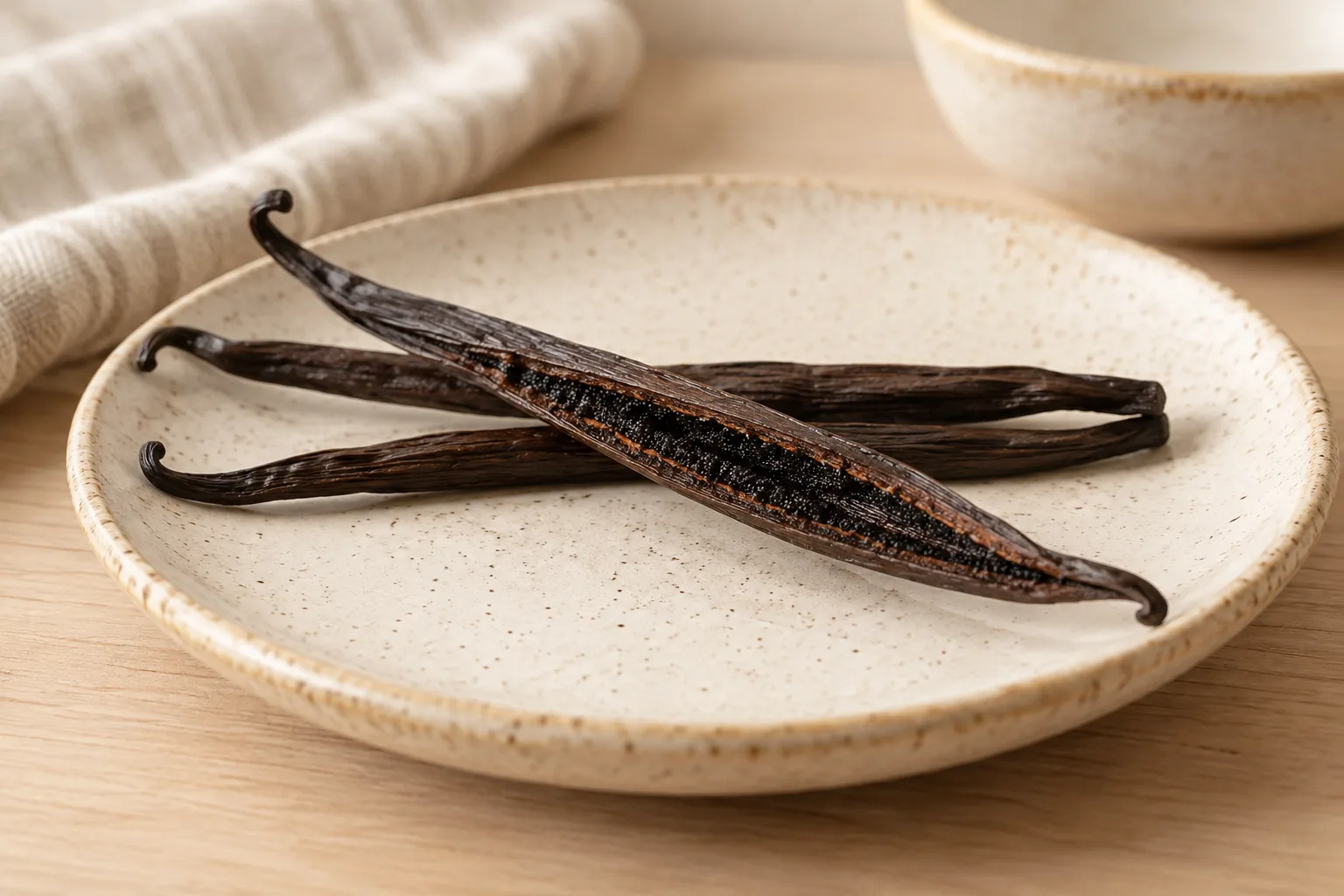
A vanilla pod is the long, cured fruit of an orchid in the Vanilla genus. It is sold dark and aromatic after curing and drying, and contains many tiny seeds inside. In cooking, both the seeds and the whole pod can be used to add aroma. Intensity and flavor notes can vary with the variety and product, so check the label rather than assuming that an extract, powder, or paste is identical to a whole pod.
When to use it
Use vanilla when you want a warm, sweet aroma to complement or stand out alongside other ingredients. It is commonly used in custards, ice cream, batters, and preparations with milk or cream, and can also add a subtle aromatic note to drinks or savory dishes. A whole pod is useful when you want the seeds to remain visible in the finished dish. When choosing between a pod, extract, paste, or powder, consider the texture you want and check the product ingredients.
How to use it
Place the pod on a board and split it lengthwise with a knife. Scrape out the seeds with the back of the blade and add them to your preparation. To flavor a liquid, add the opened pod as well so its aroma can infuse during preparation; remove it before serving if you do not want it in the finished dish. You can also stir the seeds directly into a batter or cream. If replacing the pod with extract, paste, or powder, follow that product’s directions because concentrations and added ingredients can differ.
Flavour and texture
Vanilla is generally sweet, fragrant, and warm, with notes that can suggest flowers, wood, spice, or licorice depending on the variety. Its seeds are tiny and visible as specks; the pod is long and dark and should retain some flexibility. Do not assume that every product labeled vanilla tastes exactly like a whole pod: extracts, powders, and pastes can have different ingredients and profiles.
How to choose it
Look for dark, aromatic, flexible pods that bend without feeling hard or brittle. Do not choose by length or appearance alone: variety and curing also affect the flavor profile. Check the package and label to confirm whether you are buying a whole pod or a vanilla product with other ingredients. Differences between varieties are normal and can result in distinct aromas.
Storage
Keep the pod in a closed package and protect it from moisture and strong odors to help preserve its aroma. Avoid leaving it exposed to air for long periods, as it may lose moisture and become rigid. Flexibility is a practical sign that it is not excessively dry, but the available evidence does not establish a universal storage period or a specific storage temperature.
Substitutions
You can replace a pod with vanilla extract, paste, or powder, but check the label: some powders and pastes include sugar or other ingredients, and flavored products do not necessarily reproduce the full profile of a pod. Vanillin is also sold as an aromatic alternative, but may give a less complex result. Adjust the amount according to the directions for the product you choose.
Common mistakes
Do not use only the seeds if you want to make use of the whole pod’s aroma: the split pod can also infuse a liquid. Do not assume a dry, brittle pod will be more aromatic; flexibility is recommended as a buying cue. Also, do not treat vanilla powder, extract, paste, and vanillin as interchangeable products; check their ingredients and form.
Safety and allergens
Use products labeled for food use and follow package directions, particularly for extracts, pastes, and powders, whose ingredients can vary. The available evidence identifies no specific safety warning for vanilla pods.
Culinary uses
- Aromatizante para preparaciones dulces
- Acento aromático en algunas preparaciones saladas
Recommended techniques
- Abrir la vaina a lo largo y raspar las semillas
- Infusionar las semillas y la vaina en un líquido
- Añadir las semillas directamente a una preparación
Pairs well with
- Leche y crema
- Chocolate
- Frutos secos, como la nuez
- Cremas, helados y masas de repostería
Frequently asked questions
Should I use the seeds or the pod as well?
You can use both. Scrape out the seeds and add the opened pod to a liquid you want to flavor.
How can I choose a good vanilla pod?
Look for an aromatic, flexible pod that is not dry or hard. Color and flavor notes can vary between varieties.
Can I replace a pod with extract?
Yes. Vanilla paste and powder are other options, but check the label and directions because their ingredients and strength may differ.
Sources and review
Automatically researched, cross-checked and validated content. Sources consulted:
- Origen, curiosidades y recetas con vainilla hola.com
- ¿Por qué la muerte es origen de miedos y tabúes? doi.org
- filling gender gaps: determining how traditional knowledge of experts.esf.edu
- Rollo de Nuez 1969 (Nut Roll) - lacocina.utsa.edu
- CALIDAD DE VAINILLA (Vanilla planifolia Jacks. ex Andrews ... ageconsearch.umn.edu
- o_67a5b6babd88db84 wakehealth.edu
- Plan de negocios para producción de Vainilla de Tahití ( ... bdigital.zamorano.edu
- ENH1392s/EP661: Producción natural del extracto de vainilla ask.ifas.ufl.edu
- Vainilla en repostería: usos, extracción y calidad pastrypedia.net
- ¿Cuántos tipos de vainilla existen? - Blog de La Parada de las Especias comprarespecias.net
- descripción para la categoría VAINILLA : SOC Chef - Productor y Recolector de ingredientes naturales, apasionado por la gastronomía socchef.com