- Category
- Drinks
- State
- Liquid
- Usual unit
- l
What it is
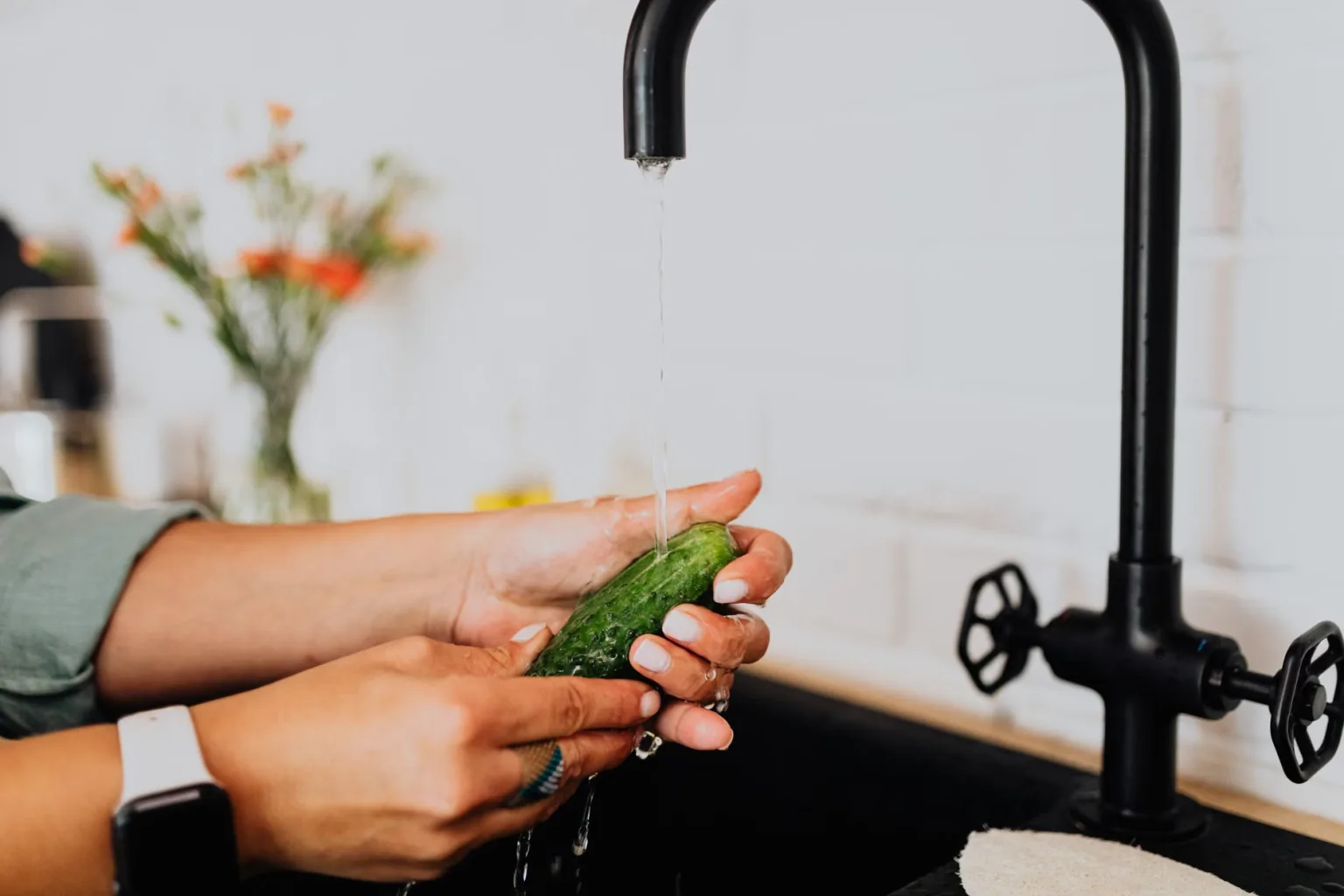
Rinsing water is not a special variety of water; it is water used to rinse ingredients during food preparation. It can be used to wash fruit and vegetables or to cool vegetables after blanching. Because this water comes into direct contact with food, its quality matters and may affect food odor or flavor. Municipal water and water from private sources do not necessarily have the same oversight. For private sources, the available evidence highlights the importance of checking water safety. Water used for rinsing should be suitable for food contact, rather than simply being whatever water is available in the kitchen.
When to use it
Use rinsing water when washing fruit or vegetables before cutting, cooking, or serving them. It can also be used to cool vegetables after blanching, provided the water is safe for that contact. Pay particular attention to the water source when preparing ingredients that will be eaten raw. If the water comes from a private well or spring, do not assume that it is safe: the available evidence on microgreens production emphasizes checking the quality of private sources. Rinsing water does not replace cleaning hands, utensils, or work surfaces.
How to use it
First check that the water is identified as suitable for drinking or food use in your area. Use it to rinse ingredients, and do not let food come into contact with a source whose safety you do not know. If using well or spring water, the available evidence stresses checking its quality; recommendations cited for microgreens apply specifically to that production context and should not be treated as universal household rules. Use safe water to cool blanched vegetables too. The available sources do not establish a universal rinsing ratio, temperature, or duration, so follow the needs of the food and local food-safety guidance.
Flavour and texture
Rinsing water has no distinctive culinary texture in this use, but water that contacts food can affect its odor or flavor if it has noticeable characteristics. One culinary source in the evidence says water quality matters during washing and that water should not have unusual flavors or odors. The available information does not support assigning this ingredient a characteristic taste or texture.
How to choose it
Choose water from a source identified as suitable for drinking in your area. If you rely on a private well or spring, do not assume it receives the same controls as a municipal supply; check its quality in line with applicable guidance. The available sources do not compare brands, bottled-water types, or household filters for rinsing, so they do not support recommending a particular option.
Storage
Water used directly from a supply does not usually need a special culinary purchase or storage routine. If you collect it before use, the available sources do not establish a storage method, container, or time limit, so precise instructions cannot be given without inventing details. Follow your water supplier’s guidance and local rules for any water stored for food use.
Substitutions
There is no different culinary ingredient that performs the same rinsing function as water. As an alternative source, municipal water identified as suitable for drinking may be used. Well or spring water should only be considered if its safety has been checked; the available sources do not support replacing rinsing water with seawater, cooking liquid, or other liquids.
Common mistakes
Do not assume a private water source is safe just because it looks clear, or that any water available in the kitchen is suitable for rinsing food. The evidence on microgreens notes that water can be a contamination route and distinguishes municipal from private sources. Do not mistake that production-specific guidance for a universal instruction covering every home kitchen.
Safety and allergens
For rinsing food, use water identified as suitable for drinking or food use in your area. If the safety of a private source is uncertain, do not use it for this purpose until it has been checked according to applicable guidance. Some available water-quality evidence concerns microgreens production and does not, by itself, establish a complete household standard.
Culinary uses
- Enjuagar frutas y verduras
- Aclarar ingredientes antes de prepararlos
Recommended techniques
- Enjuague bajo agua corriente
- Aclarado de vegetales tras el escaldado
Pairs well with
- Verduras y hortalizas frescas
- Frutas frescas
Frequently asked questions
What water should I use to rinse vegetables?
Use water identified as suitable for drinking or food use in your area. If it comes from a private source such as a well or spring, check its safety before using it.
Can I use well water to rinse food?
The available evidence does not establish that all well water is safe. It recommends checking private water sources; follow local guidance before using that water with food.
Does rinsing water have its own flavor or texture?
No characteristic flavor or texture is established for this category. However, noticeable properties of water may affect the odor or flavor of food it touches.
Sources and review
Automatically researched, cross-checked and validated content. Sources consulted:
- Client Challenge doi.org
- Comité Científico aesan.gob.es
- Food Safety Update - Fall 2022 class.ucanr.edu
- Free Standing, Slide In, and Drop In Electric housing.illinoisstate.edu
- EL AGUA COMO RECURSO GASTRONÓMICO - CORSA corsa.es
- Cómo el agua de mar realza los sabores en la cocina winbiaguademar.com
- inf% H e texashistory.unt.edu
- Alimentos para combatir los incendios forestales | Servicio de Extensión de OSU extension.oregonstate.edu
- El uso del agua en la cocina, uno de los ejes de Madrid Fusión 2024 | madrid fusión madridfusion.net
- De Compras Para la Salud: Mariscos - Ask IFAS ask.ifas.ufl.edu
- Project MUSE -- Verification required! muse.jhu.edu
- TEMPORARY VENDOR PACKET staging.mccneb.edu
- Inocuidad alimentaria en la producción de microgreens extension.psu.edu
- Shellfish Dealer Employee Information on Food Safety and ... vtechworks.lib.vt.edu
- La importancia de la calidad del agua a la hora de cocinar lavanguardia.com
- » La importancia de cocinar con agua de calidad acquajet.com