- Category
- Grains, flour and pasta
- State
- Fresh
- Usual unit
- g
What it is
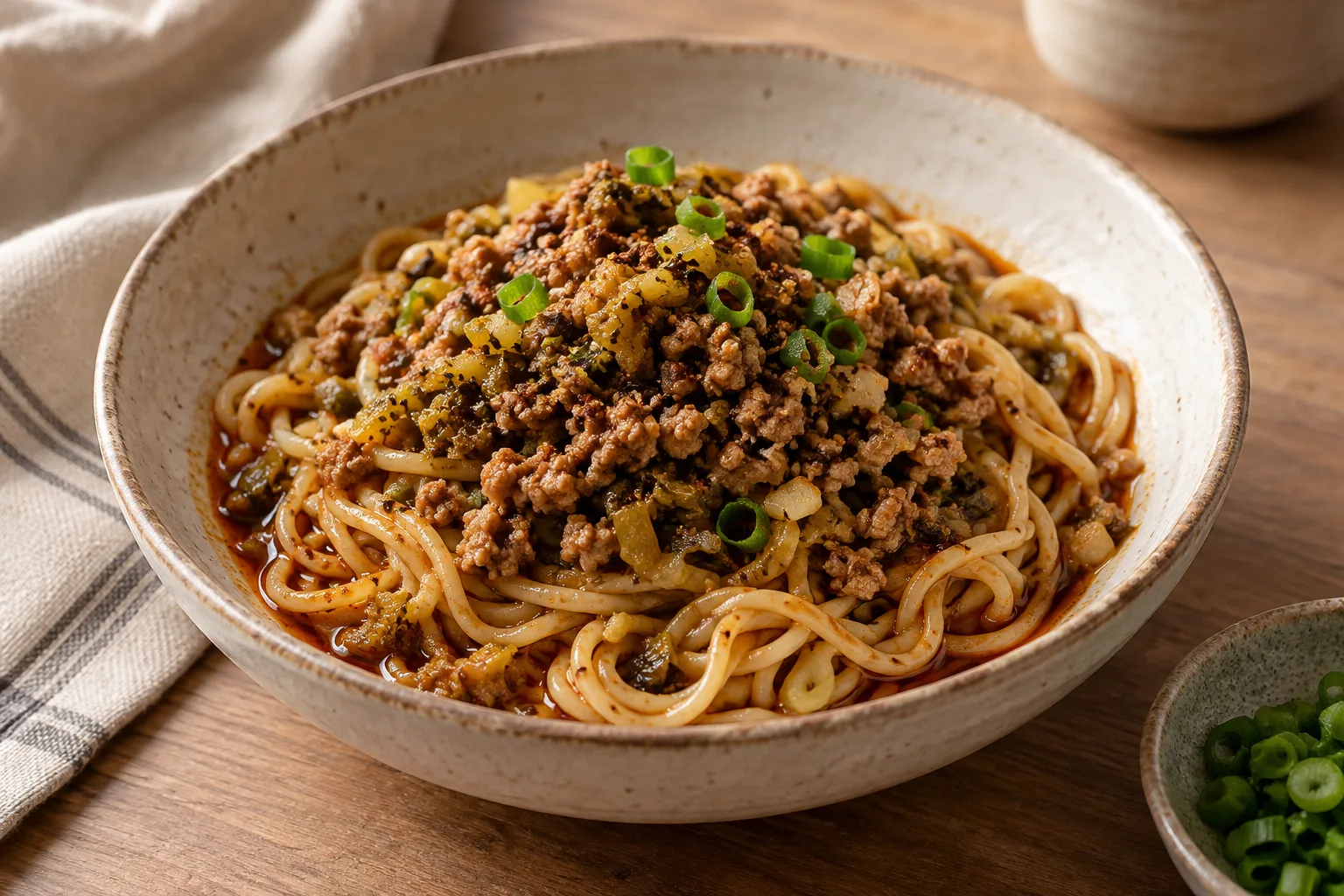
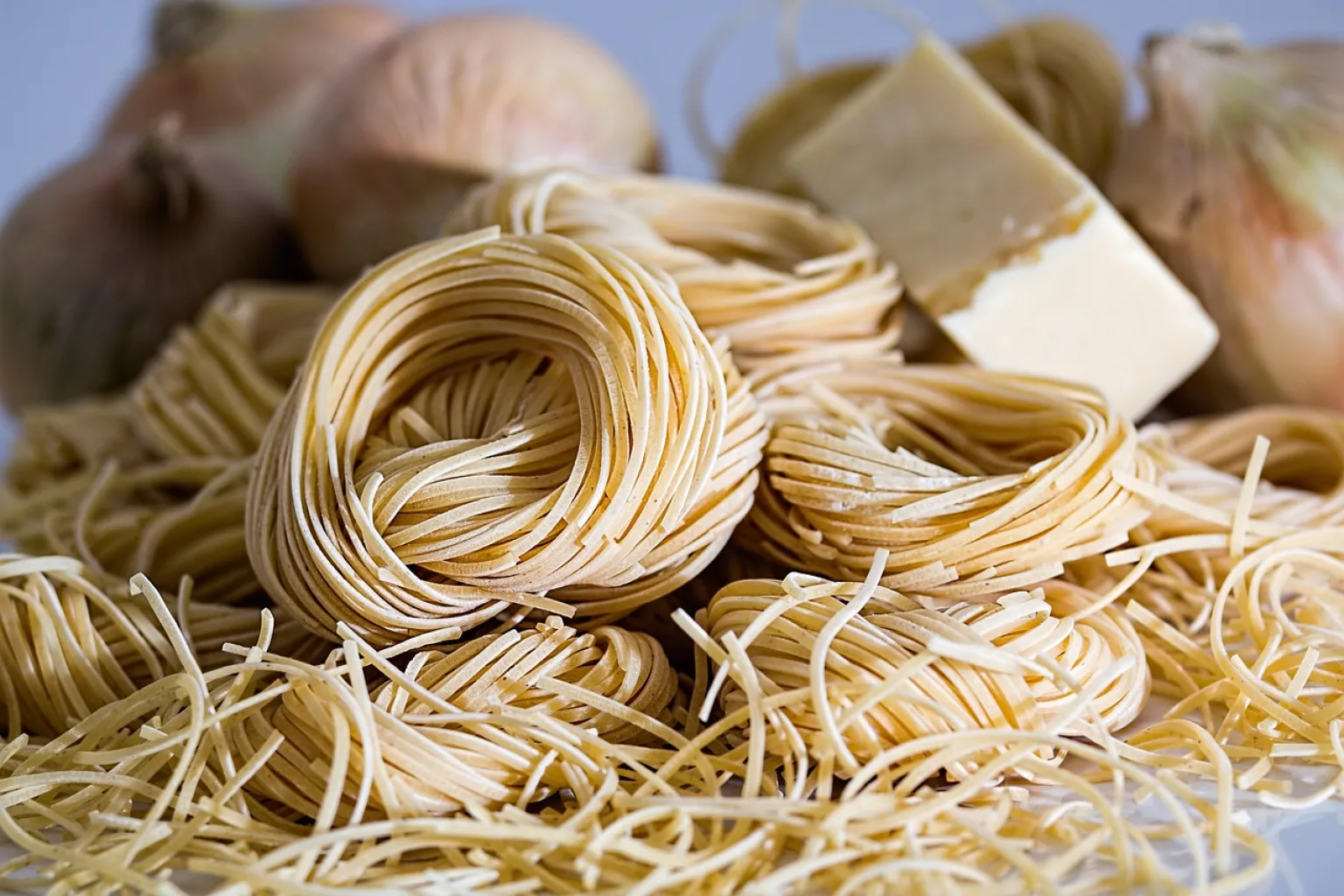
Wheat noodles are noodles made with a dough that includes wheat flour. The name covers products with different shapes, thicknesses and production methods, so it does not refer to one specific variety or fixed texture. Some are sold fresh and others dried; the flour and added ingredients, such as egg, can also vary. Asian wheat noodles include many styles, while other wheat pastas come in different shapes and formats. Wheat contains gluten, so check the label if gluten needs to be avoided. Wheat noodles should not be confused with rice noodles or buckwheat noodles, which are made from different main ingredients.
When to use it
Choose wheat noodles when you want a substantial base for soup or broth, or a main component in a stir-fry. Fresh and dried noodles can behave differently, so consider the form and the manufacturer’s directions when planning a recipe. Firmer wheat varieties can work well in brothy or sauced dishes, while fine strands can be incorporated into soups. They can be paired with vegetables, mushrooms, meat, fish or egg. If cooking for someone who avoids gluten, choose another suitable variety and check its ingredients.
How to use it
First check the package to see whether the noodles are fresh or dried, then follow the method given for that variety; there is no single cooking time that suits all wheat noodles. For soup, cook them as directed and serve in broth with vegetables, mushrooms or other accompaniments. For a stir-fry, prepare any ingredients that need separate cooking, then combine the cooked noodles with vegetables, sauce and a protein of your choice, mixing gently to distribute them. Some wheat noodles are used in wok dishes and others in broths. Do not assume that every variety absorbs sauce or holds its firmness in the same way: check the texture and finish the dish in line with the package directions.
Flavour and texture
Wheat noodles usually have a mild flavor, while their texture depends on the flour, thickness, shape, freshness and cooking method. Some varieties are described as elastic and firm; others may become softer or slippery after cooking and rinsing. The name alone therefore cannot predict an exact texture. When choosing noodles, consider whether you want them to stand out in broth, mingle with sauce or hold up in a stir-fry. Water, egg or other ingredients in the dough can also affect the result.
How to choose it
Decide whether you need fresh or dried noodles and which shape suits the recipe; the two forms are not interchangeable in every dish. Read the ingredient list to confirm that they contain wheat and to identify additions such as egg. If gluten must be avoided, do not rely on appearance or the word noodles alone: check the label and choose a product whose ingredients are clearly identified. The package should identify the variety and provide preparation directions; follow those rather than relying on a generic cooking time.
Storage
Fresh noodles keep for less time than dried ones, so check the package for directions specific to the product you bought. Do not assume that one variety has the same storage needs as another, or that an opened package should be handled like a sealed one. Follow the manufacturer’s directions for dried noodles too. If you cannot confirm how a product should be stored, check its package before storing or using it; there is no universal storage period for all wheat noodles.
Substitutions
Rice noodles can replace wheat noodles when you want a different base or need to avoid wheat, but check the label of the specific product. Soba are made with buckwheat and may also contain common wheat, so they are not automatically gluten-free. Alternatives can differ in shape and texture, so adapt the preparation to their directions and the dish. For a substitution related to allergy or intolerance, always confirm the ingredients and allergen information on the package.
Common mistakes
A common mistake is treating all noodles as identical: fresh or dried form, thickness and ingredients can affect both preparation and the result. Do not use one universal cooking time or swap wheat noodles for another type without considering the difference. Check the package, especially when avoiding gluten, and do not assume soba contains only buckwheat or that noodles have no added ingredients.
Safety and allergens
Follow the package’s cooking and storage directions, particularly because fresh and dried noodles may need different care. Check the ingredient list and allergen information if wheat or gluten must be avoided.
Culinary uses
- Base de sopas y caldos
- Acompañamiento para verduras, carnes, pescados o salsas
Recommended techniques
- Cocer en agua o caldo siguiendo las instrucciones del envase
- Saltear o saltear en wok con otros ingredientes
Pairs well with
- Caldo, verduras y setas
- Salsas y acompañamientos de carne, pescado o huevo
Frequently asked questions
Are wheat noodles always dried?
No. They are sold fresh and dried; check the package and follow the directions for the variety you buy.
Do wheat noodles contain gluten?
Wheat contains gluten. If you need to avoid it, check the label and choose an alternative whose ingredients are suitable for you.
Can I use wheat noodles in soup and stir-fries?
Yes. They are used in soups and broths as well as stir-fries. Choose a suitable form and follow the manufacturer’s directions.
Sources and review
Automatically researched, cross-checked and validated content. Sources consulted:
- ¿Por qué la muerte es origen de miedos y tabúes? doi.org
- Pasta - Wikipedia, la enciclopedia libre es.wikipedia.org
- La pasta | Consumer consumer.es
- Nutrition After Your Transplant - Health Online healthonline.washington.edu
- Comité Científico aesan.gob.es
- Recipes — UIC Heritage Garden heritagegarden.uic.edu
- Food & Fun Afterschool hsph.harvard.edu
- Safe & Healthy Food Pantries Project - Health & Well-Being health.extension.wisc.edu
- Blog Archive | Food Safety foodsafety.osu.edu
- Product Links | WSU Extension Publications | Washington State University pubs.extension.wsu.edu
- Cucumbers | UNL Food | Nebraska food.unl.edu
- Tipos de pasta en diferentes culturas: un recorrido por el mundo - Pastas Gallo : Pastas Gallo pastasgallo.es
- Noodles de trigo directoalpaladar.com
- Noodles: tipos, donde comprarlos y receta - Oriental Market orientalmarket.es