- Category
- Sugar and sweeteners
- State
- Dry
- Usual unit
- teaspoon
What it is
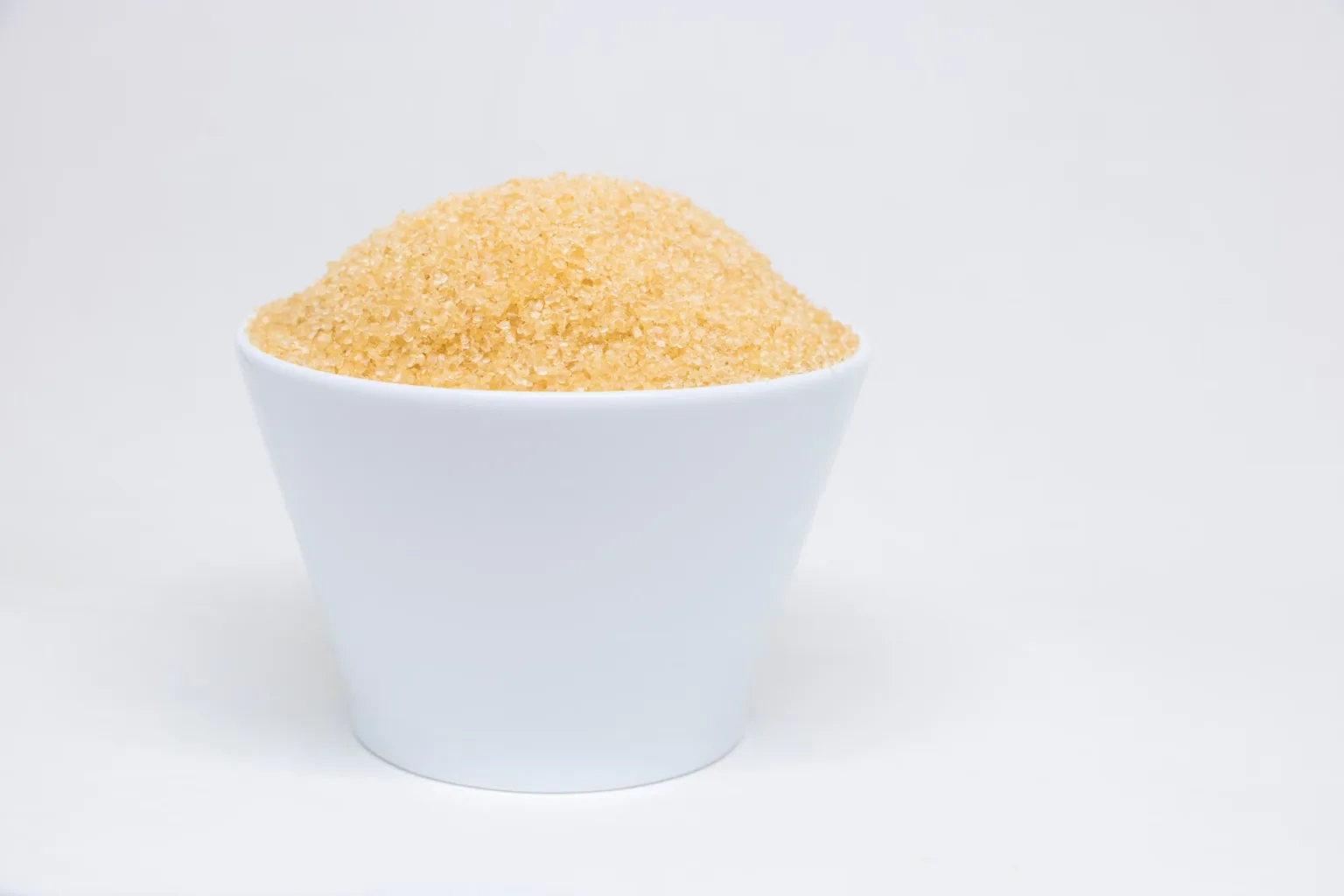
Granulated white sugar, also called table sugar, is a dry crystalline sweetener and the usual form meant when a recipe says simply “sugar” without naming another variety. Table sugar is sucrose, made up of glucose and fructose, and can be obtained from sugar cane or sugar beet. Its crystals are visible, and their size may vary somewhat by brand. It is not the same as powdered sugar: powdered sugar is ground very fine and may contain an anti-caking ingredient. This profile is for granulated white sugar, not powdered sugar or other sugar varieties.
When to use it
Use it when a recipe calls for sugar without specifying a different kind, or when you want to sweeten a drink, batter or dessert. Its crystals dissolve in both cold and hot liquids, so it can be added to drinks and liquid mixtures. In baking, it can be creamed with butter and eggs, or sprinkled over a preparation before baking when a crisp surface is wanted. Heating makes the sugar melt and caramelize. In some savory preparations, a small amount can help balance acidity; it does not replace careful adjustment of the other ingredients.
How to use it
Measure the sugar as directed by the recipe and add it at the stated stage. For drinks and liquid preparations, stir until the crystals dissolve; granulated sugar can dissolve in cold as well as hot liquids. For some batters, cream it with butter and eggs as the recipe directs. You can also sprinkle it over a preparation before baking to create a crisp coating. To caramelize it, heat until it melts and develops a caramel character, keeping watch and avoiding contact with hot sugar. Do not automatically swap in powdered sugar: its fine grind and possible anti-caking ingredients can change a recipe’s texture and behavior.
Flavour and texture
It has a clean sweetness and dry, small, perceptible crystals. Crystal size can vary slightly from one brand to another. It dissolves in cold or hot liquids; when creamed with butter and eggs it becomes part of some batters, while heating melts and caramelizes it. Sprinkled on before baking, it can form a crisp surface.
How to choose it
If a recipe does not specify a variety, look for granulated white sugar or table sugar. Check that the package clearly identifies the product and that you are not buying powdered sugar, superfine sugar or another form. Crystal size can be somewhat finer or coarser depending on the brand, so follow the recipe’s specified form when texture matters.
Storage
Keep granulated white sugar in the pantry; the available information does not require special storage conditions. Leave it in its package or transfer it to a clean, dry container, closed well to protect it from moisture and dirt. If the package gives specific storage or use directions, follow them.
Substitutions
Superfine white sugar may work when a recipe allows finer crystals and quicker dissolving. Powdered sugar is another form of ground white sugar, but it is not an automatic replacement: its texture and possible anti-caking ingredients can affect a mixture. Substitute only when the recipe allows a change of form and consider the texture you want.
Common mistakes
Do not confuse granulated sugar with powdered sugar; their particle sizes and uses differ. Do not assume every brand has exactly the same crystal size. Changing the form without considering texture, or handling melted sugar without care, can spoil the result and cause burns.
Safety and allergens
Follow the package’s storage and use directions, and avoid direct contact with melted sugar or hot caramel, which can burn. The supplied evidence gives no sugar-specific safety warning.
Culinary uses
- Sweetener for drinks, desserts and baking
- Ingredient for browning and crisp, sweet coatings
- Small-amount seasoning to balance acidity in some savory dishes
Recommended techniques
- Dissolving into hot or cold liquids
- Creaming with butter and eggs
- Heating until melted and caramelized
- Sprinkling over a surface before baking
Pairs well with
- Tea, coffee and other drinks
- Butter and eggs in cake or biscuit mixtures
- Acidic savory preparations where a small amount of sweetness is wanted
Frequently asked questions
Is granulated white sugar the same as powdered sugar?
No. Powdered sugar is white sugar ground very fine and may include an anti-caking ingredient. It does not always behave like granulated sugar.
Does it dissolve in cold drinks?
Yes. The available information says granulated sugar dissolves in cold and hot liquids; stirring helps incorporate it.
What happens when it is heated?
It melts and caramelizes. Take care when handling it hot and do not touch melted sugar.
Estimated nutrition
- Fat
- 0.32 g
- Saturates
- 0 g
- Carbohydrate
- 99.6 g
- Sugars
- 99.8 g
- Fibre
- 0 g
- Protein
- 0 g
- Salt
- 0 g
Sources and review
Automatically researched, cross-checked and validated content. Sources consulted:
- En el etiquetado alimentario hay algunas menciones que son obligatorias eletiquetadocuentamucho.aesan.gob.es
- Client Challenge doi.org
- The Essential Glossary of Cooking Terms for the Culinary Arts - Escoffier escoffier.edu
- Del blanco a la panela: los 19 tipos de azúcar más comunes, en qué se diferencian y cómo usarlos en cocina directoalpaladar.com
- Tipos y variedades de Azúcar que encontrarás en el mercado, apuntes. - Cocina y Aficiones cocinayaficiones.com
- Agencia Española de Seguridad Alimentaria y Nutrición aesan.gob.es
- Nutrition After Your Transplant - Health Online healthonline.washington.edu
- How do I tell if there’s added sugar in my drink? ¿Cómo puedo saber si mi bebida contiene azúcar agregado? | University of Nevada, Reno unr.edu
- Project MUSE -- Verification required! muse.jhu.edu
- Rosquitas de Nuez 1953 (Pecan Ring Cookies ) - lacocina.utsa.edu
- Vamos a Conservar Alimentos: Ingredientes Utilizados en las Conservas Preparadas en Casa extension.psu.edu
- Added Sugar • The Nutrition Source nutritionsource.hsph.harvard.edu
- Survey of insect pests and plant diseases of selected food ... ageconsearch.umn.edu
- ¿Qué es el azúcar? Tipos, sacarosa y edulcorantes - Zschimmer & Schwarz, Inc. zschimmer-schwarz.es