- Category
- Vegetables
- State
- Fresh
- Usual unit
- unit
What it is
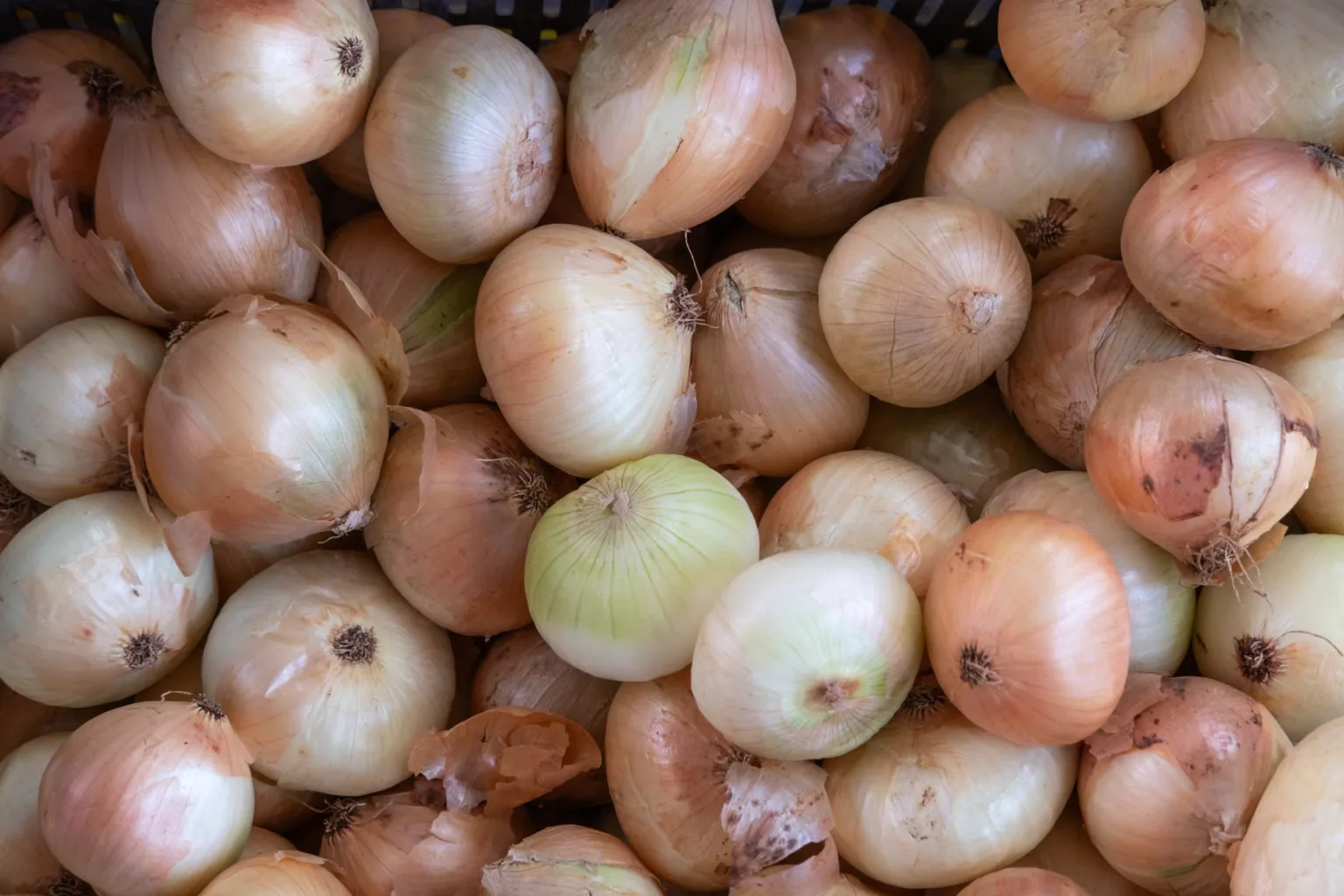
A yellow onion is a common bulb onion identified by its yellow, golden or coppery outer skin. Dry bulb onions are distinguished from green onions by being harvested after a substantial bulb has formed. Yellow onions can vary in pungency, sweetness and keeping quality; color alone does not guarantee an identical flavor in every onion. In general, their flavor is often more pronounced than that of some mild varieties, and cooking makes it rounder and sweeter. This makes them a practical choice when onion should contribute depth as well as texture. They can be chopped, sliced or cut into larger pieces to suit the preparation.
When to use it
Choose yellow onions when you want to build flavor in a hot preparation such as a sofrito, stew, sauce or broth. They are especially useful in dishes where the onion cooks for longer and can mellow, but they can also be used in quicker cooking. If a recipe simply calls for an onion, yellow is a versatile option. For a dish that needs a very mild raw onion or a striking raw color, compare white or red onions instead: traits vary by variety and are not absolute rules.
How to use it
Remove the outer skin and cut the onion to suit the recipe: small dice for an even base, strips for stews, or slices for roasting or frying. For a sofrito, cook it with the other base ingredients and let the heat soften its pungency before adding the next components. Chopped onion can be added to sauces, soups and stews so its flavor spreads through the dish. It can also be fried, roasted or caramelized. Cooking time and result depend on cut size, quantity and recipe, so watch the pan to prevent burning. If substituting white or red onion, adjust the amount to taste.
Flavour and texture
Raw yellow onion often has a pronounced, potentially pungent flavor, though intensity varies from one onion to another. Cooking mellows it and brings out a rounder, sweeter character. The flesh softens with heat, while a raw cut retains more bite. These qualities make yellow onion useful both for building background flavor and for adding texture, although not every yellow onion tastes exactly alike.
How to choose it
Choose firm yellow onions with dry outer skins and no obvious soft areas. Look for intact bulbs without visible moisture or damaged patches. Yellow or golden skin identifies the type, but does not tell you exactly how sweet or pungent an individual onion will be. If you need a particularly mild onion, do not assume every yellow onion will have that profile.
Storage
The available evidence recommends keeping yellow onions in a cool, dry place without refrigeration and says they may keep for several months. Store them in a dry, ventilated area and check them periodically. Actual keeping quality depends on the product and storage conditions; do not assume every onion will last the same amount of time. This guidance is not a guarantee of a fixed shelf life.
Substitutions
White or red onions can replace yellow onions in many recipes, but the result will not be identical. White onions are generally milder, while red onions can add more color and a different flavor, particularly when raw. Red onions may lose their characteristic color during cooking. If onion is a prominent part of the dish, adjust the quantity and taste as you cook.
Common mistakes
Do not assume all yellow onions have the same sweetness or pungency. Nor should you expect the mild, cooked profile while eating them raw. Very fine cuts or unattended high heat can undermine the desired texture or burn the onion. Match the cut and cooking approach to the dish instead of relying on one universal cooking time.
Safety and allergens
No specific official safety warning for this ingredient is available in the supplied evidence. Handle it as fresh produce and follow local food-hygiene guidance; the evidence provided does not establish a safe storage duration.
Culinary uses
- Base aromática para sofritos, salsas, caldos y guisos
- Acompañamiento y condimento para platos de carne, pescado, arroz y verduras
Recommended techniques
- Picar y cocinar lentamente como base de un sofrito
- Freír, asar o caramelizar para aprovechar su sabor cocinado
Pairs well with
- Tomate y legumbres en salsas y guisos
- Carne, pescado, arroz y verduras
Frequently asked questions
What dishes are yellow onions best for?
They are a versatile choice for sofritos, stews, sauces, broths and soups, especially when you want onion to build background flavor.
Can yellow onions be eaten raw?
Yes, although their raw flavor is often more pronounced than their cooked flavor. Intensity varies, so taste a piece and adjust the amount.
How should yellow onions be stored?
The available evidence recommends a cool, dry place without refrigeration. It does not establish a guaranteed storage duration for every onion.
Estimated nutrition
- Fat
- 0 g
- Saturates
- 0 g
- Carbohydrate
- 9.46 g
- Sugars
- 6.08 g
- Fibre
- 2 g
- Protein
- 1.35 g
- Salt
- 0.01 g
Sources and review
Automatically researched, cross-checked and validated content. Sources consulted:
- Client Challenge doi.org
- ¿Amarilla, blanca, roja o Vidalia? Para qué sirve cada tipo de cebolla directoalpaladar.com
- Tipos de cebolla y su utilización en la cocina | Blog Bernad Refrigeración josebernad.com
- Salsa de Manzana y Durazno (Melocotón) (Spanish) - National Center for Home Food Preservation nchfp.uga.edu
- POTATOES - Extension St. Croix County stcroix.extension.wisc.edu
- UCCE efforts improve quality of and demand for fresh ... ucanr.edu
- Ideas for Healthy Living wpcdn.web.wsu.edu
- Producción de Cebolla extension.psu.edu
- filling gender gaps: determining how traditional knowledge of experts.esf.edu
- La cebolla, la base de la gastronomía española - Enrique Romay eromay.com
- La tribu de las cebollas apuntococina.com
- Macarrones a la Crema 1946 (Macaroni with Cream) - lacocina.utsa.edu
- Comparing the effectiveness of pesticides in controlling thrips in dry bulb onions | Servicio de Extensión de OSU extension.oregonstate.edu
- Cebolla blanca, morada o amarilla: cuál es la diferencia y cuál conviene usar en cada receta recetas.elperiodico.com