- Category
- Vegetables
- State
- Fresh
- Usual unit
- g
What it is
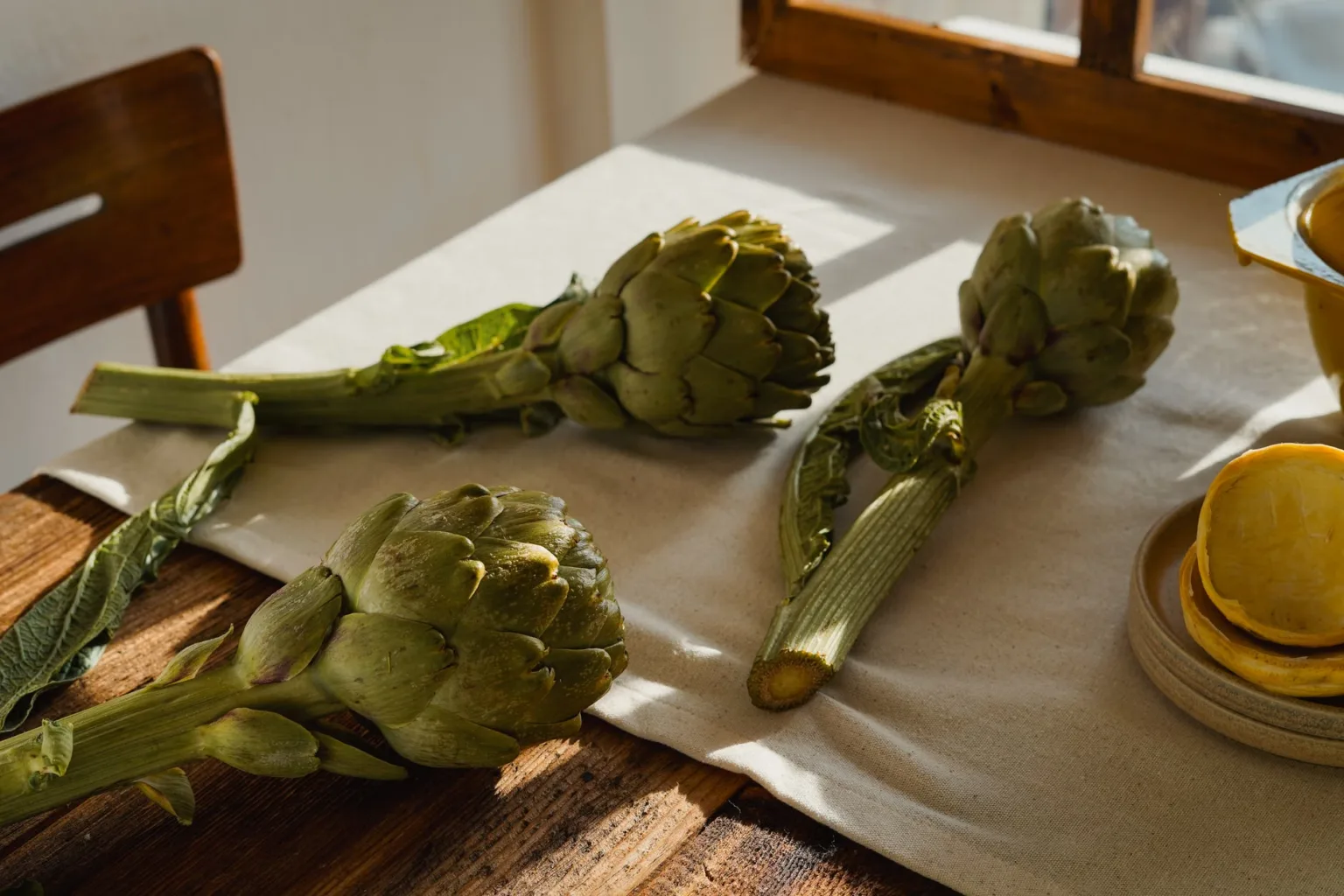
The artichoke sold as a vegetable is an edible bud made of overlapping bracts, harvested before it has fully developed. The center and tender portions are especially valued in cooking, although the whole bud also includes firmer outer layers. Its shape can be rounder or more elongated, and size alone does not determine quality: density and a compact appearance also matter. Artichokes are sold fresh and in preserved forms. This profile concerns fresh artichokes and does not assign them a particular season.
When to use it
Choose a fresh artichoke when you want a vegetable with a distinct presence in a dish, want to add it to a vegetable medley, or plan to include it in a cooked vegetable preparation. It is versatile when a recipe suits steaming, boiling, oven cooking, grilling, frying, or a sofrito. Compact, dense buds are a good choice when you want to work with whole artichokes. If a recipe calls for a more convenient, already-prepared form, preserved artichokes may be practical, though their texture and condition differ from fresh artichokes.
How to use it
Remove any parts you do not intend to use and prepare the artichoke according to the recipe; the available sources do not establish one universal cleaning method or cooking time. It can be boiled, steamed, fried, battered, stewed, added to a sofrito, grilled, or cooked in an oven. Use raw artichoke only when the recipe calls for it. For griddling or oven roasting, one culinary guide recommends leaving the leaf tips untrimmed to help retain moisture inside during roasting. Check the texture as you cook and adapt the cut and technique to the preparation you have chosen.
Flavour and texture
Artichokes have a distinctive flavor; the heart is described as delicate and mild. In a roasted preparation, the flesh can become crisp while remaining juicy. The experience varies with the part used and the cooking method, so a roasted fresh artichoke should not be expected to have the same texture as a cooked or preserved one. Choose the result that fits the dish rather than assuming every artichoke has an identical texture.
How to choose it
Choose artichokes that feel heavy for their size and have compact, well-formed buds. A buying guide recommends light-green examples and suggests gently squeezing the artichoke near the ear: a slight squeak may indicate freshness, while soft leaves at the base or leaves that have opened are signs of reduced freshness. Use these clues together; appearance alone cannot guarantee the quality inside.
Storage
To keep a fresh artichoke, one culinary guide recommends refrigeration in a closed plastic bag after trimming a small piece from the stem and lightly moistening it. Another source advises keeping it in a cool place. No specific storage duration is established, so do not assume one: follow any applicable package instructions and check the artichoke before cooking.
Substitutions
Preserved artichokes can stand in for fresh ones in recipes that allow an already-prepared vegetable; artichoke hearts are another option when the recipe needs only that part. These forms are not identical to fresh artichokes and may differ in firmness and preparation needs. Check which form the recipe expects and adjust when you add it, without assuming an exact one-for-one match.
Common mistakes
Do not choose on size alone: density and a compact bud matter too. Soft leaves at the base or opened leaves are not signs of good freshness. Also, do not assume fresh and preserved artichokes will behave alike, or trim the leaf tips before roasting if you want to follow the recommendation to retain internal moisture.
Safety and allergens
The available evidence provides no artichoke-specific safety warning. Check any ingredient and allergen information provided with the product, where applicable, and follow its storage and use instructions. Information requirements can vary by product presentation and method of sale.
Culinary uses
- Verdura para menestras y mezclas de hortalizas
- Ingrediente principal en platos de verduras cocinadas
Recommended techniques
- Cocción al vapor o hervido
- Asado al horno o a la brasa
Pairs well with
- Otras verduras en una menestra
- Verduras en sofritos y guisos
Frequently asked questions
Which part of an artichoke is eaten?
The bud is made of bracts and contains tender portions valued in cooking, including the heart. The sources do not say that every part has the same texture.
How can I choose a fresh artichoke?
Look for a compact, well-formed bud and a piece that feels heavy for its size. Open leaves or soft leaves at the base are signs of reduced freshness.
Which cooking methods can I use?
The sources describe artichokes boiled, steamed, fried, battered, stewed, added to a sofrito, grilled, and oven-cooked. The best method depends on the recipe.
Estimated nutrition
- Fat
- 0.34 g
- Saturates
- 0.08 g
- Carbohydrate
- 12 g
- Sugars
- 0.99 g
- Fibre
- 5.7 g
- Protein
- 2.89 g
- Salt
- 0.15 g
Sources and review
Automatically researched, cross-checked and validated content. Sources consulted:
- En el etiquetado alimentario hay algunas menciones que son obligatorias eletiquetadocuentamucho.aesan.gob.es
- Client Challenge doi.org
- Cooking Food Storage | USU extension.usu.edu
- The Essential Glossary of Cooking Terms for the Culinary Arts - Escoffier escoffier.edu
- Aesan - Agencia Española de Seguridad Alimentaria y Nutrición aesan.gob.es
- ▷ Alcachofa: La Guía Definitiva sobre nuestro Vegetal Favorito cynara.net
- ¿Qué es la Alcachofa? Origen, beneficios y posología | Dieti Natura dieti-natura.es
- Alcachofa: origen y propiedades nutricionales | ChefCaprabo chefcaprabo.com
- NC conservas vegetales mapa.gob.es
- Food Selection & Storage | Home & Garden Information Center hgic.clemson.edu
- How to Cook Nopales for a Flavorful Experience • southernwv.edu staging.southernwv.edu
- Alcachofa | Postharvest Research and Extension Center postharvest.ucdavis.edu
- Monográfico: Cocinar la huerta en temporada (2 días) cordonbleu.edu
- Del campo a su mesa: científicos de UF revelan el poder saludable de la alcachofa - News blogs.ifas.ufl.edu
- The Case of Pablo Neruda's Odas elementales and Food digitalcommons.sacredheart.edu
- A Guide to the Strategic Pantry - Orange County Center | N.C. Cooperative Extension orange.ces.ncsu.edu