- Category
- Meat
- State
- Other
- Usual unit
- g
What it is
Panceta is a pork cut associated with the belly area, where meat and fat occur together. Names such as panceta, bacon, and pancetta vary with the product and context, so they should not be treated as exact equivalents. The sources describe fresh, cured, and smoked panceta, and associate bacon with smoked varieties in some uses. The name alone does not reliably identify how a product was processed or whether it needs cooking. This guide covers panceta broadly and does not assign one state to every product sold under similar names. Read the package and follow its directions to identify what you have and how to use it.
When to use it
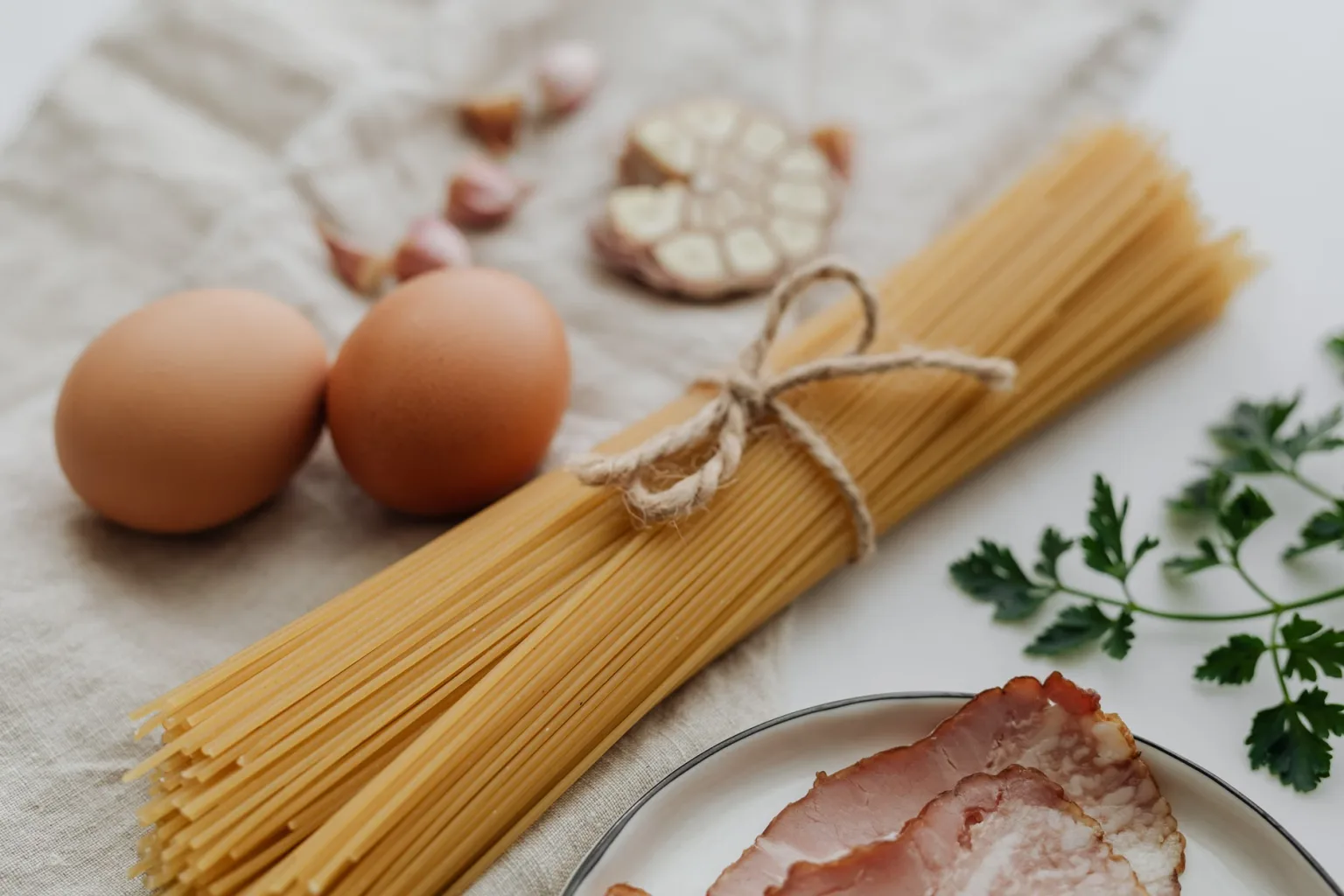
Use it when you want to add a pronounced flavor and pieces of pork to a dish. Panceta can be cut into strips or pieces for frying, added to stews or sauces, or cooked on a griddle or grill. It can also be used in sandwiches, breakfast dishes, and pasta. Choose the product according to the result you want: a fresh version is not necessarily the same as a cured or smoked one. Before cooking or serving it, check the label and the manufacturer's directions; do not infer how it was processed from the name alone.
How to use it
Read the package first and distinguish fresh, cured, or smoked panceta when the label provides that information. Follow the manufacturer's directions for the specific product. To cook it, cut it into strips or pieces and fry it, cook it on a griddle or grill, or add it to a stew or sauce. It is also used in sandwiches, breakfast dishes, and pasta. If you replace one variety with another, remember that curing or smoking can change the flavor and the expected result in a recipe. Do not assume that every form can be served without cooking or prepared in the same way: base that decision on the label and product instructions.
Flavour and texture
Panceta is described as a combination of meat and fat, and some varieties are associated with a stronger or smoky flavor. The resulting texture depends on the product and preparation: frying can produce crisp pieces, while stews and sauces incorporate it with the other ingredients. There is no single profile that describes every variety. Check whether the product is fresh, cured, or smoked before anticipating its flavor and texture.
How to choose it
Read the full product name and package description. The sources distinguish fresh, cured, and smoked panceta, and note that bacon can refer to a smoked variety in some uses. Check the condition of the package and follow the manufacturer's directions for use and storage. If you want a particular flavor, look for a stated curing or smoking process; do not rely only on a colloquial name, which can vary by product.
Storage
Store the product according to its package directions: do not assume that fresh, cured, and smoked varieties share the same storage requirements. Follow the manufacturer's instructions and keep perishable products under appropriately cold conditions. Do not taste food of uncertain condition to judge whether it is safe. Discard it if the package is damaged or you notice signs of spoilage.
Substitutions
You can substitute a cured or smoked variety for fresh panceta, or fresh panceta for smoked bacon, but the result will not be identical. Smoking gives a distinct flavor profile, and the sources distinguish fresh, cured, and smoked forms. Check the substitute's directions and do not assume that a similar name guarantees the same processing or recommended use.
Common mistakes
A common mistake is treating fresh, cured, and smoked panceta and bacon as one identical product. The sources describe differences among these forms and their flavor profiles. Do not decide whether a product can be served without cooking based on its name alone; check the label and do not assume a substitute will give the same result in a recipe.
Safety and allergens
Follow the package's storage and preparation directions, since the product name alone does not identify how it was processed. Do not taste food of uncertain condition to assess its safety. Discard the product if the package is damaged or it shows signs of spoilage.
Culinary uses
- Aportar sabor y grasa a guisos y salsas
- Servir como ingrediente o acompañamiento en sándwiches, desayunos y platos de pasta
Recommended techniques
- Cortar en tiras o trozos y freír
- Cocinar a la plancha o a la parrilla
- Añadir a guisos o salsas
Pairs well with
- Huevos y tortillas
- Pan, lechuga y tomate
- Pasta y verduras
Frequently asked questions
Are panceta and bacon always the same?
Not necessarily. The sources distinguish fresh, cured, and smoked forms, and associate bacon with smoked varieties in some uses. Check the product label.
How can I cook panceta?
The sources describe cutting it into strips or pieces and frying it, cooking it on a griddle or grill, or adding it to stews and sauces.
Can I substitute smoked bacon for fresh panceta?
You can, but smoking will change the flavor profile. Check the product directions and adapt the recipe to the result you want.
Estimated nutrition
- Fat
- 41.2 g
- Saturates
- 14.7 g
- Carbohydrate
- 0 g
- Sugars
- 0 g
- Fibre
- 0 g
- Protein
- 29.4 g
- Salt
- 4.55 g
Sources and review
Automatically researched, cross-checked and validated content. Sources consulted:
- Client Challenge doi.org
- Food Storage for Safety and Quality - El Paso County Extension elpaso.extension.colostate.edu
- Kitchen Companion: Your Safe Food Handbook ucanr.edu
- Noticias del Exterior : boletín de información internacional ... mapa.gob.es
- Trabajo electrónico aesan.gob.es
- Holiday Hors D'oeuvres with Chef Richard Ruben | Institute of Culinary Education ice.edu
- Space Food, Bacon Bars, Apollo 11 (White) | National Air and Space Museum airandspace.si.edu
- SELECTION AND USE OF BACON - University Digital Conservancy conservancy.umn.edu
- Use of a Predictive Tool Based on Small-Scale - Meat HACCP meathaccp.wisc.edu
- E-118: Storing Food Safely | New Mexico State University - BE BOLD. Shape the Future. pubs.nmsu.edu
- \r\n \n Premier Culinary School in the South | Louisiana Culinary Institute\n \r\n lci.edu
- Panceta: Historia, Variedades y Recetas Para Disfrutar — Ibéricos Sofía Luengo ibericossofialuengo.es
- El bacon en la cocina friolisa.es
- Descubre los alimentos - Panceta | mentta.com mentta.com
- Panceta Ibérica: Tipos, recetas y maridajes gourmet irresistibles elpaladar.es