- Category
- Fruit
- State
- Fresh
- Usual unit
- unit
What it is
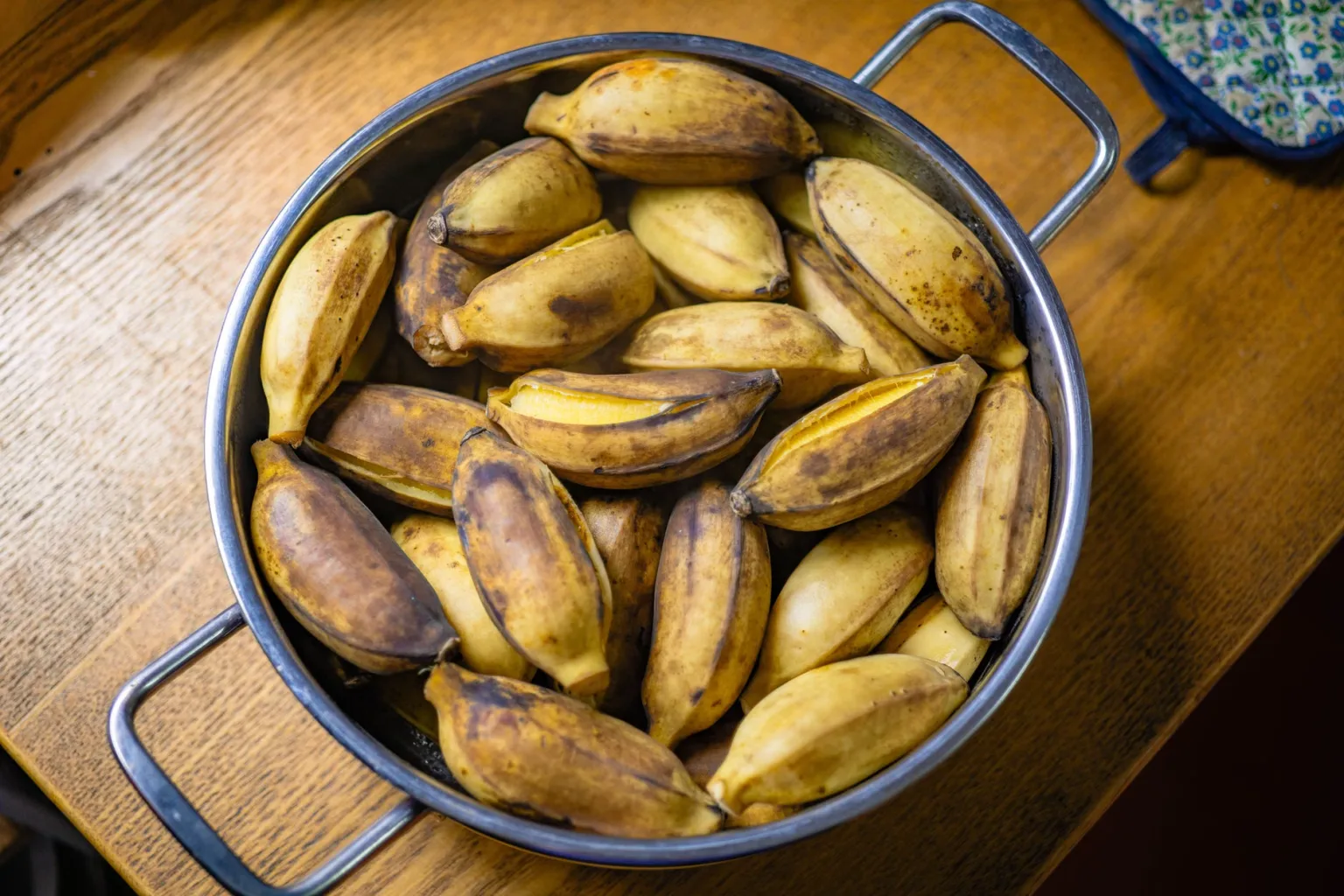
A banana is the edible fruit of plants in the genus Musa, part of the Musaceae family. The name covers varieties that differ in size, color, firmness and culinary use. Sweet bananas are commonly eaten raw and are also used in smoothies and desserts. Cooking bananas are generally larger, firmer and less sweet, and are prepared cooked. Ripeness matters too: as a sweet banana ripens, its flavor becomes sweeter and its flesh softer. Because names vary by region and many varieties exist, consider the fruit’s type and intended use rather than relying on its name alone.
When to use it
Choose a ripe sweet banana to eat as is, blend into a smoothie or use in a dessert. If a recipe calls for a firmer, less sweet fruit that will be cooked, look for a cooking banana. Ripe bananas can also be fried or caramelized and served as a side. Skin color and firmness can help indicate ripeness, but varieties differ, so consider the recipe and the result you want. Avoid very soft fruit when you need the pieces to hold their shape.
How to use it
For a simple preparation, peel a ripe sweet banana and serve it raw; chop it into a fruit salad or blend it into a smoothie. Use it in compotes and other sweet preparations too. For a cooked side, bananas can be fried or caramelized; a cooking banana is a suitable choice when you want firmer, less sweet flesh. Cooking bananas can also be mashed and served as a purée. Choose according to variety and ripeness: a very ripe sweet banana will not keep the same firmness as a cooking banana. Peel and cut the fruit shortly before adding it to a recipe.
Flavour and texture
Flavor and firmness vary with variety and ripeness. Ripe sweet bananas taste sweeter and have soft flesh; cooking bananas are usually firmer and less sweet. Fruit can also vary in size and color, so appearance alone does not determine how it should be used. Choose according to whether you plan to eat it raw or cook it.
How to choose it
Choose fruit that is intact and free from bruises or dents, and avoid pieces that are excessively soft. For common sweet bananas and small varieties, skin color can help indicate ripeness. A few black or brown spots on the skin do not, by themselves, mean the fruit has lost quality. For cooking, look for a firm, less sweet variety; if unsure, check the variety or intended use indicated by the seller.
Storage
Keep bananas in a cool, dry place, protected from direct sunlight; the available guidance does not call for special storage conditions. If refrigerated, the peel may darken. This affects the outside appearance, but the source consulted says it does not affect nutritional quality. Handle the fruit gently and check it before use.
Substitutions
Sweet bananas and cooking bananas are not identical: they differ in firmness and sweetness. Substitute one for the other only when the recipe can accommodate those changes, bearing in mind that a ripe sweet banana softens more and adds sweetness. For a result closer to the recipe’s intent, use the type it specifies.
Common mistakes
Do not assume every banana is used in the same way: sweet bananas are commonly served raw, while cooking bananas are used cooked. Also, do not reject fruit solely because of dark spots on the peel, or choose an overly soft one when a recipe needs firm pieces.
Safety and allergens
The available sources do not identify a specific safety warning for fresh bananas. Follow any use or storage directions supplied with the product, and ask the seller if you need clarification.
Culinary uses
- Fruta para consumir fresca, especialmente cuando está madura
- Ingrediente para postres, batidos y guarniciones cocinadas
Recommended techniques
- Pelar y servir crudo o triturar para batidos
- Freír o caramelizar; el plátano de cocinar también puede hacerse puré
Pairs well with
- Batidos y ensaladas de frutas
- Guarniciones para platos de carne o pescado
Frequently asked questions
Can all bananas be eaten raw?
Sweet bananas are commonly eaten raw. Cooking bananas are mainly used cooked, so choose the type that suits the variety and preparation.
Do dark spots on a banana peel mean it has gone bad?
Not necessarily. The available guidance says black or brown spots on the peel do not, by themselves, affect the fruit’s quality. Avoid fruit that is excessively soft.
How should fresh bananas be stored?
Keep them in a cool, dry place away from direct sunlight. Refrigeration may darken the peel; that exterior change does not, by itself, indicate a loss of nutritional quality.
Estimated nutrition
- Fat
- 0.33 g
- Saturates
- 0.11 g
- Carbohydrate
- 22.8 g
- Sugars
- 12.2 g
- Fibre
- 2.6 g
- Protein
- 1.09 g
- Salt
- 0 g
Sources and review
Automatically researched, cross-checked and validated content. Sources consulted:
- En el etiquetado alimentario hay algunas menciones que son obligatorias eletiquetadocuentamucho.aesan.gob.es
- Client Challenge doi.org
- Aesan - Agencia Española de Seguridad Alimentaria y Nutrición aesan.gob.es
- Banana - Wikipedia, la enciclopedia libre es.wikipedia.org
- Plátano: propiedades, beneficios y valor nutricional lavanguardia.com
- Tipos de plátano: conoce las variedades más comunes y sus usos | Weekontrol weekontrol.com
- El plátano | Consumer consumer.es
- VARY YOUR VEGGIES: How to Select and Store Vegetables | NDSU Agriculture ndsu.edu
- American Indian Health - Recipes aihd.ku.edu
- L a cadena de producción de frutas y hortalizas ha vivido cambios funda- mapa.gob.es
- Frozen Bananas/Plátanos Congelados (LCH) | CSU Northridge w2.csun.edu
- Universidad de Puerto Rico Recinto Universitario de Mayagüez uprm.edu
- Pan de Platano: Caribbean Plantain Banana Bread | Institute of Culinary Education ice.edu
- The Mexican Cook Book (1971) – Platanos Fritos / Fried Bananas - lacocina.utsa.edu
- Review: De los plátanos de Oller a los Food Trucks: Comida, alimentación y cocina puertorriqueña en ensayos y recetas, by Cruz Miguel Ortiz Cuadra | Gastronomica | University of California Press online.ucpress.edu