- Category
- Sauces and condiments
- State
- Preserved
- Usual unit
- g
What it is
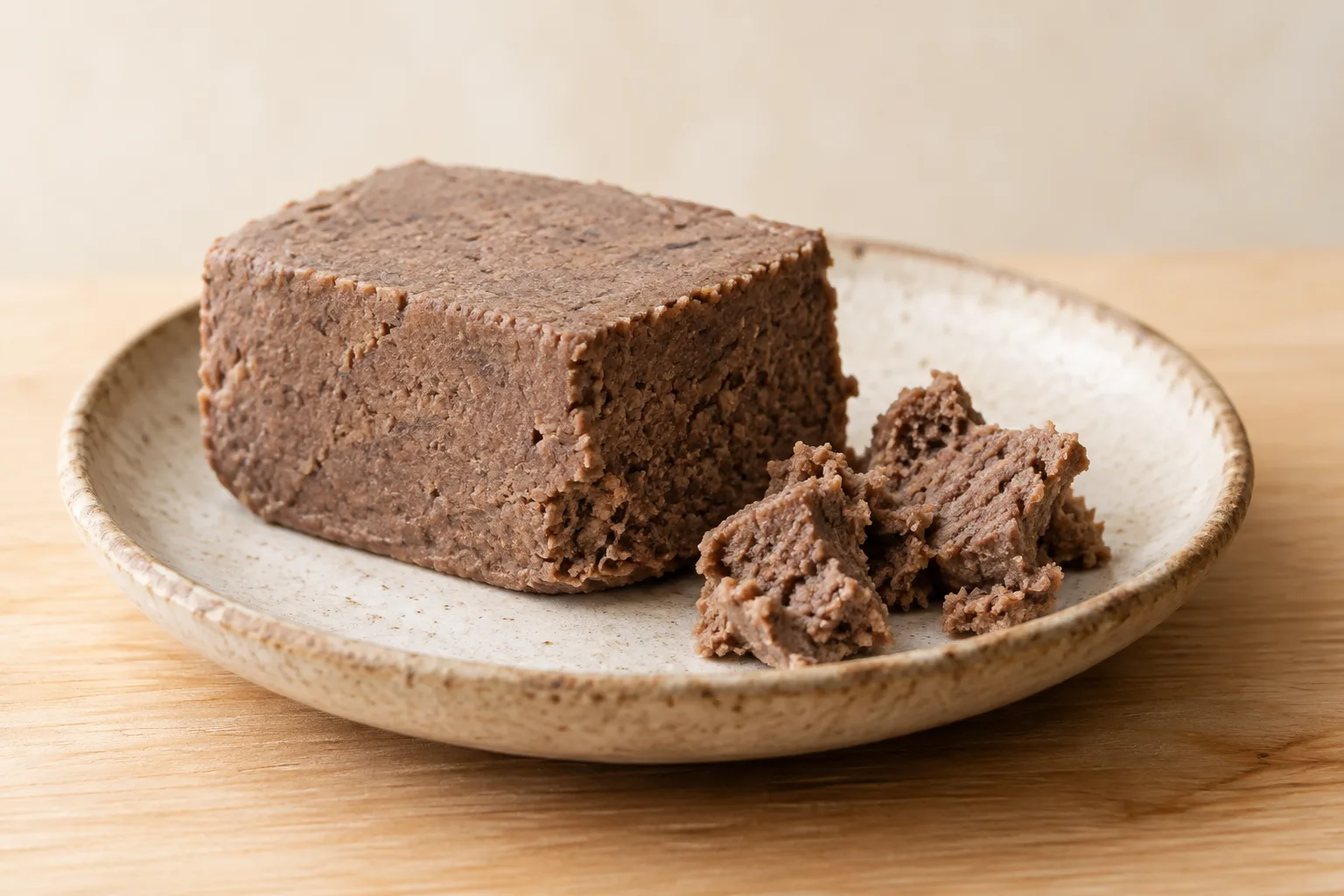
Belacan is a variety of shrimp paste associated with Malaysian cooking. It is made from chopped shrimp that are left to ferment and then pressed; the available descriptions also mention a frying stage in its production. Like other shrimp pastes, it can vary in aroma, texture, and saltiness depending on the style and producer. It is not a pourable liquid sauce: it is described as a compact or pressed paste. In cooking, it can be used as a seasoning on its own or combined with other ingredients to make a sauce or spice paste. It is an ingredient in sambal belacan and may be included in rempah, the aromatic paste used in some laksa preparations.
When to use it
Use belacan when you want fermented shrimp seasoning to contribute a pronounced savory character to a sauce or spice paste. It is a relevant choice for sambal belacan with chilies, garlic, and shallots, or for inclusion in rempah intended for laksa. The available evidence also places it in Southeast Asian cooking, but does not give a universal amount or claim that every style of belacan has the same intensity. Consider the product you have and adjust the amount to suit the dish and the flavor you want.
How to use it
Pound or mix belacan with chilies, garlic, and shallots to make a sambal belacan-style mixture; one description of this preparation also includes sugar. Alternatively, add it to a rempah paste with aromatics such as shallots, garlic, ginger, lemongrass, and chilies. In the laksa preparation described by the source, the spice paste is sautéed or cooked in oil until aromatic before coconut milk and the other soup ingredients are added. The source does not provide a universal quantity for belacan, so begin with a modest amount and adjust to the product and dish. Remember that it contains shrimp, and check the package if you need to confirm every ingredient.
Flavour and texture
Belacan belongs to the fermented shrimp-paste family, whose aroma is notably strong. Products in this family vary in aroma, texture, and saltiness, and the sources do not establish one fixed profile for every belacan. It is described as a pressed paste, so it should not be treated like an easily poured liquid. Its flavor can be integrated into a mixture with chilies and aromatics rather than used as the only seasoning.
How to choose it
Look for a product identified as belacan or shrimp paste, and check its ingredient list and the manufacturer's directions. Regional shrimp pastes can differ in aroma, texture, and saltiness, so the general name does not guarantee that every product is alike. If a recipe specifically calls for belacan, choosing another fermented paste may change the result. Also check that the product suits your dietary needs, since belacan is made with shrimp.
Storage
The available evidence does not specify storage conditions, how long belacan keeps after opening, or whether it needs refrigeration. Do not infer those details just because it is fermented or pressed: check the package and follow the manufacturer's directions for the specific product. If the package gives no clear guidance, ask the seller or manufacturer before deciding on a storage method or time period.
Substitutions
Another fermented shrimp paste can stand in for belacan, but the result may differ because these products vary in saltiness, texture, and aroma. Terasi is another shrimp-paste variety mentioned in the sources; it is not identical to belacan. Adjust cautiously and taste the dish rather than assuming a direct, equal substitution.
Common mistakes
Do not assume all shrimp pastes have the same flavor, texture, or saltiness: the sources describe variation among styles. Also, account for the other seasonings in the recipe instead of adding belacan without consideration, and do not mistake it for a liquid sauce. If you substitute another variety, reassess the amount.
Safety and allergens
Belacan is made with shrimp, a crustacean. Check the label if you have an allergy or need to confirm the product's ingredients. The available sources provide no specific official handling or storage instructions, so follow the directions on the package.
Culinary uses
- Condimento fermentado para aportar sabor intenso
- Ingrediente de pastas de especias y salsas
Recommended techniques
- Machacar o mezclar con chiles, ajo y chalotas para preparar sambal belacan
- Incorporar a una pasta de especias y saltearla en aceite hasta que desprenda aroma
Pairs well with
- Chiles, ajo y chalotas en sambal belacan
- Jengibre, ajo, chalotas, hierba limón, chiles y leche de coco en una pasta rempah para laksa
Frequently asked questions
What is belacan?
It is a Malaysian variety of fermented shrimp paste used as a seasoning and in spice pastes.
How do you use belacan?
Mix it with chilies, garlic, and shallots for sambal belacan, or include it in a rempah paste for laksa.
Is terasi the same as belacan?
Not exactly. Both are shrimp-paste varieties, but the sources note that such products can differ in aroma, texture, and saltiness.
Sources and review
Automatically researched, cross-checked and validated content. Sources consulted:
- Origen, curiosidades y recetas con vainilla hola.com
- Client Challenge doi.org
- Tipos de Maridaje: de afinidad o contraste | Bartalent Lab bartalentlab.com
- Gambas: origen, variedades, propiedades y cómo usarlas en la cocina abc.es
- All About Laksa Noodles | Institute of Culinary Education ice.edu
- Project MUSE -- Verification required! muse.jhu.edu
- food preparation methods and regional collections.lib.utah.edu
- o $ p o $ $ o# scholarspace.manoa.hawaii.edu
- TEMUAN ir.library.oregonstate.edu
- Qué es el Guanciale | Historia, Elaboración y usos valcoiberia.com
- Guanciale: qué es, cuál es su origen y diferencias con bacon y panceta bonviveur.com
- Gastronomía. Mazapán. Origen, historia y tipos. – Balansiya balansiya.com
- Pasta de gambas - Wikipedia, la enciclopedia libre es.wikipedia.org
- Qué es el maridaje: tipos y consejos - Brandy Fundador brandyfundador.com
- Qué es el maridaje: El arte de lograr la armonía perfecta entre gastronomía y bebida | Grupo Dani García grupodanigarcia.com