- Category
- Vegetables
- State
- Fresh
- Usual unit
- unit
What it is
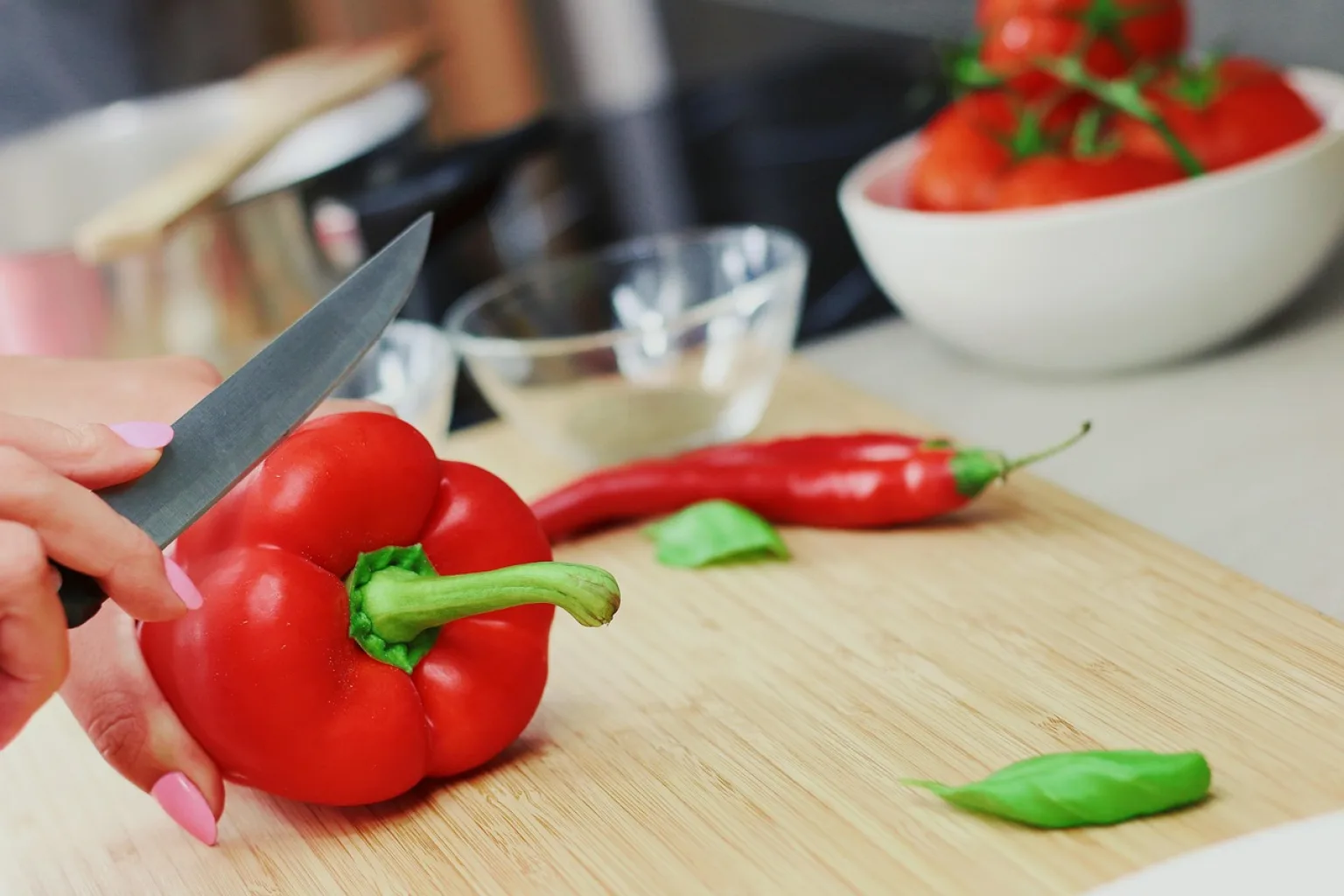
A bell pepper is a mild, fleshy pepper used as a vegetable in cooking, although botanically it is a fruit. It belongs to the Capsicum genus and the nightshade family. Fresh bell peppers are sold in several colors. Green peppers are generally described as more vegetal and less sweet, while red peppers are described as riper, sweeter and more aromatic. Yellow and orange peppers may have a mild, fruity character. Color and flavor can vary with variety and maturity, so color is a useful culinary guide rather than an absolute guarantee. Bell pepper should not be confused with black pepper or with paprika, a seasoning made from dried, ground peppers.
When to use it
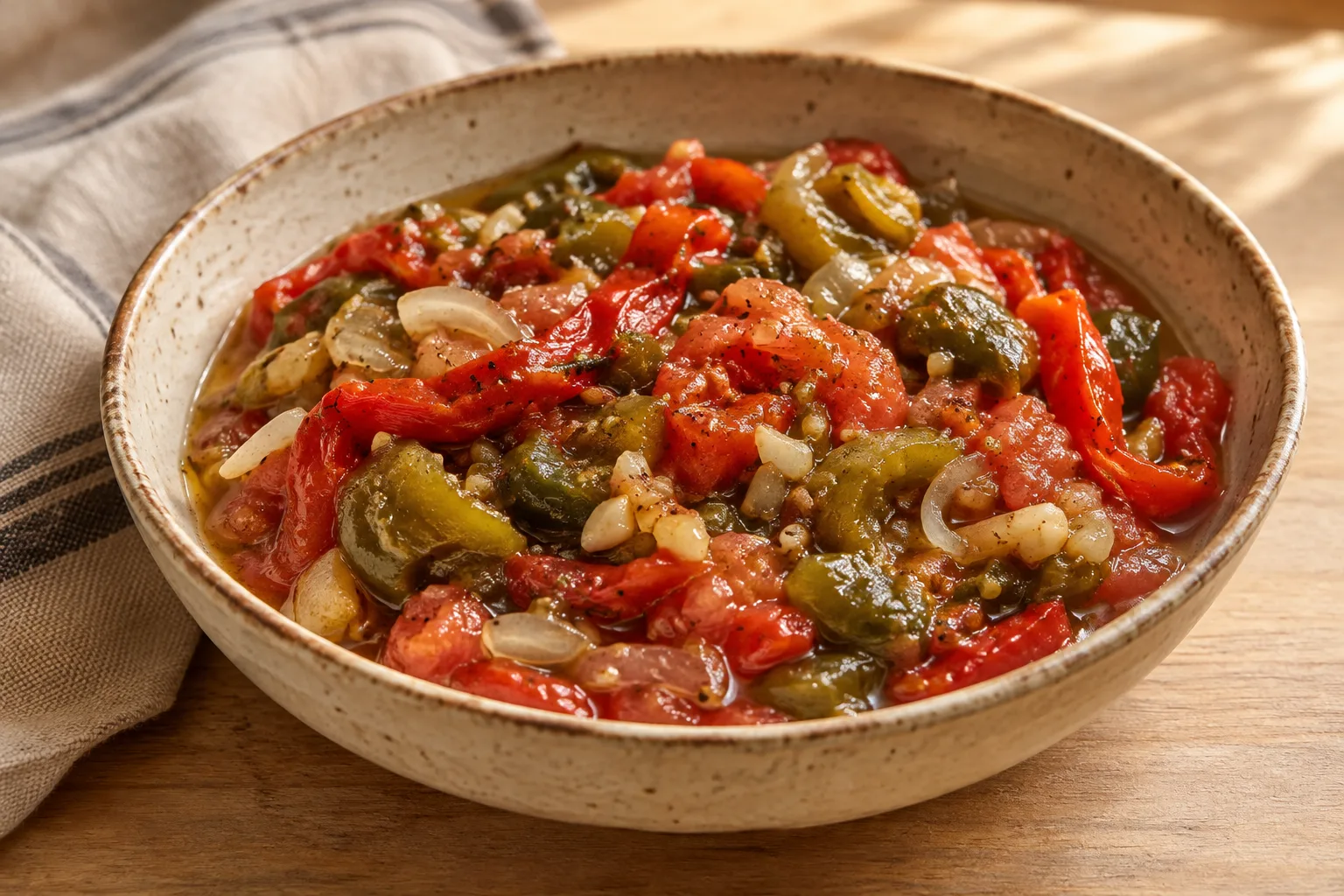
Choose bell pepper when you want color, fleshy texture and a mild sweet or vegetal flavor. Raw, it works in salads and crudités when a fresh, crisp bite is useful. Roasted or otherwise cooked, it can bring sweetness and softness to sofritos, rice dishes, stews and fillings. Green peppers generally suit dishes where a less sweet, more vegetal note is wanted; red, yellow or orange peppers can suit a sweeter or fruitier profile. For home-preserved products, do not improvise quantities or processing methods: follow a reliable tested recipe.
How to use it
Wash the pepper and cut it to suit the recipe. To serve it raw, remove the stem, seeds and inner white ribs if you prefer an even texture, then slice or dice it for salads and crudités. For cooking, cut it and add it to a sofrito, rice dish, stew or filling; you can also roast it until the skin blisters and peel it if desired. Roasting makes the flesh softer and can bring out a sweeter impression, while raw pepper stays crisp. To freeze it for later cooking, wash it, remove the stem, seeds and membranes, cut it, and freeze the pieces in a single layer before transferring them to a freezer-safe bag. Thawed pepper may be less firm, so it is especially useful in cooked dishes.
Flavour and texture
The flesh is thick and meaty, with a crisp texture when raw. Green peppers are generally more vegetal and less sweet; red peppers are described as riper, sweeter and more aromatic, while yellow and orange peppers may be mild and fruity. Roasting softens the flesh and can make its flavor seem sweeter. Variety and maturity can change these characteristics.
How to choose it
Choose peppers that are firm and crisp, with vivid color and smooth, shiny skin, and no soft spots, mold or visible decay. Thick-walled, fleshy peppers are useful for roasting or stuffing. Choose a color to suit the flavor you want: green is generally less sweet and more vegetal, while red is often sweeter and more aromatic. These are general tendencies, and individual peppers can vary.
Storage
Keep fresh peppers refrigerated and use them while they remain firm and in good condition; the available evidence does not establish a specific household storage duration for fresh peppers. To freeze, wash, remove the stem, seeds and membranes, cut the pepper, and first freeze the pieces spread in a single layer. Then transfer them to a freezer-safe bag or container, removing excess air. The texture may be less crisp after thawing, so use thawed peppers in cooked dishes. For shelf-stable home canning, follow a tested recipe rather than improvising the process.
Substitutions
To replace one color with another, use a different sweet bell pepper and account for the flavor you want: green is generally less sweet and more vegetal than red, yellow or orange. The swap is not entirely neutral in flavor. If a recipe calls for a dried pepper, a hot variety or a preserved product, do not assume fresh bell pepper will have the same flavor or cooking behavior.
Common mistakes
Do not assume that all colors taste the same: green peppers are generally less sweet than red, and some yellow or orange peppers have a mild, fruity profile. Do not confuse fresh bell pepper with paprika, a dried, ground seasoning, or with dried or hot pepper varieties. Remember that frozen pepper can lose firmness after thawing, and plan to use it in cooked dishes.
Safety and allergens
Wash the pepper before cutting it. If making a shelf-stable home preserve, do not improvise the recipe or processing method: peppers are low-acid vegetables, so use tested preservation instructions.
Culinary uses
- Fresh vegetable for salads and crudités
- Cooked ingredient for sofritos, fillings, rice dishes and stews
Recommended techniques
- Serve raw, washed and sliced
- Roast until the skin blisters, then peel if desired
- Sauté or fry as part of a cooked dish
- Cut and freeze for later use in cooked dishes
Pairs well with
- Rice and other cooked grain dishes
- Fish, including cod
- Meat and vegetable fillings
Frequently asked questions
Can bell pepper be eaten raw?
Yes. It is eaten raw, for example in salads or crudités, and remains crisp. Wash it before cutting.
Is green bell pepper as sweet as red?
Not usually. Green peppers are generally more vegetal and less sweet; red peppers are described as riper, sweeter and more aromatic. Flavor can also vary by variety.
Can fresh bell pepper be frozen?
Yes. It can be washed, cut and frozen raw. It may lose some firmness when thawed, so it is useful in cooked dishes.
Sources and review
Automatically researched, cross-checked and validated content. Sources consulted:
- Client Challenge doi.org
- El pimiento rojo:¿ una verdura o un condimento? - Grupo Gastronómico El Almirez ggelalmirez.com
- Pimientos: variedades y usos en cocina - CocinoPedia.com cocinopedia.com
- Freezing Pimientos - National Center for Home Food Preservation nchfp.uga.edu
- The Ultimate Guide to Hot Peppers - Escoffier escoffier.edu
- How to Freeze Sweet, Bell and Hot Peppers | UNL Food | Nebraska food.unl.edu
- El Pimiento Y Su Importancia En La Gastronomía Española - Restaurante Romero restaurante-romero.es
- Conservando los Coloridos Pimientos del Huerto extension.psu.edu
- Publicaciones de Seguridad alimentaria aesan.gob.es
- Salsa, Peppers and Spices ucanr.edu
- Preserve Smart apps.chhs.colostate.edu
- Preserving Vegetables | Home & Garden Information Center hgic.clemson.edu
- Pimiento morrón: Usos en la cocina según la variedad | Cocinatis cocinatis.com
- Pimiento morrón - Gastronomía Vasca: Escuela de Hostelería Leioa gastronomiavasca.net