- Category
- Herbs and spices
- State
- Dry
- Usual unit
- teaspoon
What it is
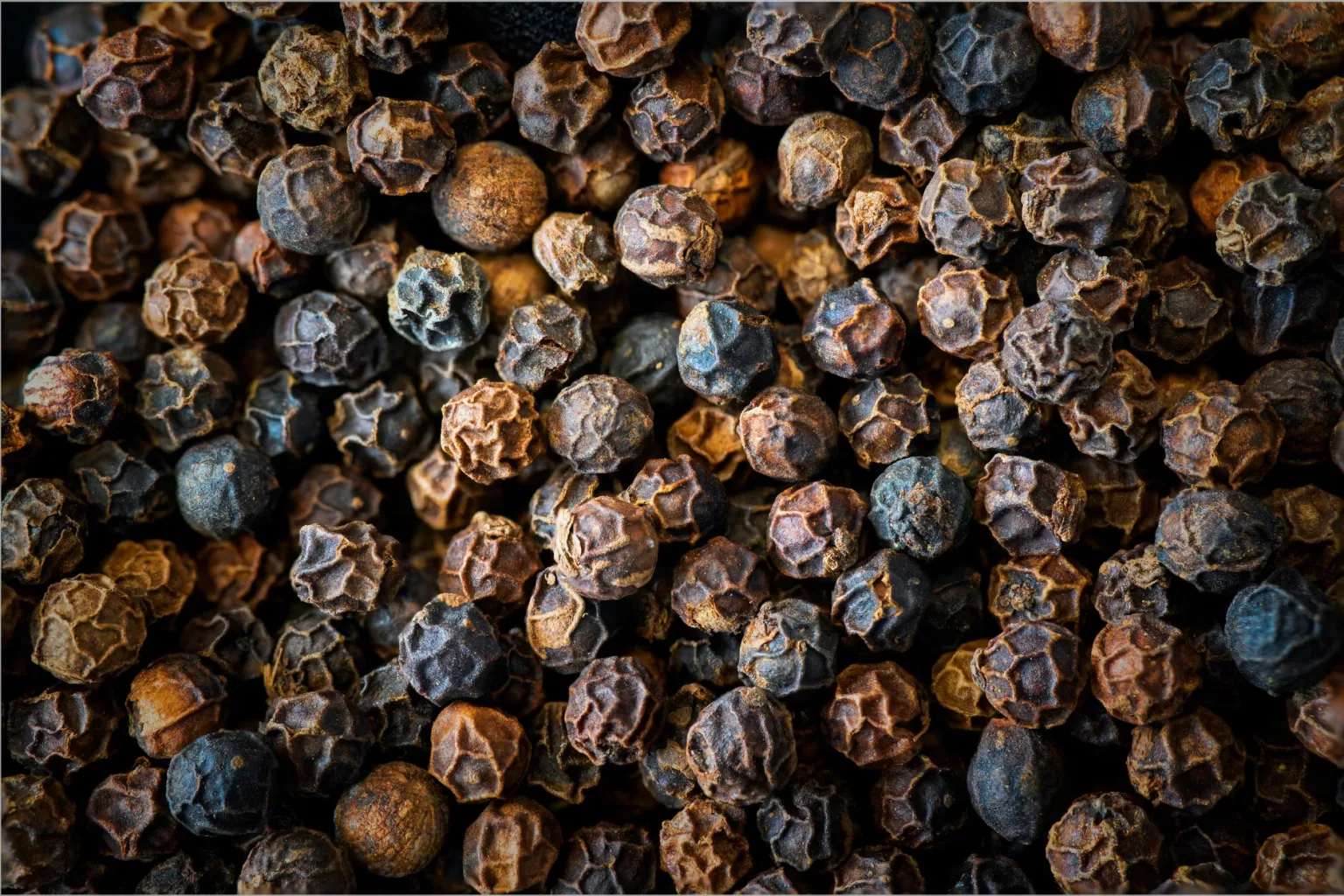
Whole black peppercorns are the dried fruit of Piper nigrum, a climbing plant in the Piperaceae family. The berries are harvested before full maturity and develop their familiar dark colour and wrinkled surface as they dry. Black pepper is sold whole as well as ground. Keeping it whole lets you grind it when needed or add the peppercorns intact to a dish. Its culinary profile is pronounced, aromatic, and peppery, with a slight bitterness described for this variety. Black peppercorns are not paprika, nor are they interchangeable in name with other pepper-like spices from different plants.
When to use it
Use black pepper when you want a warm, assertive heat and aroma, or when you want to control the intensity by grinding only what you need. It is used in stews, braises, roasts, pickling preparations, sauces, salads, and meat or fish dishes. Whole peppercorns suit liquid-based cooking and marinades; freshly ground pepper is convenient as a finishing seasoning. Its flavour is pronounced, so begin with a small amount, taste, and add more only if needed.
How to use it
Grind the peppercorns in a pepper mill or crush them in a mortar just before adding them when you want a fine, aromatic seasoning. For a more noticeable texture, leave some pieces coarsely crushed. You can add whole peppercorns to stews, braises, pickling preparations, or marinades and let them accompany the cooking. Alternatively, grind pepper directly over salads, sauces, meat, fish, or vegetables. Add it gradually and taste as you go, because too much can dominate a dish. The best form depends on the result you want: whole peppercorns for cooked preparations, or freshly ground pepper as a table or finishing seasoning.
Flavour and texture
Black peppercorns have an intense aroma and a warm, peppery, slightly bitter taste. The dried whole peppercorn is hard and wrinkled; used whole, it gives a more localised presence, while freshly ground pepper spreads more evenly through a dish. The perceived heat varies with the amount and how it is used. Its aroma is often more vivid when the pepper is ground just before use.
How to choose it
Choose whole peppercorns if you want to grind them as needed and control the coarseness. Check the label to make sure the product is black pepper rather than another variety or a mixed-pepper blend. If you can see the contents, look for whole, dark, wrinkled peppercorns without an obvious quantity of broken pieces. Aroma can be a useful freshness cue when the packaging allows you to assess it. Do not assume an origin or harvest season that the label does not state.
Storage
Keep peppercorns in a tightly closed container in a cool, dark place to help preserve their aroma. Avoid leaving them exposed to light, heat, or moisture, and close the container after each use. Keeping the peppercorns whole until needed is a practical way to grind only the amount required. Follow any storage directions on the package; the available evidence does not establish a universal storage period.
Substitutions
Ground black pepper is a straightforward alternative when you do not have whole peppercorns; use a little and adjust to taste. White pepper can be an option when you want a milder profile or are seasoning a delicate preparation, but its flavour is not identical. There is no universal one-to-one quantity for these alternatives, so taste and adjust gradually.
Common mistakes
Adding too much pepper at once can make its heat and aroma overwhelm the dish. Start with a small amount and taste before adjusting. Another mistake is expecting white pepper or a mixed-pepper blend to taste exactly like black pepper. For a more vivid aroma, keep peppercorns whole and grind only what you plan to use.
Safety and allergens
Use it as a seasoning and adjust the amount to suit the people eating, since its pronounced heat and flavour may be too strong for some. The supplied evidence contains no specific official warning about ordinary culinary use of peppercorns.
Culinary uses
- Condimento aromático y picante
- Realzar el sabor de guisos, salsas y otros platos
Recommended techniques
- Moler justo antes de usar
- Añadir en grano o molida a guisos y salsas
Pairs well with
- Carnes y pescados
- Guisos, estofados y salsas
- Ensaladas y verduras
Frequently asked questions
Are whole and ground black pepper the same ingredient?
They are two forms of black pepper. Ground pepper is convenient; whole peppercorns can be freshly ground or added intact.
When should I grind peppercorns?
Grinding them just before use lets you add a fresher aroma and control both the amount and coarseness.
What dishes use black pepper?
It is used in stews, braises, roasts, pickling preparations, sauces, salads, and meat or fish dishes.
Estimated nutrition
- Fat
- 0 g
- Saturates
- 0 g
- Carbohydrate
- 0 g
- Sugars
- 0 g
- Protein
- 0 g
- Salt
- 0 g
Sources and review
Automatically researched, cross-checked and validated content. Sources consulted:
- Pimentón - Wikipedia, la enciclopedia libre es.wikipedia.org
- The Essential Glossary of Cooking Terms for the Culinary Arts - Escoffier escoffier.edu
- Pimienta: origen, tipos, propiedades y usos en la cocina bonviveur.com
- Pimienta- Gastronomía - Región de Murcia Digital regmurcia.com
- - YouTube youtube.com
- Extracto en Polvo de Pimienta Negra doi.org
- Pimienta negra en grano | Por qué incluirla en tus comidas jetextramar.com
- ¿Cómo usar la pimienta en la cocina? | Recetas Nestlé recetasnestle.com.ec
- Pimienta Negra en Polvo doi.org
- Beneficios de la pimienta negra: propiedades y usos culinarios munozypujante.com
- La pimienta negra | El Huerto Urbano elhuertourbano.net
- Los secretos de la pimienta lavanguardia.com