- Category
- Grains, flour and pasta
- State
- Dry
- Usual unit
- g
What it is
Bomba rice is a short, rounded-grain rice variety. On a product described as bomba-style, the wording signals the style of rice intended, but check the package name to find out exactly which variety is being sold. Sources describe bomba grains as resistant to splitting during cooking and able to expand as they absorb liquid. It is used especially for paella and similar rice dishes. Not every round rice behaves the same way: variety, the particular product, and cooking method all affect the final texture.
When to use it
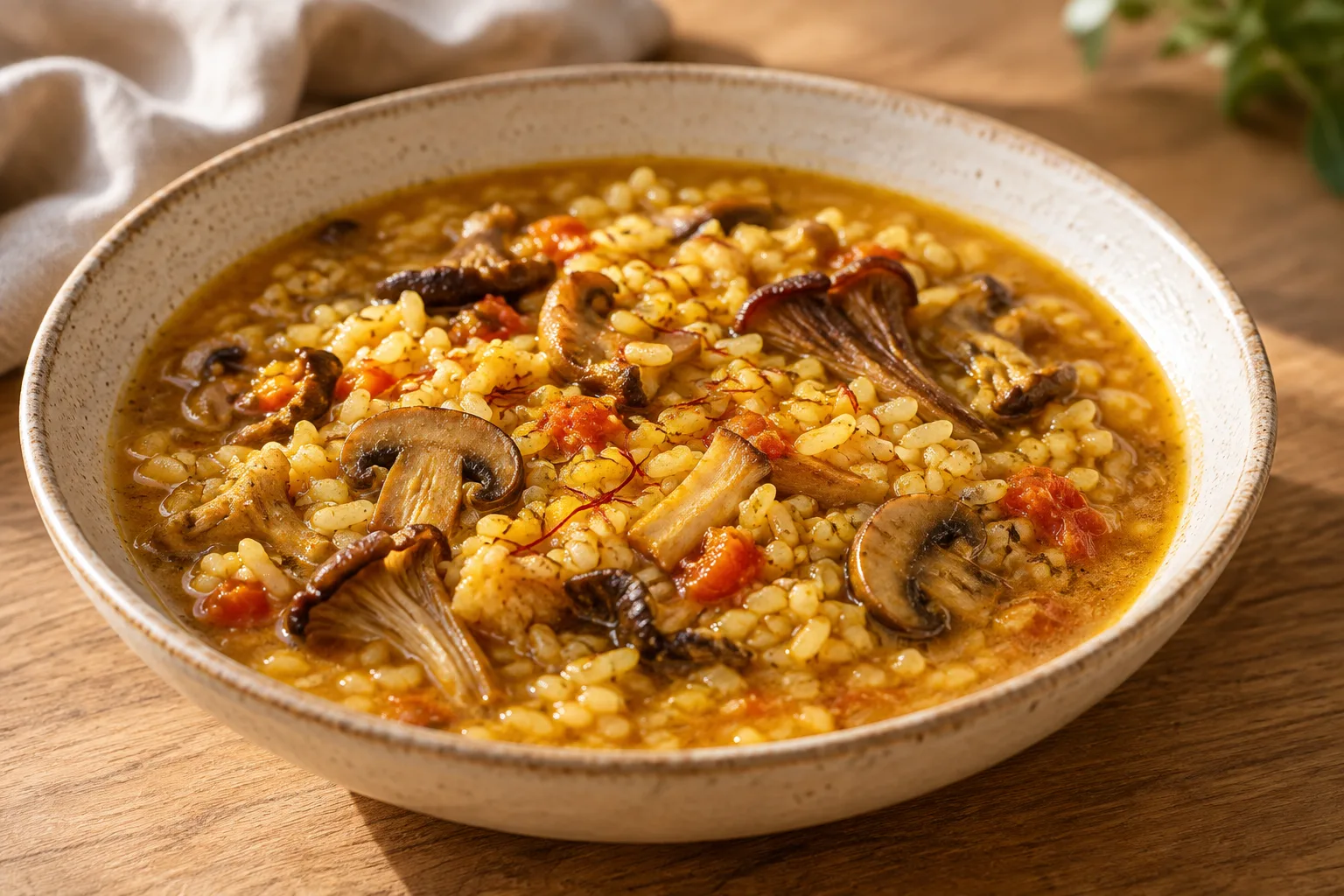
Choose it for paella or another rice dish where you want the grains to take up cooking liquid and retain their shape. It can also be used in soupy or creamy rice dishes, although the result depends on the recipe and control of the cooking. If you want a very creamy texture, check whether the recipe calls for a more suitable rice. When the package says “bomba-style,” check the product information rather than assuming that every brand will cook identically.
How to use it
Use the rice according to the package directions and the quantities specified by your recipe; there is no universal liquid measure that guarantees the same result with every product. For paella, distribute the rice as directed by the recipe and cook it with the specified stock, checking the grain for doneness. For soupy or creamy rice, choose a recipe designed for that finish and adjust the liquid according to its directions. Do not automatically copy cooking times or quantities from another rice: sources note that bomba may need more liquid than some other rice, but the specific directions vary.
Flavour and texture
The uncooked grains are commonly described as short, rounded, and pearly in appearance. Their flavor is described as mild or neutral, so stock and the other ingredients contribute much of the dish’s character. When cooked, bomba rice can absorb liquid and expand without splitting easily; a firm texture and distinct grains are often desired. This is not guaranteed in every preparation: the result changes with the product, liquid ratio, and cooking method.
How to choose it
Check that the package identifies the product as bomba rice or clearly describes it as bomba-style; “round rice” alone does not confirm that it is this variety. Also read the food name and directions for use to understand what you are buying and how the producer recommends using it. If a recipe depends on a particular texture, choose a product whose label and description fit that use. A pearly appearance may offer a clue, but it is not enough on its own to identify the variety.
Storage
Check and follow the storage directions on the package, since applicable information may depend on how the product is presented. Keep the rice identified with its label so you can refer to its name and any use or storage advice. If buying it loose, ask for the available product information and directions. Do not assume a particular date or special storage condition for the rice unless it appears on the package or is provided by the seller.
Substitutions
Round rice can work as a substitute in some recipes, but it is not necessarily equivalent to bomba: liquid absorption and final texture may differ. Another short- or medium-grain rice may work if the recipe allows it, but follow its own directions and adjust the liquid accordingly. In paella, where keeping recognizable grains matters, a substitute can change the result; do not switch quantities blindly.
Common mistakes
Treating every round rice as bomba can lead to a different result because varieties do not all behave alike. Another common mistake is copying liquid amounts or cooking directions from a different product without checking. Bomba’s resistance does not mean it cannot overcook or that it always absorbs exactly the same amount: use a suitable recipe and check the grains as they cook.
Safety and allergens
Check the product label and follow its use and storage directions. If you have an allergy or intolerance, consult the package allergen information or ask the seller when buying loose; do not assume that prepared or mixed products have the same ingredients as plain rice.
Culinary uses
- Base para paellas y arroces secos
- Grano para arroces caldosos o melosos
Recommended techniques
- Cocción en paella
- Cocción en caldo, ajustada a las indicaciones del envase
Pairs well with
- Caldo y otros ingredientes de la receta
- Verduras, carnes o mariscos en arroces compuestos
Frequently asked questions
Is bomba rice the same as round rice?
Not necessarily. Bomba is a short, rounded-grain variety; the term “round rice” can cover rice with different cooking behavior.
What dishes is it commonly used for?
It is used especially for paella and similar rice dishes. It can also be used in soupy or creamy preparations when the recipe suits it.
Can I use the same quantities as for another rice?
Do not assume so. Follow the product and recipe directions, since liquid requirements can vary between rices.
Sources and review
Automatically researched, cross-checked and validated content. Sources consulted:
- En el etiquetado alimentario hay algunas menciones que son obligatorias eletiquetadocuentamucho.aesan.gob.es
- Aesan - Agencia Española de Seguridad Alimentaria y Nutrición aesan.gob.es
- Arroz bomba - Wikipedia, la enciclopedia libre es.wikipedia.org
- Arroz Bomba: Guía Completa, Propiedades y Diferencias lovingthermo.com
- Arroz bomba: beneficios, trucos y recetas montsia.es
- ¿Qué tipos de arroz existen? Variedades y características vaellocampos.com
- ¿Por qué debes utilizar arroz bomba en tus risottos si no tienes las variedades típicas? 20minutos.es
- Arroz Redondo o Bomba: Características y Usos | Brillante brillante.es
- Descubre por qué el arroz redondo bomba es la elección perfecta para tus platos internacionales superlekker.es
- ▷ ¿Qué diferencia hay entre arroz redondo y arroz bomba? | Como Cocinar y Comer comococinarocomer.com
- 🥇Diferencias entre arroz redondo y arroz bomba: tipos de grano y propiedades culinarias. reyvinoblanco.com
- Diferencia entre Arroz Bomba y Arroz Redondo: Características y Usos locosxlapaella.com
- Diferencia entre Arroz Bomba y Arroz Redondo: Características y Usos - Gastronomía y turismo en Valencia gastronómica valenciagastronomica.com
- Tipos de Arroz: Guía Completa de Variedades | ArrozSOS arrozsos.es
- Redondo, largo o bomba: por qué el arroz no se cuece igual elconfidencialdigital.com
- Los cinco tipos de arroz más usados en España (y cuál elegir para cada receta) - Paellalia – Caldos Caseros Concentrados paellalia.com