- Category
- Fish and seafood
- State
- Fresh
- Usual unit
- kg
What it is
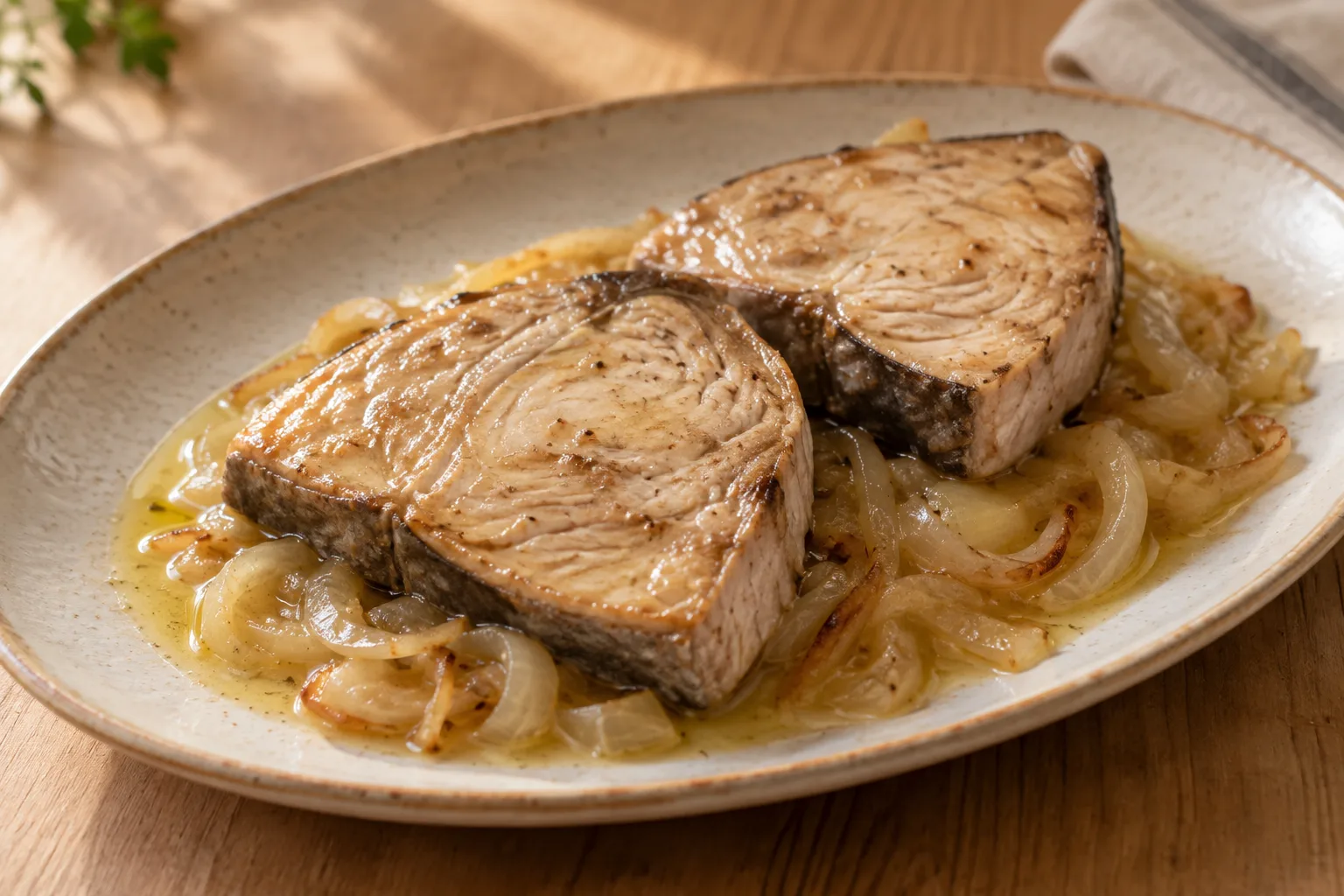
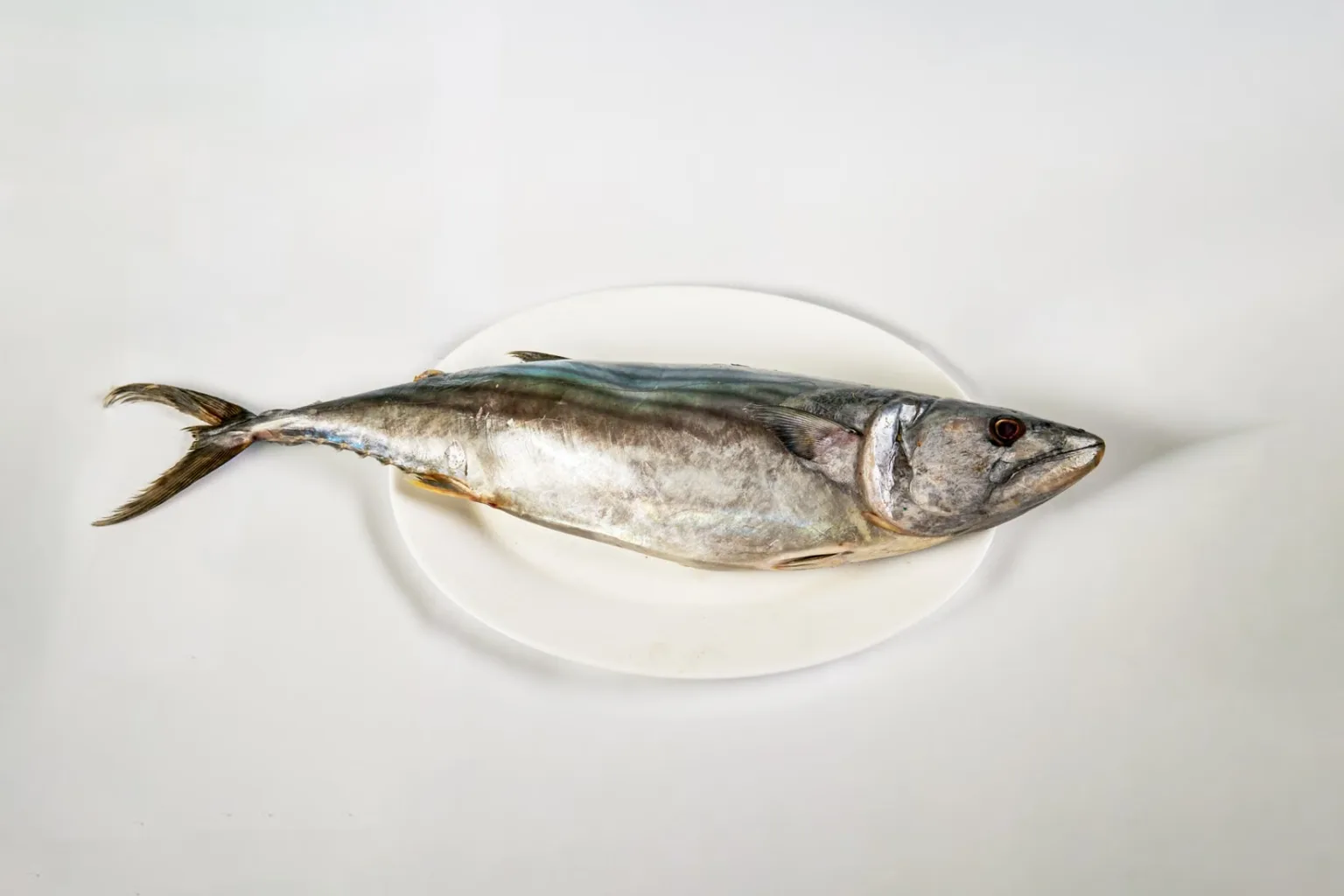
Bonito is a common name used for more than one fish in the Scombridae family, so it does not always identify a single species. Common bonito of the genus Sarda is not the same fish as bonito del norte, also called albacore or white tuna. The selling name and, where provided, the stated species help clarify what you are buying. In the kitchen, fresh bonito is sold in cuts such as loins, steaks and belly, and is used on a griddle or grill, in stews and in escabeche. Culinary sources describe its flesh as firm and juicy, although flavor and texture vary with species and cut.
When to use it
Use it when you want to serve fish as a main course or add it to a sauced dish. Loins and steaks are used for griddling or stewing; bonito also appears in recipes with tomato, onion and potato, as well as in escabeche. The name can refer to different species, and availability depends on the product and market, so one season cannot safely be assigned to every fish sold as bonito. If the species is unclear, check the product name or ask the seller.
How to use it
Before cooking, check which fish and cut you have, and follow the handling and storage directions on the label or from the seller. For a straightforward preparation, cook the cut on a griddle or grill and serve it with tomato, onion or vegetables. You can also add it to a potato stew with sauce, prepare it with tomato or onion, or use it for escabeche. These are documented uses, not a guarantee that every species and cut behaves alike. Thickness and recipe affect the result, so choose a reliable recipe suited to the piece rather than assuming there is one universal cooking time.
Flavour and texture
Culinary sources describe bonito flesh as firm and juicy, making it suitable for simple preparations as well as sauced dishes. There is no single profile for every fish sold under this name: bonito can refer to different species, and the cut also affects texture. Where possible, identify the species and do not automatically apply descriptions of bonito del norte or albacore to common bonito.
How to choose it
If the name bonito does not make the product clear, ask the seller which species it is. Common bonito and bonito del norte are not interchangeable names for one species. Choose a cut to suit the dish; loins, steaks and belly are used in different preparations. For packaged fish, check the label for the product name and storage and use directions. If it is sold unpackaged, ask the seller for the relevant information.
Storage
Store the fish according to the label or the seller’s directions, since these may depend on the product and how it is sold. For packaged fish, check the storage instructions and date on the label. For unpackaged fish, ask how to keep and use it safely. The available information does not support one universal storage time or temperature for every bonito product.
Substitutions
Tuna or albacore may work as alternatives in some preparations, but they are not automatically equivalent to bonito. The common name bonito can refer to different species, and flavor and texture can vary between fish and cuts. Check the alternative product’s name and adapt the recipe to the piece available.
Common mistakes
A common mistake is treating bonito, bonito del norte and tuna as if they always mean the same fish. Bonito can name more than one species, while bonito del norte is also sold as albacore or white tuna. Check the product name and do not assume every product shares the same season, texture or cooking method.
Safety and allergens
Bonito is fish. Check allergen information and follow the label or seller’s storage and safe-use directions. If you plan to eat it raw or lightly cooked, consult current official guidance for the product and location; the information available here does not establish a specific preventive method.
Culinary uses
- Main-course fish for griddling or grilling
- Ingredient for stews, tomato or onion dishes, and escabeche
Recommended techniques
- Griddling or grilling
- Stewing
- Preparing as escabeche
Pairs well with
- Tomato
- Onion
- Potato
Frequently asked questions
Is bonito the same as bonito del norte?
Not necessarily. Bonito can refer to different species; bonito del norte is also known as albacore or white tuna. Check the product name or stated species.
What ingredients pair with bonito?
Tomato, onion and potato appear in different bonito recipes, including stews and sauced dishes.
How can bonito be cooked?
It is used on a griddle or grill, in stews and as escabeche. The species and cut help determine a suitable preparation.
Estimated nutrition
- Fat
- 25.4 g
- Saturates
- 5.45 g
- Carbohydrate
- 0 g
- Sugars
- 0 g
- Fibre
- 0 g
- Protein
- 23.6 g
- Salt
- 1.46 g
Sources and review
Automatically researched, cross-checked and validated content. Sources consulted:
- En el etiquetado alimentario hay algunas menciones que son obligatorias eletiquetadocuentamucho.aesan.gob.es
- Client Challenge doi.org
- Revista del comité científico de la aecosan número 24 aesan.gob.es
- Atún y bonito: diferencias, variedades, usos y tradición conmuchagula.com
- WIN79 : Link SLOT777 Terbaik Hari Ini Situs Slot Gacor Maxwin Gampang Jackpot Hoki wasabidelnorte.es
- ¿Qué es bonito? - Spiegato spiegato.com
- 10 recetas con bonito: ideas deliciosas para aprovechar este pescado de temporada bonviveur.com
- Boniato: ¿Cuáles son sus usos? | Recetas Nestlé recetasnestlecam.com
- Bonito: Propiedades y beneficios - Dialprix dialprix.es
- Bonito: propiedades, beneficios y valor nutricional lavanguardia.com
- El bonito del norte, un pescado en todo su esplendor más allá del marmitako (y otras cuatro recetas para que brille) directoalpaladar.com
- Pimienta: Variedades y usos Culinarios petitchef.es
- Gastronomía de Galicia - Wikipedia, la enciclopedia libre es.wikipedia.org
- 8 recetas para disfrutar del bonito del norte | El Diario Vasco diariovasco.com
- Cómo cocinar el bonito para que quede jugoso: Guía paso a paso • Pim Pam Cook pimpamcook.es
- Recetas con Bonito - Gallina Blanca gallinablanca.es