- Category
- Bread and dough
- State
- Fresh
- Usual unit
- slice
What it is
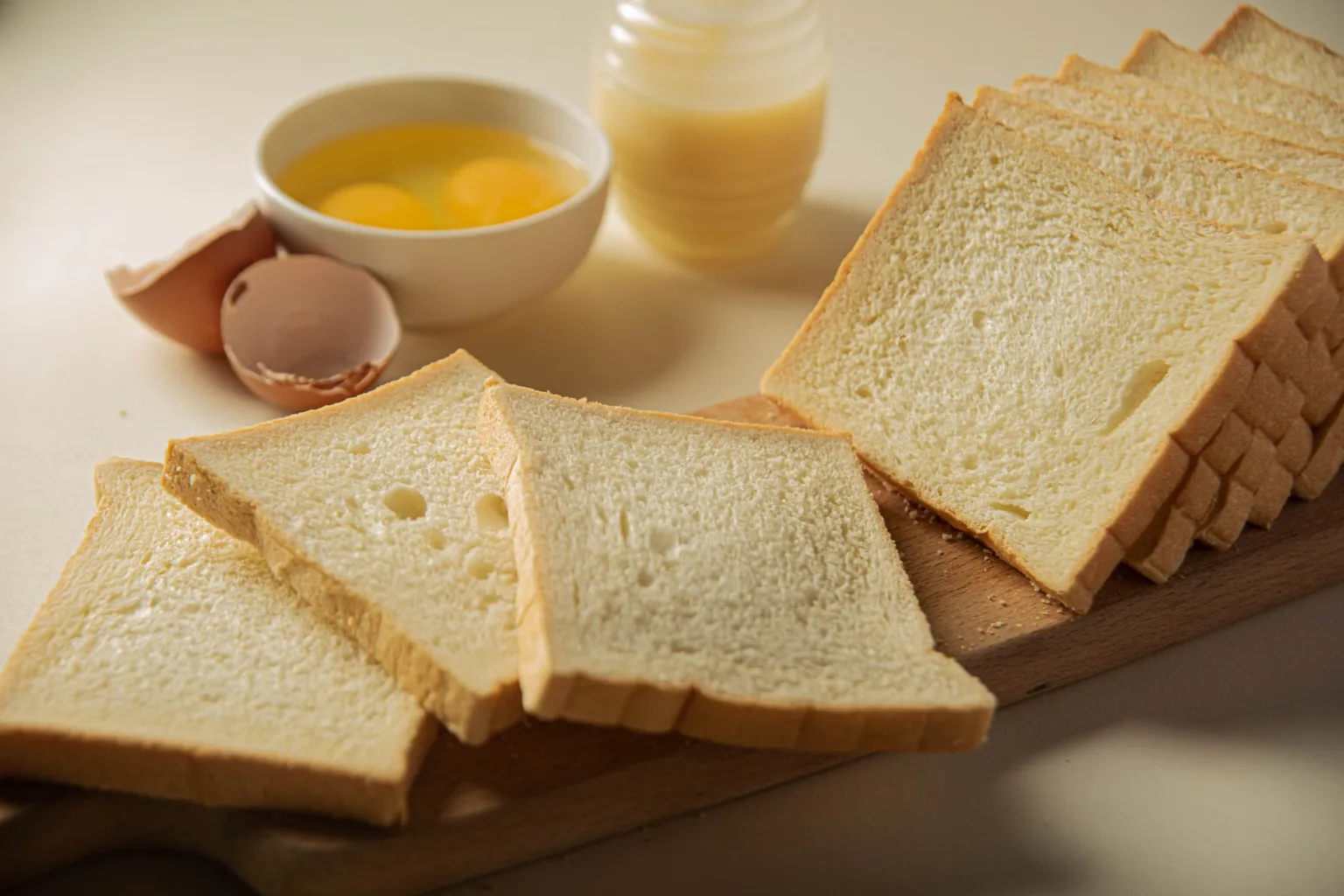
Bread is a food usually made by baking a dough based mainly on cereal flour, water, and salt. Many recipes use yeast: fermentation produces gas and helps the dough rise and become more airy. There are also breads made without yeast and varieties made from cereals other than wheat, including rye, barley, corn, and rice. Some recipes add seeds, fats, eggs, sugar, fruit, nuts, or vegetables, so ingredients and texture differ from one product to another. The word “bread” does not describe one fixed recipe. Check the ingredient list to find out what a particular loaf or portion contains.
When to use it
Use bread when you need a base to hold sandwich or roll fillings, or when you want an accompaniment for soup or sauce. The variety and shape matter: bread may come as slices, loaves, rolls, or flatbreads, with crumb that is more or less airy and crusts that differ from one product to another. Choose according to how you plan to serve it and the structure your dish needs. If you want a variety made without yeast, unleavened bread is an option; for a flatter format, consider flatbread. Check the ingredients when the bread’s composition matters.
How to use it
Cut bread into slices or pieces to suit the way you plan to serve it. For a sandwich or filled roll, use it as the base and add the filling ingredients specified in your recipe. You can also serve bread with soup or use it alongside a sauce; these are established uses for different bread varieties. Bread does not have one standard recipe: some doughs ferment with yeast and others do not, and recipes may include added ingredients such as seeds, fats, eggs, or fruit. Before using it, make sure the variety suits the result you want and read the product information if you need to know its ingredients or allergens.
Flavour and texture
Bread’s flavor and texture depend on its flour, recipe, fermentation, and shape. The crumb may be airy in fermented breads or denser in some varieties; crusts also vary between products. Cereals other than wheat and additions such as seeds, fats, or fruit can result in breads with different characteristics. Do not assume that every bread has the same flavor, texture, or ingredients.
How to choose it
Choose a shape and texture that fit how you plan to serve the bread: sliced bread for sandwiches, for example, or a format suited to serving alongside soup or sauce. Read the ingredient list to identify the main cereal and any additions, such as seeds, fats, eggs, or fruit. If you need to avoid a particular ingredient or allergen, also check the product’s allergen information or ask the seller; the name of a bread alone does not describe its full composition.
Storage
Check the package’s storage directions first and follow them, since products and packaging can differ. Keep bread protected from moisture and conditions that could reduce its quality, and consult the manufacturer’s guidance on storage and duration. Dates and directions may depend on the particular product and how it is sold. Remember that quality and safety are not the same: do not base a decision to eat bread on appearance or taste alone.
Substitutions
If you need a different variety, flatbread offers a flatter format, while unleavened bread is an option when you want bread made without yeast. Another cereal-based bread may also work, but its crumb, shape, and ingredients could differ and affect how it holds or accompanies the rest of the dish. Check the substitute’s ingredients, especially if you need to avoid a particular cereal or allergen.
Common mistakes
A common mistake is treating every variety as though it had the same recipe, texture, and best use. Bread can contain different cereals, yeast, and other ingredients, so do not assume its composition from the name alone. Also, do not ignore storage directions or confuse a date intended to indicate quality with a general guarantee of safety.
Safety and allergens
Check ingredient and allergen information, especially if you need to avoid wheat or another ingredient. Follow the storage and use directions on the package or provided by the seller; information requirements can differ by product presentation and sales format.
Culinary uses
- Base para sándwiches y bocadillos
- Acompañamiento para sopas y salsas
- Ingrediente para recetas que aprovechan el pan en rebanadas o trozos
Recommended techniques
- Horneado
- Fermentación de la masa cuando la receta incorpora levadura
- Corte en rebanadas o trozos para servir y montar preparaciones
Pairs well with
- Sopas
- Salsas
- Ingredientes de relleno para sándwiches
Frequently asked questions
Does all bread contain wheat and yeast?
No. Some breads use cereals other than wheat, and some are made without yeast. Check the ingredient list for the specific product.
How can I use bread with a meal?
It can form the base of a sandwich or filled roll and can be served alongside soup or sauce. Choose a format that suits the dish.
What should I check before buying bread?
Choose a format for your intended use and check the ingredients and allergen information. Follow the product’s storage directions too.
Estimated nutrition
- Fat
- 0 g
- Saturates
- 0 g
- Carbohydrate
- 52.1 g
- Sugars
- 2.08 g
- Protein
- 10.4 g
- Salt
- 1.4 g
Sources and review
Automatically researched, cross-checked and validated content. Sources consulted:
- En el etiquetado alimentario hay algunas menciones que son obligatorias eletiquetadocuentamucho.aesan.gob.es
- Pan - Wikipedia, la enciclopedia libre es.wikipedia.org
- Client Challenge doi.org
- Cooking Food Storage | USU extension.usu.edu
- Food Selection & Storage | Home & Garden Information Center hgic.clemson.edu
- A Guide to the Strategic Pantry - Orange County Center | N.C. Cooperative Extension orange.ces.ncsu.edu
- Learning How to Cook: A Guide for Beginners - Escoffier escoffier.edu
- Storing Staple Ingredients in the Kitchen extension.psu.edu
- El Gobierno aprueba una ley pionera contra el desperdicio alimentario para su tramitación parlamentaria mapa.gob.es
- African Cooking Ware Research Papers - Academia.edu academia.edu
- A Guide to the Strategic Pantry - Dare County Center | N.C. Cooperative Extension dare.ces.ncsu.edu
- Pan: Variedades, Ingredientes y Proceso de Elaboración - Studocu studocu.com
- Descubre el origen de diez tipos de panes tradicionales y las características que los hacen irresistibles abc.es
- Tipos de pan: guía completa de variedades y sus características profesionalhoreca.com
- Historia del pan: cómo conocimos este gran alimento - Pastas Gallo : Pastas Gallo pastasgallo.es