- Category
- Grains, flour and pasta
- State
- Fresh
- Usual unit
- unit
What it is
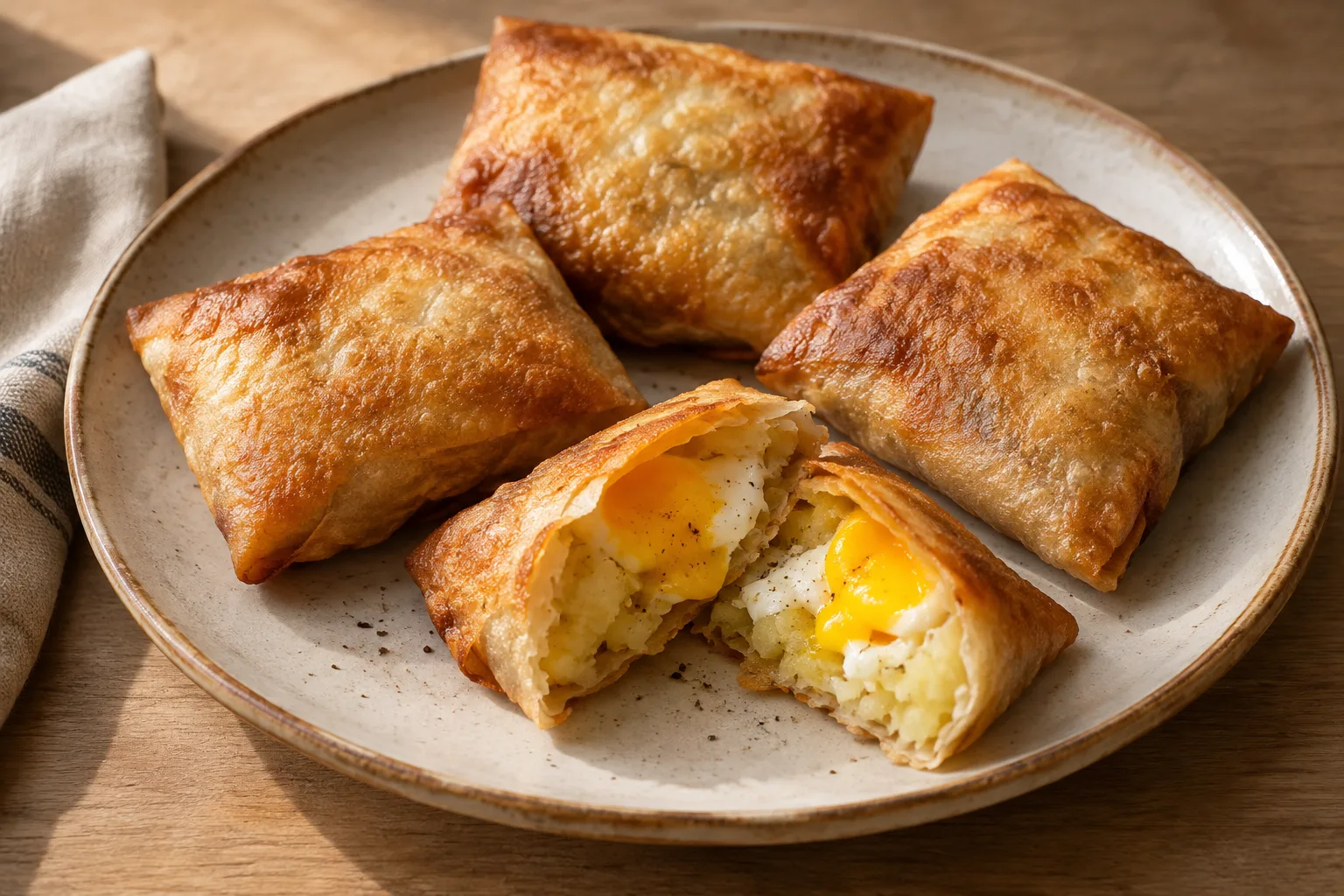
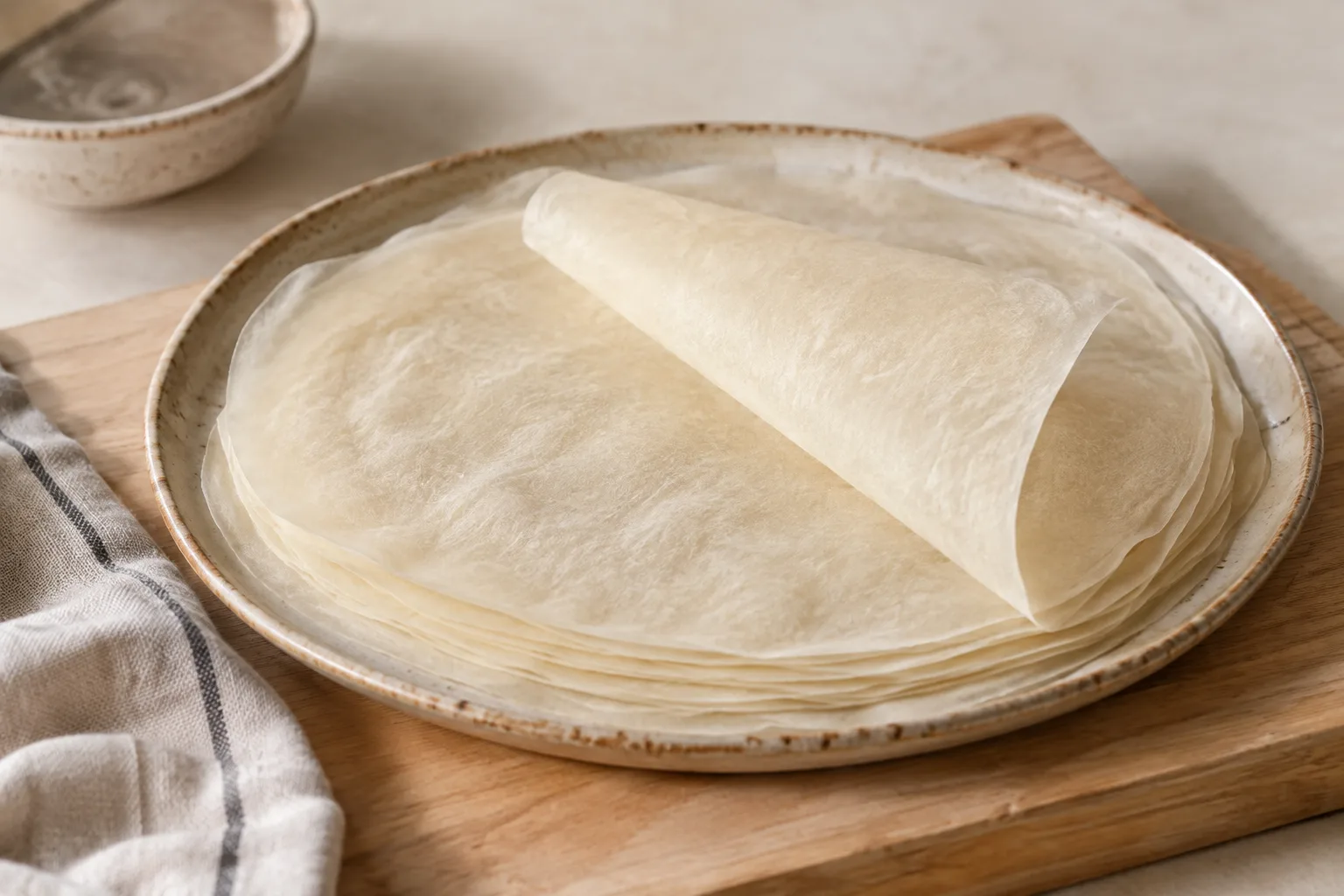
Brik pastry is a thin dough sold in sheets, often round or oval, and used to wrap, cover, or shape foods. The evidence describes versions made with wheat flour or wheat semolina, water, and salt, sometimes with oil as well. Recipes and packaged products are not necessarily identical: some industrial versions may include additional ingredients such as soy lecithin or citric acid, so check the label. Brik resembles filo pastry but is often somewhat thicker, more rustic, and sturdier. It is not puff pastry and should not be expected to rise into the same airy, lifted layers.
When to use it
Choose brik sheets when you want a crisp wrapper for a sweet or savory filling, or when you are shaping parcels, triangles, rolls, or small bites. They can also be used as a thin tart base or covering. Brik is useful when you want a sheet that is easier to handle than delicate filo, though it can still dry out when exposed to air. Filo can work in many similar recipes, but its fragility and the number of layers used may change the result.
How to use it
Prepare the filling and tools before opening the package so the sheets spend as little time exposed to air as possible. Separate the sheets carefully, add the filling, and fold into the shape you want without overfilling. Keep unused sheets covered with a well-wrung damp cloth while you work. Depending on the recipe, bake, fry, or cook the parcels in a pan with little or no fat. For a tart, avoid a filling that releases too much liquid if you want the pastry to stay crisp. Follow the package directions for the specific product you bought.
Flavour and texture
Brik pastry has a fairly neutral flavor, so it can accompany sweet and savory fillings without overpowering them. Once cooked, it can be thin and crisp, with a more rustic and sturdier texture than filo. The result depends on the brand, sheet thickness, cooking method, and moisture in the filling. Brik does not behave like puff pastry: its appeal is a light, crisp wrapper rather than a dough that rises into bulky layers.
How to choose it
Look for brik sheets in the refrigerated section and check the package for storage and handling directions. Choose an intact, properly closed package and read the ingredient list, since industrial formulas can vary and may include ingredients such as soy lecithin or citric acid. Round or oval sheets are common, but formats vary by maker. If you need a very thin, delicate sheet, compare the product with filo instead of assuming the two are identical.
Storage
Keep the package closed and refrigerated as directed by the manufacturer. After opening, reseal it carefully to limit exposure to air; the pastry can dry out and tear if left uncovered. Take out only the sheets you need and cover the rest, for example with a well-wrung damp cloth while working. Some sources say the pastry can be frozen, but use the package directions for your particular product; there is no universal storage period established here.
Substitutions
Filo can replace brik in many preparations, but it is more delicate and may work better in several layers. Brik can stand in for filo when a sturdier sheet is useful. The swap is not exact: thickness, hydration, and handling differ between products. For recipes that rely on one firm sheet, choose according to the pastry specified and the structure you need.
Common mistakes
Leaving the sheets exposed while preparing the filling can dry them out and make them break when folded. Another common error is treating brik as identical to puff pastry or filo; these doughs behave differently. Avoid overfilling a sheet or using a very wet filling when a crisp finish is the goal. Check the package rather than assuming every brand has the same ingredients or handling requirements.
Safety and allergens
Check the label for wheat and possible ingredients such as soy, and follow the manufacturer's storage directions. Do not use a package if its seal or condition gives you concern; discard it without tasting if it appears abnormal.
Culinary uses
- Envoltura fina y crujiente para rellenos salados o dulces
- Base o cubierta ligera para tartas y aperitivos
Recommended techniques
- Hornear
- Freír
- Cocinar en sartén con poca grasa o sin grasa
Pairs well with
- Verduras salteadas y queso
- Rellenos de carne o pescado
- Frutas y frutos secos
Frequently asked questions
Are brik and filo pastry the same?
No. They are similar and can be substituted in many recipes, but brik is generally somewhat thicker and sturdier, while filo is more delicate.
How can I stop brik sheets from tearing?
Prepare the filling before opening the package and cover unused sheets with a well-wrung damp cloth while you work.
Can brik pastry be used for sweet dishes?
Yes. It can be used for both sweet and savory preparations; the filling and cooking method shape the final result.
Sources and review
Automatically researched, cross-checked and validated content. Sources consulted:
- ¿Por qué la muerte es origen de miedos y tabúes? doi.org
- E-118: Storing Food Safely | New Mexico State University - BE BOLD. Shape the Future. pubs.nmsu.edu
- The Potential of a Tomato | Institute of Culinary Education ice.edu
- Culinary Arts | EICC eicc.edu
- Menus | RIT Dining | RIT rit.edu
- Culinary Institute of America | World's Premier Culinary College ciachef.edu
- microwave pasteurization of cooked pasta products: ... rex.libraries.wsu.edu
- Safe and Healthy: Food Product Dating trempealeau.extension.wisc.edu
- Pasta brick | Qué es, tipos. origen y usos culinarios codinafoods.com
- Pasta brick | Gastronomía & Cía gastronomiaycia.com
- ¿Qué puedo hacer con la masa filo y la pasta brick? | El Comidista | Gastronomía | EL PAÍS elpais.com
- Pasta Filo o philo, ideal para hacer dellciosas recetas eladerezo.com
- - YouTube youtube.com
- Hojaldre, masa quebrada, pasta ‘brick’, masa filo… ¿cómo distinguirlas? hola.com