- Category
- Pulses
- State
- Dry
- Usual unit
- g
What it is
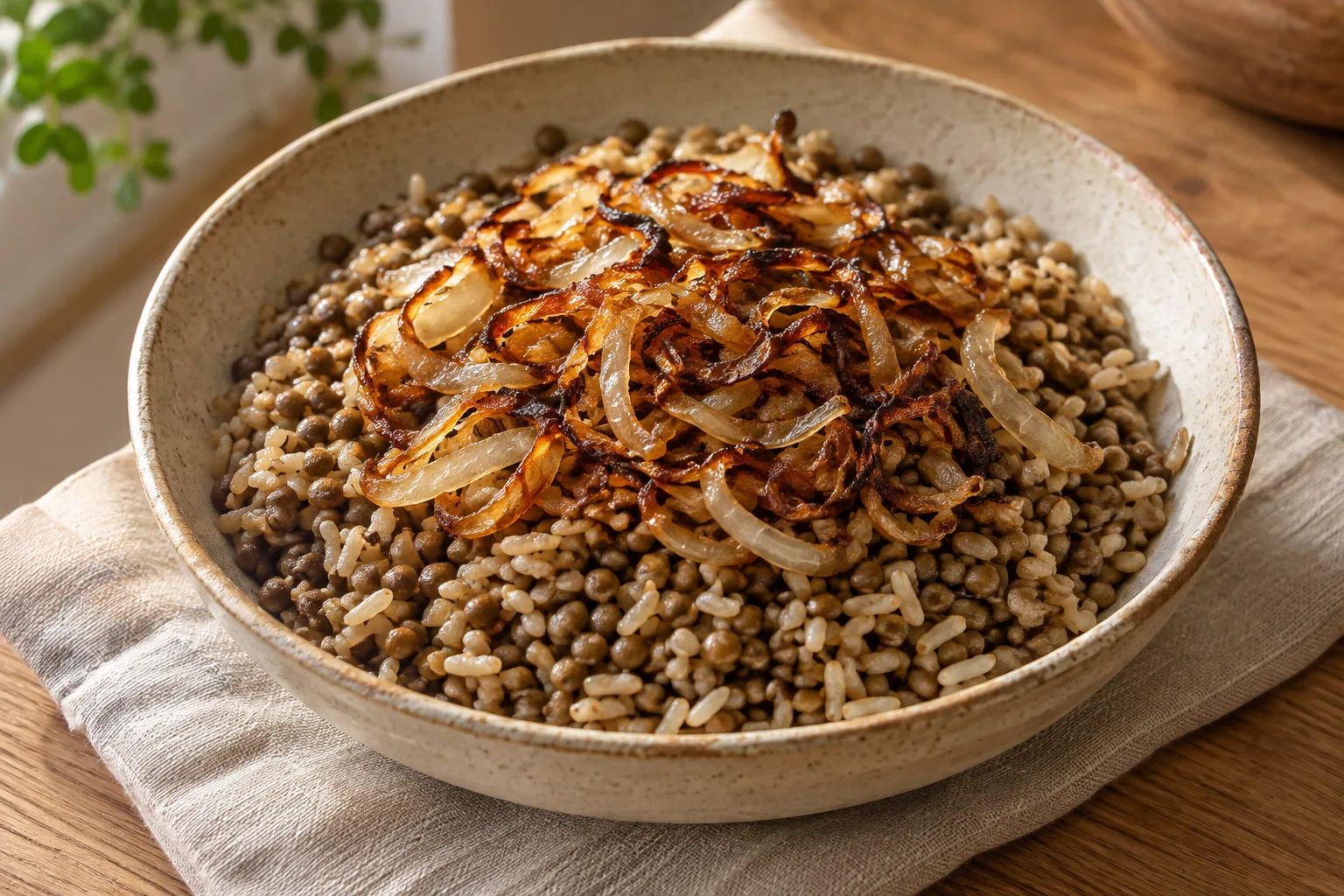
Brown lentils are a type of lentil, a legume commonly sold as a dry seed. Their color can range from khaki brown to very dark brown, and their flavor is described as mild and earthy. Compared with varieties that break down readily, brown lentils generally hold their shape during cooking, although they can become too soft if overcooked. This texture makes them useful in both spoonable dishes and warm salads. The name describes a group of brown-colored lentils, not a single uniform size or appearance: products can vary. This profile refers to dry lentils, not a fresh product.
When to use it
Choose brown lentils when you want the cooked legume to remain recognizably intact, such as in stews, casseroles and warm salads. They also work in soups and vegetarian preparations such as patties or meat-free loaves, where they add substance. Their mild, earthy profile leaves room for stock, vegetables and dressing to shape the final flavor. If you want a very creamy preparation or a purée that breaks down easily, red lentils may be a better fit because they lose their shape more readily.
How to use it
Before cooking, check the product and follow any directions on its package. Dry brown lentils can be simmered in liquid until tender; available information about lentils indicates that soaking is not essential. Check their texture as they cook and stop when they are tender but still have the shape you want. Add them to soups, stews or casseroles, or fold cooked lentils into vegetables for a warm salad. They can also be used in vegetarian patties or meat-free loaves. Adjust the liquid and seasoning to suit the recipe, since ingredients and desired results differ. Do not treat one fixed cooking time as universal: lentil type and preferred texture affect the result.
Flavour and texture
Their flavor is mild and earthy, without necessarily overpowering other ingredients. When cooked with care, brown lentils are tender and generally retain their shape. They can become too soft if cooked for too long, so check them as they prepare. Their color ranges from khaki brown to darker shades; visual variation alone does not mean they must be used differently.
How to choose it
Look for a product identified as brown lentils and check the package to confirm that it is sold as a dry product. The color can range from khaki brown to very dark brown, so bags need not look exactly alike. When buying in bulk, use the information provided at the point of sale to confirm the product name. Follow any use directions supplied with the purchase, since labeling can vary with the form of sale.
Storage
Store dry lentils in an airtight container in a place protected from light, heat and moisture. Keep the container closed between uses and check the package for any specific storage or shelf-life instructions. This guidance is for dry lentils; do not automatically apply it to cooked lentils or prepared products, which may have different storage directions.
Substitutions
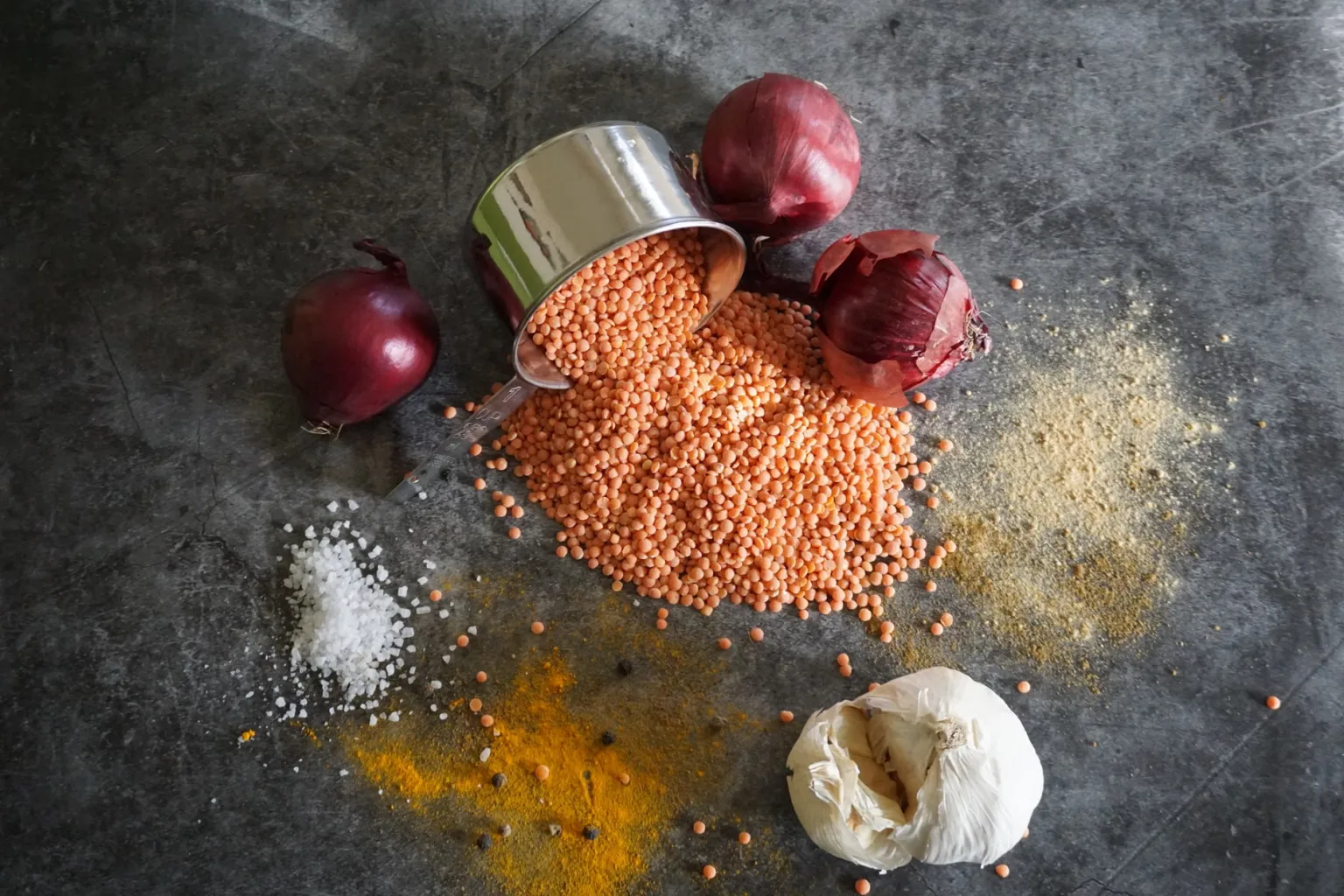
Green lentils can replace brown lentils in salads, stews or soups when you want a legume that holds its shape. Red lentils are an option for soups and purées, but they soften and break down more, so they do not give the same texture in a salad. Choose according to the result you want, not color alone, and check doneness because varieties behave differently.
Common mistakes
Cooking them longer than needed can make them lose their shape and become too soft. Another mistake is choosing red lentils for a salad that needs a firm texture: they tend to break down more than brown lentils. Do not assume that all lentils of the same color have identical size or appearance, and do not ignore package directions for use and storage.
Safety and allergens
Read the package information and follow its use and storage directions, especially if it gives product-specific instructions. For unpackaged lentils or prepared dishes, check the allergen information available at the point of sale or from the food service establishment.
Culinary uses
- Base for soups and stews
- Component in warm salads
- Ingredient for vegetarian patties
Recommended techniques
- Simmering until tender
- Cooking in soups or stews
- Cooking and folding into salads
Pairs well with
- Rice
- Vegetables such as spinach and red pepper
- Olive oil and vinegar in a salad dressing
Frequently asked questions
Do brown lentils need to be soaked?
Available information about lentils indicates that soaking is not essential. If the package gives different directions for the specific product, follow those directions.
What dishes are brown lentils suited to?
They are used in soups, stews, casseroles and warm salads. They can also be included in vegetarian patties or meat-free loaves.
Do brown lentils hold their shape when cooked?
They generally hold their shape fairly well, but can become too soft if overcooked. Check the texture while they cook.
Estimated nutrition
- Fat
- 1 g
- Saturates
- 0 g
- Carbohydrate
- 64 g
- Sugars
- 0 g
- Fibre
- 10 g
- Protein
- 24 g
- Salt
- 0 g
Sources and review
Automatically researched, cross-checked and validated content. Sources consulted:
- En el etiquetado alimentario hay algunas menciones que son obligatorias eletiquetadocuentamucho.aesan.gob.es
- Client Challenge doi.org
- Tipos de lentejas: características y cocción | Fine Dining Lovers finedininglovers.es
- Verdes, rojas o negras: tipos de lentejas y sus recetas habituales | Gastronomía elmundo.es
- CAMBIO JUSTO Y DURADERO future.edu
- MEJORAMIENTO DE LA CALIDAD NUTRICIONAL Y ... vtechworks.lib.vt.edu
- informe anual de indicadores - agricultura, pesca y alimentación servicio.mapa.gob.es
- Maqueta.qxp:Maqueta Comità CientÃfico Nâ« 2 aesan.gob.es
- Grow drought-tolerant vegetables to save water in the garden | Servicio de Extensión de OSU extension.oregonstate.edu
- Reconstructing Seville: Translating Eduardo del Campo's ... etd.ohiolink.edu
- Memoria 2023 unav.edu
- Agricultura-Boliviana-La-experiencia-de-la-quinua. ... campusvirtual.upb.edu
- Neologismes documentats en textos escrits i orals en ... repositori.upf.edu
- Lenteja - Gastronomía Vasca: Escuela de Hostelería Leioa gastronomiavasca.net
- Lentejas, el ingrediente de oro - Secretos Del Sur. secretosdelsur.com
- ¿Qué son las lentejas? | ¡TE LO CONTAMOS TODO! - Nutrición Duque restauranteduque.es