- Category
- Bread and dough
- State
- Fresh
- Usual unit
- unit
What it is
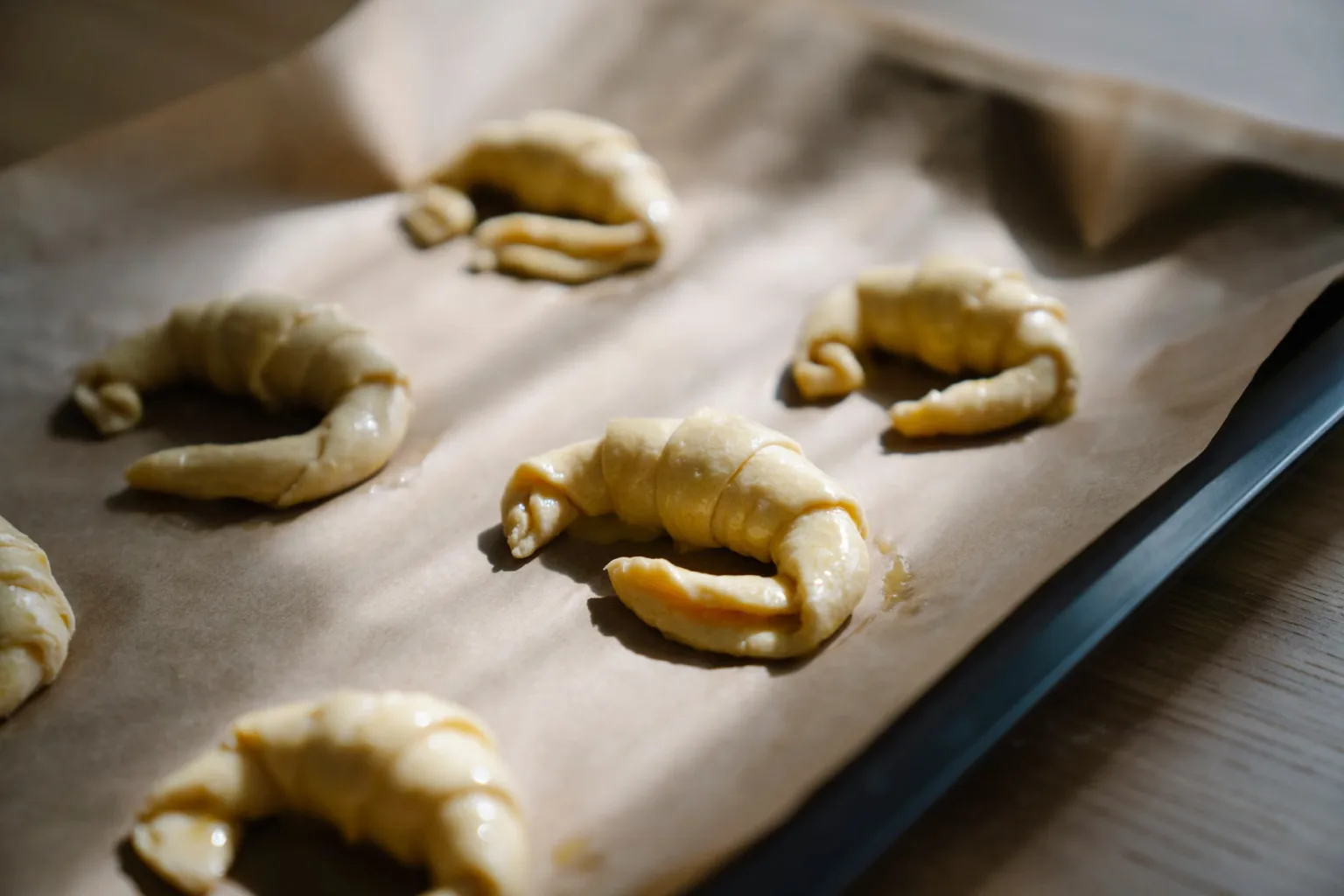
A butter croissant is a bakery pastry made from yeasted dough that is laminated with butter to create layers. Croissants are associated with a light interior and flaky exterior; the phrase “butter croissant” indicates the use of butter, but the exact recipe depends on the product. It may be sold plain or filled, and sweet or savory versions exist. The recipes in the available evidence describe flour, yeast, sugar, salt and butter, but they do not establish that every commercial croissant has the same ingredients.
When to use it
Serve one at breakfast or as a snack when you want a pastry that can be enjoyed plain or with an accompaniment. It can also be used as a simple base for fillings: cooked ham with cheese, or butter with jam, are combinations noted in the sources. Choose a plain version when you want to add your own filling, or a filled one for a ready-made option; check the ingredients whenever you need to avoid a particular food.
How to use it
Serve the croissant whole, open it to add a filling, or include it alongside other breakfast or snack foods. Documented combinations include cooked ham and cheese, and butter with jam; coffee is also mentioned as a common accompaniment. Plain croissants can suit sweet or savory additions, while filled varieties may contain different ingredients. If you heat one or use it in a preparation, follow the package or seller’s instructions: the available evidence does not establish one universal time or temperature.
Flavour and texture
Available descriptions characterize butter croissants as buttery and relatively delicate in flavor. They are described as having a crisp, flaky outside and an airy interior, although results vary between products and recipes. Plain versions may have a fairly neutral profile, making sweet or savory accompaniments suitable. A filling, when present, changes both the flavor and texture.
How to choose it
Check that the product is identified as a butter croissant and consult its ingredient list when available. Recipes and fillings can differ between bakeries and packaged products, so do not assume that every croissant follows the same formula. If you have an allergy or intolerance, consult the seller or package information, particularly for unpackaged pastries, and confirm which ingredients that may cause a reaction are present.
Storage
The available evidence does not establish a universal storage period or set of conditions for croissants. Follow the package directions for a packaged product, or ask the seller when buying one loose. Check any accompanying date and storage guidance; do not apply a specific refrigeration or freezing rule to all croissants without product information.
Substitutions
Where the recipe or serving allows, swap a plain croissant for a filled one, or the reverse, bearing in mind that the filling changes the flavor and ingredients. Another laminated pastry may serve a similar role as a flaky base, but it will not be identical in composition or result. Check the label if the substitution needs to meet a dietary restriction.
Common mistakes
Do not assume that all croissants have exactly the same ingredients or that the words “butter croissant” fully describe the recipe. Do not assume that a filled pastry has the same allergens as a plain one. If you need a particular texture or composition, verify the product and follow its storage and use directions.
Safety and allergens
Wheat and milk appear in the recipes consulted, but ingredients can vary. Check the package or ask the seller about ingredients and allergens; required food information can depend on whether the product is packaged or sold unpackaged.
Culinary uses
- Bollería para desayuno o merienda
- Base para rellenos dulces o salados
Recommended techniques
- Laminado de masa con mantequilla
- Corte, enrollado y horneado
Pairs well with
- Jamón cocido y queso
- Mermelada
- Café
Frequently asked questions
What makes a croissant a butter croissant?
The name indicates that butter is used in its preparation, especially for laminating the dough. The exact recipe can vary by product.
What can I serve with a butter croissant?
Options described in the sources include cooked ham with cheese, butter with jam, and coffee. It can also be served plain.
Do all butter croissants contain the same allergens?
You should not assume so. Recipes can vary; check the package information or ask the seller about ingredients and allergens.
Estimated nutrition
- Fat
- 16.9 g
- Saturates
- 10.4 g
- Carbohydrate
- 44.2 g
- Sugars
- 5.19 g
- Fibre
- 1.3 g
- Protein
- 7.79 g
- Salt
- 1.07 g
Sources and review
Automatically researched, cross-checked and validated content. Sources consulted:
- En el etiquetado alimentario hay algunas menciones que son obligatorias eletiquetadocuentamucho.aesan.gob.es
- ¿Por qué la muerte es origen de miedos y tabúes? doi.org
- The Essential Glossary of Cooking Terms for the Culinary Arts - Escoffier escoffier.edu
- Lo que Necesita Saber Sobre Derrames Cerebrales patientslearn.uams.edu
- Healthy Eating Plan for Weight Management med.uc.edu
- 21 Seminarios de panadería y pastelería | Culinary Institute Lenotre culinaryinstitute.edu
- NUTRITION IN ME 4th GRADE Curriculum - Wsu s3.wp.wsu.edu
- Best Butters for Everyday Use - Consumer Reports go.wisc.edu
- Butter vs. Margarine - Harvard Health health.harvard.edu
- Croissants de mantequilla - No me comes nada nomecomesnada.es
- Cruasán - Wikipedia, la enciclopedia libre es.wikipedia.org
- El croissant no es francés, te desvelamos su origen y la receta original cadena100.es
- CROISSANTS DE MANTEQUILLA glacemokablogspot.wordpress.com