- Category
- Dairy and eggs
- State
- Fresh
- Usual unit
- g
What it is
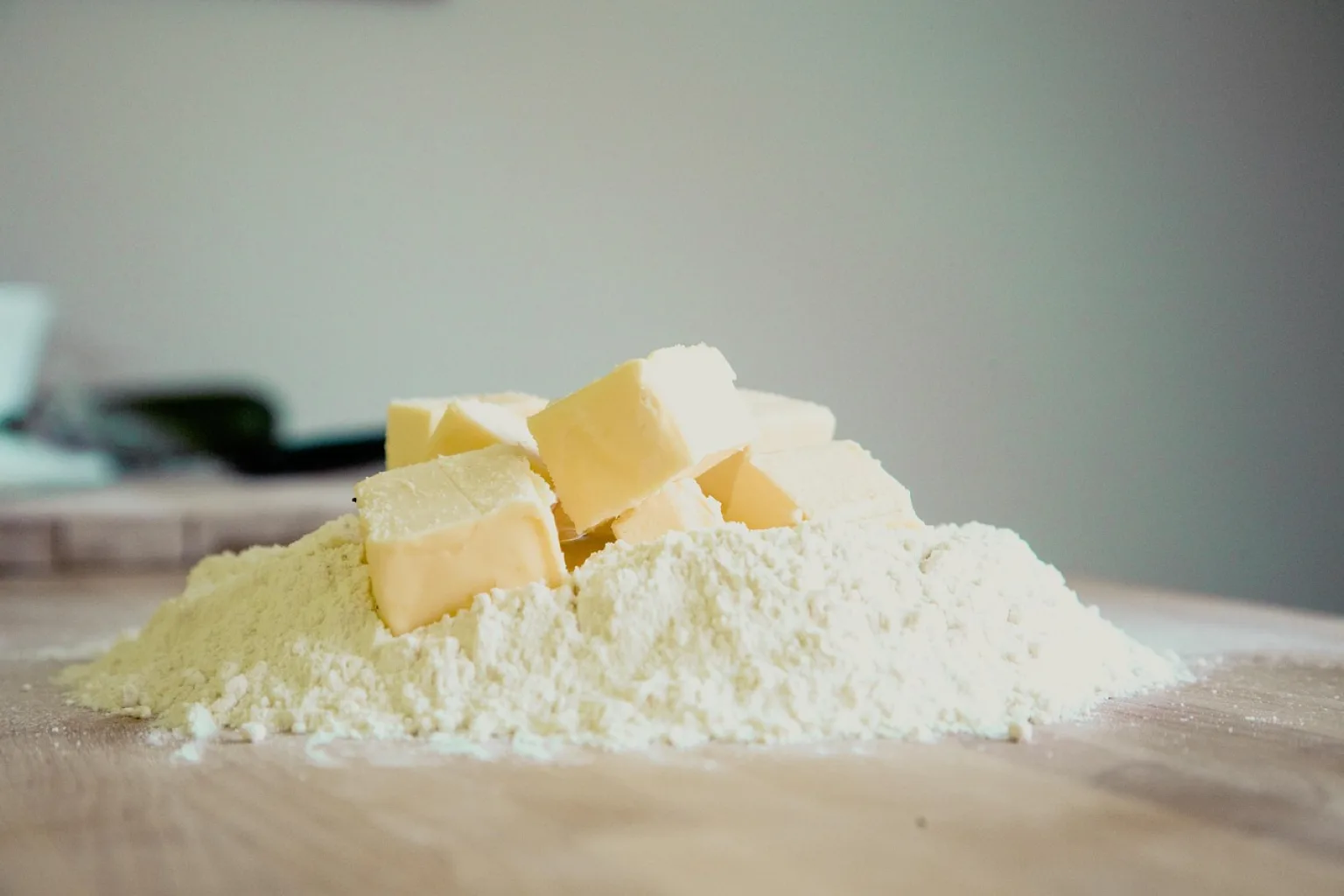
Butter for dough is dairy butter used as an ingredient in pastry or baking mixtures. It is made from milk fat and is available salted or unsalted; differences in production can also affect its flavor and consistency. The phrase does not describe a separate type of butter: it refers to the intended use in a recipe. For example, in a sablé dough, cold butter is worked into flour until the mixture looks sandy before the remaining ingredients are added. The temperature and method specified by the recipe matter, so cold, softened, and melted butter should not be treated as interchangeable.
When to use it
Use butter when a dough recipe calls for it as its fat, for example in cookies, tarts, or sablé pastry. It is particularly suitable when you want butter’s characteristic flavor and a rich pastry texture. In a sablé recipe, cold butter is rubbed into flour; other preparations may call for a different consistency. Check the specific instructions before you begin, and do not change the butter’s state on your own: changing the technique may affect the result.
How to use it
Weigh the amount specified and prepare the butter in the state the recipe requires. For sablé dough, work cold butter into sifted flour until the mixture has a sandy appearance. Then add the other ingredients specified by the formula and mix only as much as needed to bring the dough together smoothly. One professional pastry method finishes this dough with fraisage, briefly working it on the counter with the heel of the hand. Follow your own recipe’s instructions for resting, chilling, and baking: times and temperatures depend on the preparation and cannot be determined from the butter alone.
Flavour and texture
Butter gives dough a distinctive dairy flavor and richness. Its consistency can vary: some butters are firmer, others softer, and products may be salted or unsalted. Those differences matter when working the butter and following a recipe. In sablé dough, cold butter is worked into the flour until the mixture looks sandy; the final result also depends on the formula and mixing method.
How to choose it
Choose butter that suits the recipe and preparation you plan to make. Check the package to see whether it is salted or unsalted and follow the recipe’s choice; if the recipe does not specify, bear in mind that the type of butter can affect the final salty taste. Check the product name and storage instructions as well. Butter consistency varies, so follow the texture required by the recipe rather than assuming every product will behave in the same way.
Storage
Store butter according to the instructions on its package, which apply to the product you bought. Keep its wrapper and label available while you use it so you can check those directions. For dough, take out the amount you need and use it in the state specified by the recipe; a sablé formula, for example, may call for cold butter. The available information does not support one universal storage period for all butter.
Substitutions
If you need to change varieties, salted and unsalted butter are different options: check the recipe’s salt before switching between them. Butter is also made from the milk of different animals, but its flavor and consistency may vary. These options do not guarantee the same result in every dough; use a recipe that allows for the change and do not assume the volume or texture will be identical.
Common mistakes
A common mistake is overlooking whether the recipe calls for cold, softened, or melted butter. Mixing the dough more than necessary can also work against the intended preparation: for the professional sablé method described, the guidance is to mix as little as possible and finish briefly with fraisage. Do not assume salted and unsalted butter are indistinguishable or that one variety will work identically in every recipe.
Safety and allergens
Butter is a dairy product and contains milk. If you need to avoid milk, check the product label and do not use it unless you have confirmed its ingredients. Follow the package’s storage instructions and avoid using a product if its package is damaged or its appearance or smell is unusual.
Culinary uses
- Aporta sabor y riqueza a masas de repostería.
- Contribuye a la humedad y la textura de preparaciones dulces.
- Es la materia grasa de masas sablé y otras masas de pastelería.
Recommended techniques
- Arenar harina con mantequilla fría para formar una masa sablé.
- Mezclar lo mínimo necesario y terminar la masa con fraisage para homogeneizarla.
Pairs well with
- Harina, para masas de repostería y galletas.
- Azúcar glas y almendra molida, como en una masa sablé.
- Huevo, para ligar masas de pastelería.
Frequently asked questions
What butter should I use for sablé dough?
A professional sablé recipe works cold butter into flour until the mixture looks sandy. Follow the temperature and quantities in your own recipe.
Can I use salted butter instead of unsalted butter?
They are different varieties, and switching may change how salty the dough tastes. Check the recipe’s added salt and follow its specification when one is given.
Is butter for dough different from regular butter?
The phrase describes the intended use, not a separate type of butter. Choose the variety and state required by the recipe.
Sources and review
Automatically researched, cross-checked and validated content. Sources consulted:
- The Essential Glossary of Cooking Terms for the Culinary Arts - Escoffier escoffier.edu
- Mantequilla - Wikipedia, la enciclopedia libre es.wikipedia.org
- La importancia de la mantequilla en la cocina friolisa.es
- Nutrition After Your Transplant - Health Online healthonline.washington.edu
- Recetas del chef Benjamin Estienne cordonbleu.edu
- UCCE efforts improve quality of and demand for fresh ... ucanr.edu
- Usos culinarios de la mantequilla – Mantequilla Lorenzana mantequillalorenzana.com
- Qué es eso llamado epistemología, para qué sirve, por qué es inexcusable para la universidad y para la paz | Reencuentro. Análisis de problemas universitarios doi.org
- La Seguridad Alimentaria aesan.gob.es
- Cómo Utilizar la Mantequilla de Maní | CSU Extension extension.colostate.edu
- 21 Seminarios de panadería y pastelería | Culinary Institute Lenotre culinaryinstitute.edu
- PLIEGO DE CONDICIONES DE LA DOP «MANTEQUILLA ... mapa.gob.es
- El origen de la mantequilla | Naturarla | Arla arlafoods.es