- Category
- Dairy and eggs
- State
- Fresh
- Usual unit
- g
What it is
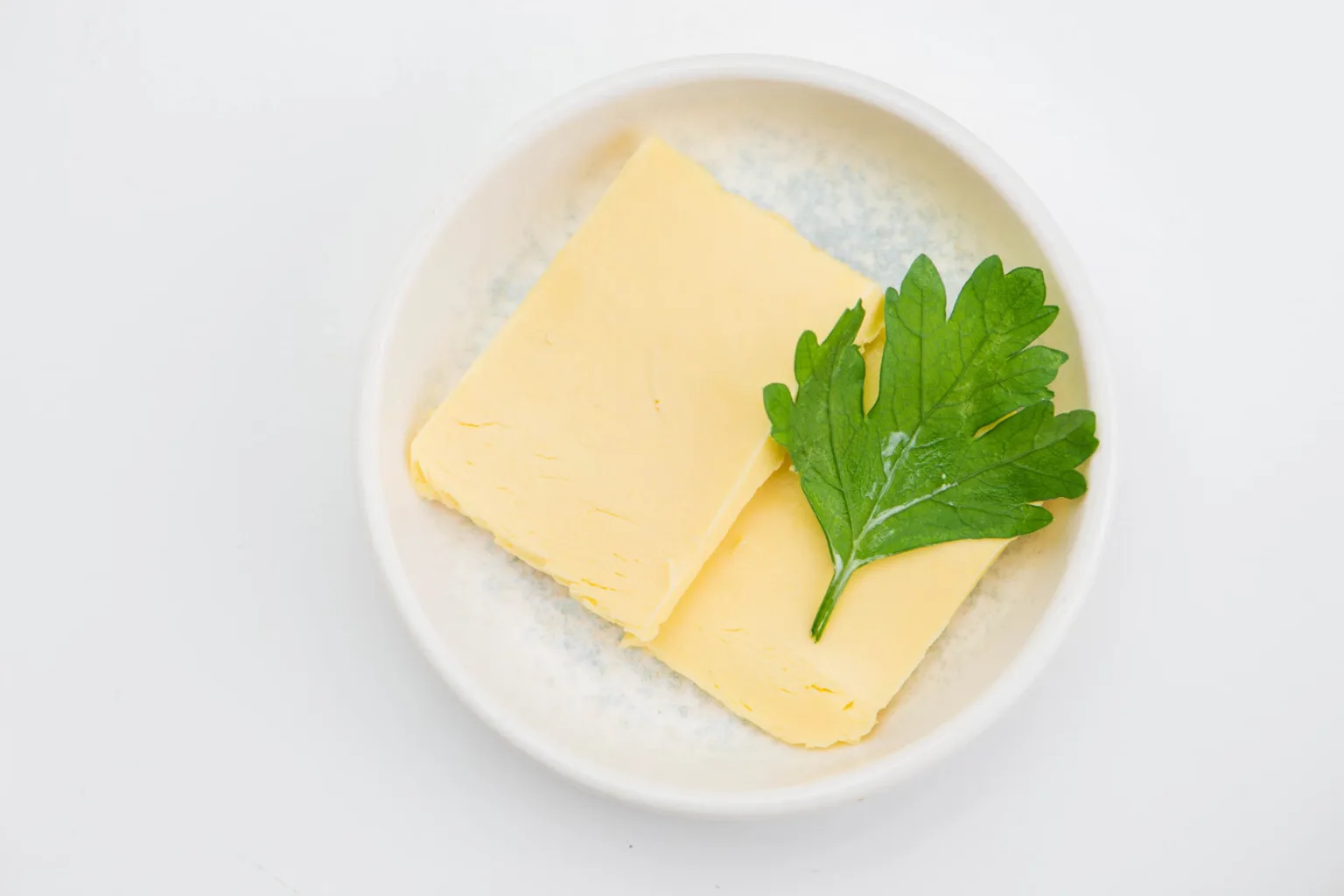
Butter is a dairy product made by churning cream, bringing the fat together into a mass and separating it from some of the liquid phase. Its consistency can vary between products, and it is sold in forms that include salted and unsalted. In a sauce, it is used as an ingredient that contributes richness and flavor; depending on the preparation, it may be melted or incorporated with other ingredients. The phrase “butter for the sauce” describes a cooking use, not a separate variety with a fixed composition. Read the package to identify the product and check whether it contains salt.
When to use it
Use butter when you want to enrich a sauce or add flavor to sautéed vegetables, pasta and other dishes. It can also be used in baking, including cookies, cakes, tarts and puff pastry. Choose salted or unsalted butter according to the recipe; if using salted butter, account for its salt when seasoning. Do not assume that every butter behaves in exactly the same way: consistency can differ from one product to another.
How to use it
For a sauce, measure the amount specified in the recipe and melt or incorporate it as that preparation directs. Butter can also be used to sauté or fry ingredients, and to add flavor to vegetables such as mushrooms or leeks. In baking, follow the recipe’s instructions for using it: butter is included in preparations such as cookies, cakes, tarts and puff pastry. Check whether it is salted before seasoning, and do not automatically replace the fat if the recipe depends on a particular texture. If using olive oil instead, do so only when the preparation can accommodate the change.
Flavour and texture
Butter contributes a rich, dairy flavor and can give a sauce a creamier impression. Its texture is not identical across all products: the proportions of different forms of fat affect whether it feels firmer or softer. Salted and unsalted versions are also available. Check the package and consider both consistency and salt when choosing butter for a recipe.
How to choose it
Read the product name and ingredient information to identify the butter and check whether it is salted. Butter products can differ in their characteristics and consistency, so do not assume two packages will behave identically in a recipe. If the butter is going into an already seasoned sauce, unsalted butter makes it easier to adjust salt separately; always confirm the product details on the label.
Storage
Check and follow the storage instructions on the package. Food-label information about storage and use should be followed when provided, since instructions can depend on the product and its presentation. Keep the wrapper or label available so you can also check the date and any product-specific directions. Do not extend or change storage practices simply because the butter will be used in a sauce.
Substitutions
In some sautéed or fried preparations, olive oil can replace butter if the recipe allows the change; the result will not necessarily be the same. If salt is the main difference, salted and unsalted butter can replace one another with an adjustment to seasoning. There is no universal substitution for every sauce and dough, so follow the recipe when it depends on the form or consistency of the fat.
Common mistakes
A common mistake is not checking whether the butter is salted and seasoning the sauce as though it were unsalted. It is also unwise to assume all butter has the same consistency or that olive oil will give the same result in every preparation. Read the label and change the fat only when the recipe can accommodate the substitution.
Safety and allergens
Butter is a dairy product, and milk is a recognized allergen. If you have a milk allergy, do not consume it without checking the package information; ask the food provider about allergen information when it is served unpackaged. Follow the storage and use directions on the label.
Culinary uses
- Aportar sabor y riqueza a salsas
- Servir como grasa de cocción y como ingrediente de repostería
Recommended techniques
- Fundir e incorporar a una salsa
- Usar para rehogar o freír
- Integrar en masas de repostería
Pairs well with
- Pan
- Verduras, incluidos champiñones y puerro
- Pasta y salsas
Frequently asked questions
Is butter for sauce a special variety?
The phrase describes how butter is used in a recipe; on its own, it does not identify a specific composition. Check the package to see whether it is salted or unsalted.
Can I use salted butter in a sauce?
Yes, if the recipe allows it. Account for the salt in the butter and adjust the seasoning accordingly.
What allergen precaution should I take?
Butter contains milk, a recognized allergen. Check the label and ask for allergen information when food is served unpackaged.
Sources and review
Automatically researched, cross-checked and validated content. Sources consulted:
- En el etiquetado alimentario hay algunas menciones que son obligatorias eletiquetadocuentamucho.aesan.gob.es
- The Essential Glossary of Cooking Terms for the Culinary Arts - Escoffier escoffier.edu
- Mantequilla - Wikipedia, la enciclopedia libre es.wikipedia.org
- La importancia de la mantequilla en la cocina friolisa.es
- Etiquetado de sustancias que causan alergias e intolerancias alimentarias aesan.gob.es
- Los alimentos como medicina: la dieta antiinflamatoria | Children's Hospital of Philadelphia chop.edu
- Nutrition After Your Transplant - Health Online healthonline.washington.edu
- Usos culinarios de la mantequilla – Mantequilla Lorenzana mantequillalorenzana.com
- Conoce todos los usos de la mantequilla | Naturarla | Arla arlafoods.es
- Qué es eso llamado epistemología, para qué sirve, por qué es inexcusable para la universidad y para la paz | Reencuentro. Análisis de problemas universitarios doi.org
- Page 7 | See All Home Food Preservation and Safety - Home Food Preservation and Safety - Food Safety and Quality extension.psu.edu
- Cómo Utilizar la Mantequilla de Maní | CSU Extension extension.colostate.edu
- Safe & Healthy Food Pantries Project - Health & Well-Being health.extension.wisc.edu
- Macarrones a la Crema 1946 (Macaroni with Cream) - lacocina.utsa.edu