- Category
- Pulses
- State
- Canned
- Usual unit
- g
What it is
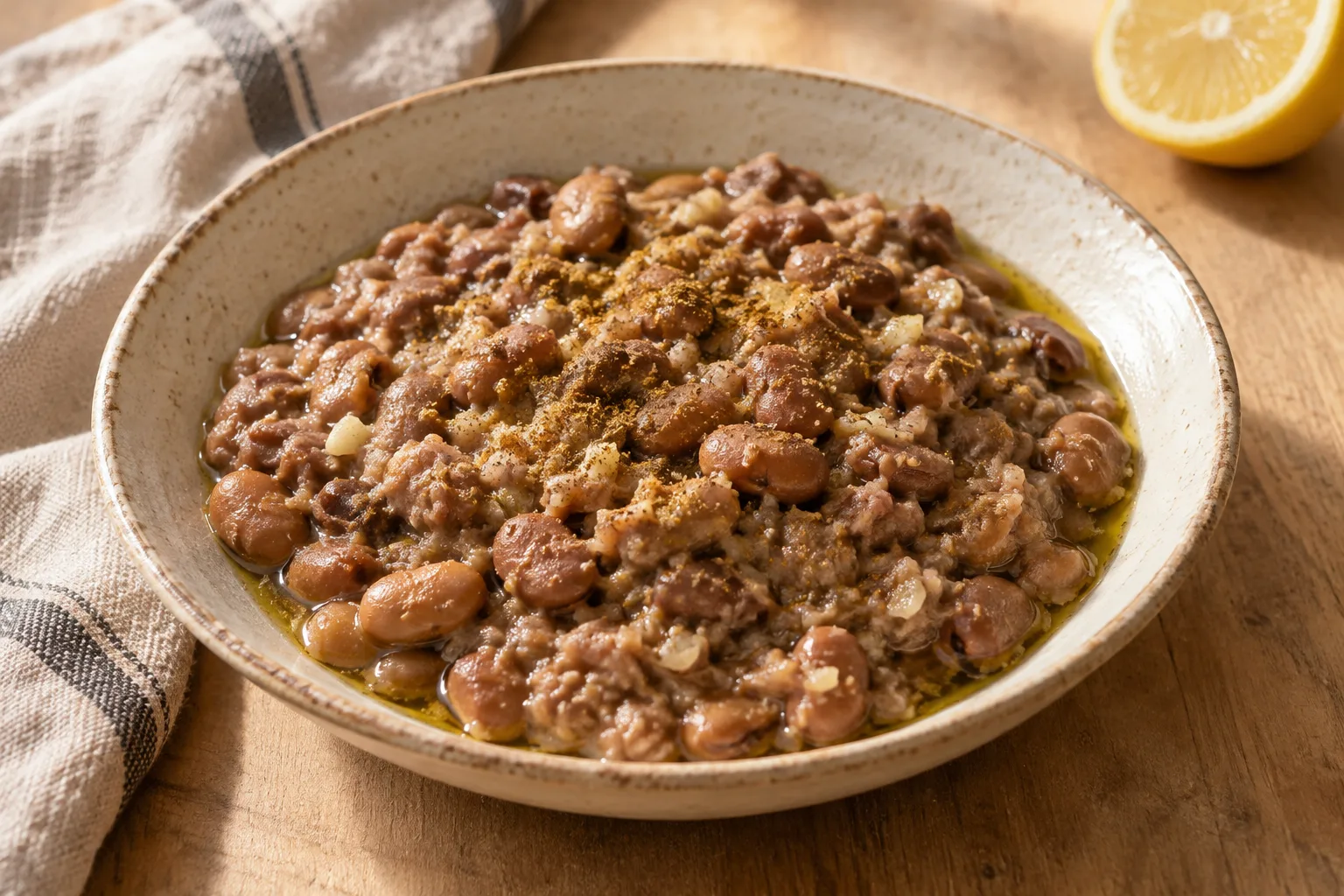
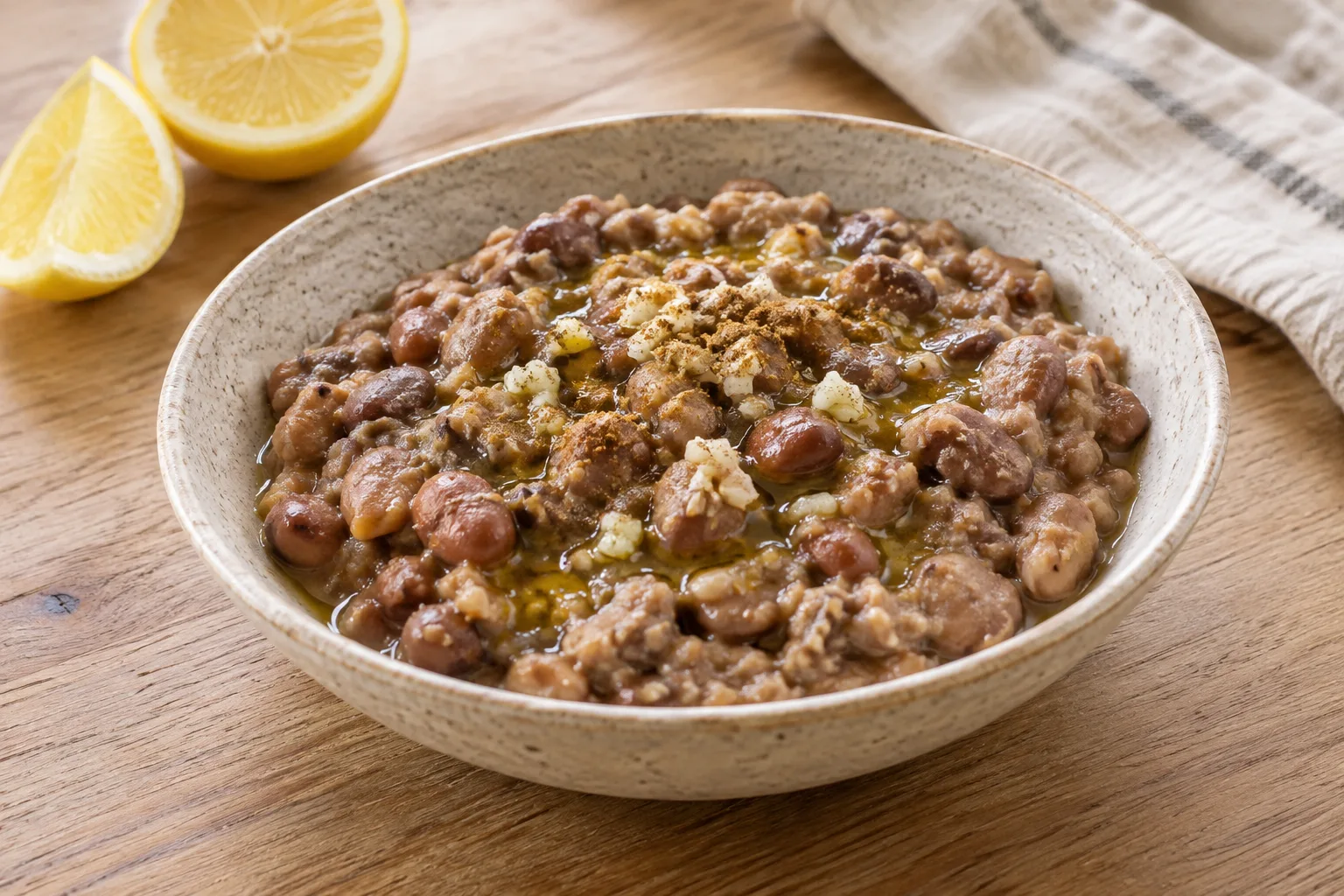
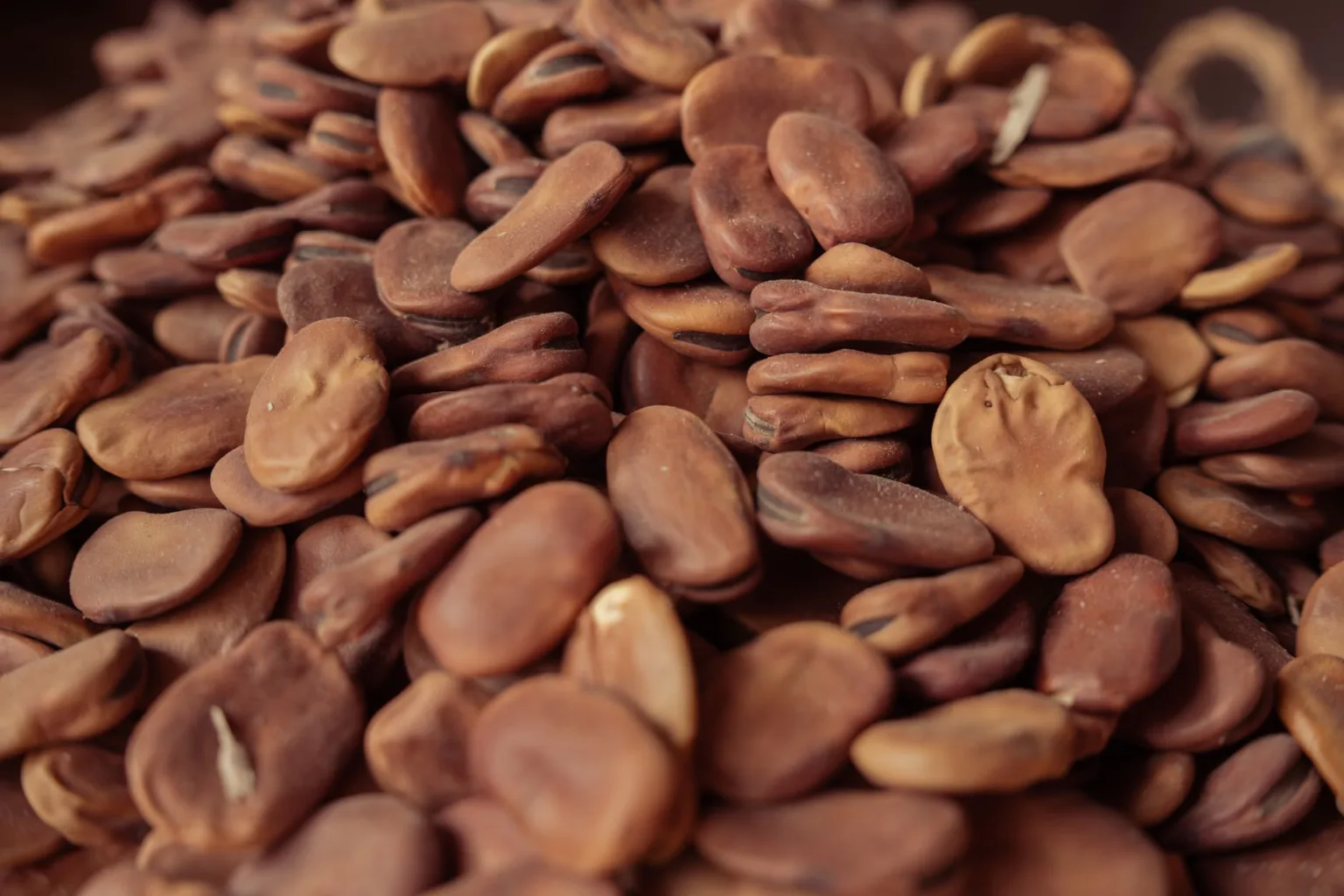
Canned cooked fava beans are fava seeds that have been cooked and packed for use in recipes according to the product directions. Fava beans belong to the legume family. The supplied sources distinguish fresh, tender fava beans from dried legumes, but do not describe every feature of each commercial canned product. Bean size, firmness, seasoning, and packing liquid may therefore vary. Treat them as a convenient ingredient: drain them if the recipe calls for it, add them to a dish, or fry them with an accompaniment. The available sources do not support assigning canned fava beans a specific season or making nutrition or health claims about them.
When to use it
Use them when you want to add fava beans to a meal without starting with fresh pods or dried legumes. They can be part of a snack, a salad, or a simple dish with ham. For a different finish, one source suggests frying canned fava beans with chopped mint and olive oil. Because the product is sold cooked, check the package before deciding whether it needs further heating; the available evidence does not establish a universal heating time. The can can be a convenient way to keep the ingredient on hand, but the sources do not establish a storage period that applies to every brand.
How to use it
Read the package directions first, and drain the beans if your recipe calls for removing the packing liquid. For a simple preparation, fry them with olive oil and chopped mint, a combination suggested for canned fava beans and peas. You can also serve them with ham, a pairing shown in a quick canned-fava preparation. If the beans are tender, handle them gently so they do not break apart. The sources do not say whether rinsing is necessary or give a universal cooking or heating time; follow the product directions and judge the beans’ firmness. Adjust the other ingredients to suit the result, rather than assuming every can has the same liquid or seasoning.
Flavour and texture
The supplied sources do not reliably describe the flavor and texture of every canned cooked fava bean product. These qualities can vary, so check the beans’ firmness after draining before choosing how to use them. If they are tender, add them gently to help keep their shape. Mint, olive oil, and ham are pairings mentioned in the sources; they are serving ideas, not a guarantee that every brand will taste or feel the same.
How to choose it
Compare the package information and choose a product that suits your recipe. Check that it is identified as cooked fava beans, review the ingredient list, look for any stated added salt, and read the directions. The available sources do not give criteria for comparing brands, varieties, bean sizes, or packing liquids, so do not assume every can will have the same firmness or seasoning. If a particular quality matters for your recipe, check the product and its label before buying.
Storage
Before opening the package, follow its storage directions and date. The available sources do not establish a universal shelf life or exact conditions that apply to every brand of canned cooked fava beans. After opening, check the label for advice on handling leftovers and any container guidance from the manufacturer. No specific refrigeration period for this product is established here, so do not invent one or apply home-canning instructions to a commercial can.
Substitutions
Cooked peas may work in simple recipes that can take another tender legume; the sources mention peas and fava beans in a preparation suggestion but do not say that they are interchangeable in every dish. Cooked chickpeas can be considered when a recipe allows a different legume. In either case, the result will not be identical to fava beans: check how the firmness and flavor fit, and adjust the rest of the dish.
Common mistakes
Do not assume every can has the same firmness, seasoning, or amount of packing liquid. Avoid using a fixed heating time without checking the package: the beans are described as cooked, but the sources give no universal time for preparing them. Also, do not confuse directions for processing low-acid foods in home canning with using an already prepared commercial product.
Safety and allergens
Follow the package directions for use and storage; the available sources do not give a specific leftover period for every brand. Do not use this cooking guidance to make home-canned beans. Virginia Tech states that low-acid foods such as beans require pressure processing for safe home preservation; that information concerns home canning and does not provide instructions for this commercial product.
Culinary uses
- Base para ensaladas y aperitivos
- Ingrediente para platos sencillos con jamón
Recommended techniques
- Escurrir cuando la receta no requiera el líquido de cobertura
- Freír con aceite de oliva y menta picada
Pairs well with
- Menta y aceite de oliva
- Jamón
Frequently asked questions
Do canned cooked fava beans need to be drained?
That depends on the recipe and package directions. Drain them when you want to remove the packing liquid; the available sources do not establish that rinsing is necessary.
What is a simple way to serve them?
The sources suggest frying canned fava beans with chopped mint and olive oil. They also show ham as a pairing in a quick preparation.
Can I replace them with another legume?
You can try cooked peas or cooked chickpeas if the recipe allows the change. Their firmness and flavor may differ, so adjust the dish.
How long do they keep after opening?
The supplied evidence does not establish one storage period for every brand. Check the package directions for handling leftovers.
Estimated nutrition
- Fat
- 0.4 g
- Saturates
- 0.07 g
- Carbohydrate
- 19.6 g
- Sugars
- 1.82 g
- Fibre
- 5.4 g
- Protein
- 7.6 g
- Salt
- 0.01 g
Sources and review
Automatically researched, cross-checked and validated content. Sources consulted:
- Almacenamiento Seguro de Alimentos: - El Refrigerador y el ... bookstore.ksre.ksu.edu
- Romanica Olomucensia : «¿Qué pinga es esto?». Usos disfemísticos en el español de Cuba doi.org
- The Essential Glossary of Cooking Terms for the Culinary Arts - Escoffier escoffier.edu
- Washington State Food Access English-Spanish Glossary wpcdn.web.wsu.edu
- Aplicaciones de la Biotecnología en Seguridad Alimentaria aesan.gob.es
- Vamos a Conservar Alimentos - Home Food Preservation and Safety - Food Safety and Quality extension.psu.edu
- Elaboración de Conservas a Presión (Pressure Canning) | VCE Publications | Virginia Tech pubs.ext.vt.edu
- NUTRITION IN ACTION Beans & Peas • Frijoles & ... stonybrookmedicine.edu
- Preserving Garifuna Traditions During the Pandemic Holiday latinxproject.nyu.edu
- COCINANDO VOY RECETANDO VENGO: HABAS EN CONSERVA CASERA. cocinandovoyrecetandovengo.blogspot.com
- Habas en conserva es más fácil en Canal Cocina - Canal Cocina canalcocina.es
- Habas, origen, historia y creencias sobre esta hortaliza. blog.plantamus.com
- Habas tiernas: qué son, cómo se cocinan y cuáles son los beneficios de la vicia faba directoalpaladar.com