- Category
- Pulses
- State
- Canned
- Usual unit
- g
What it is
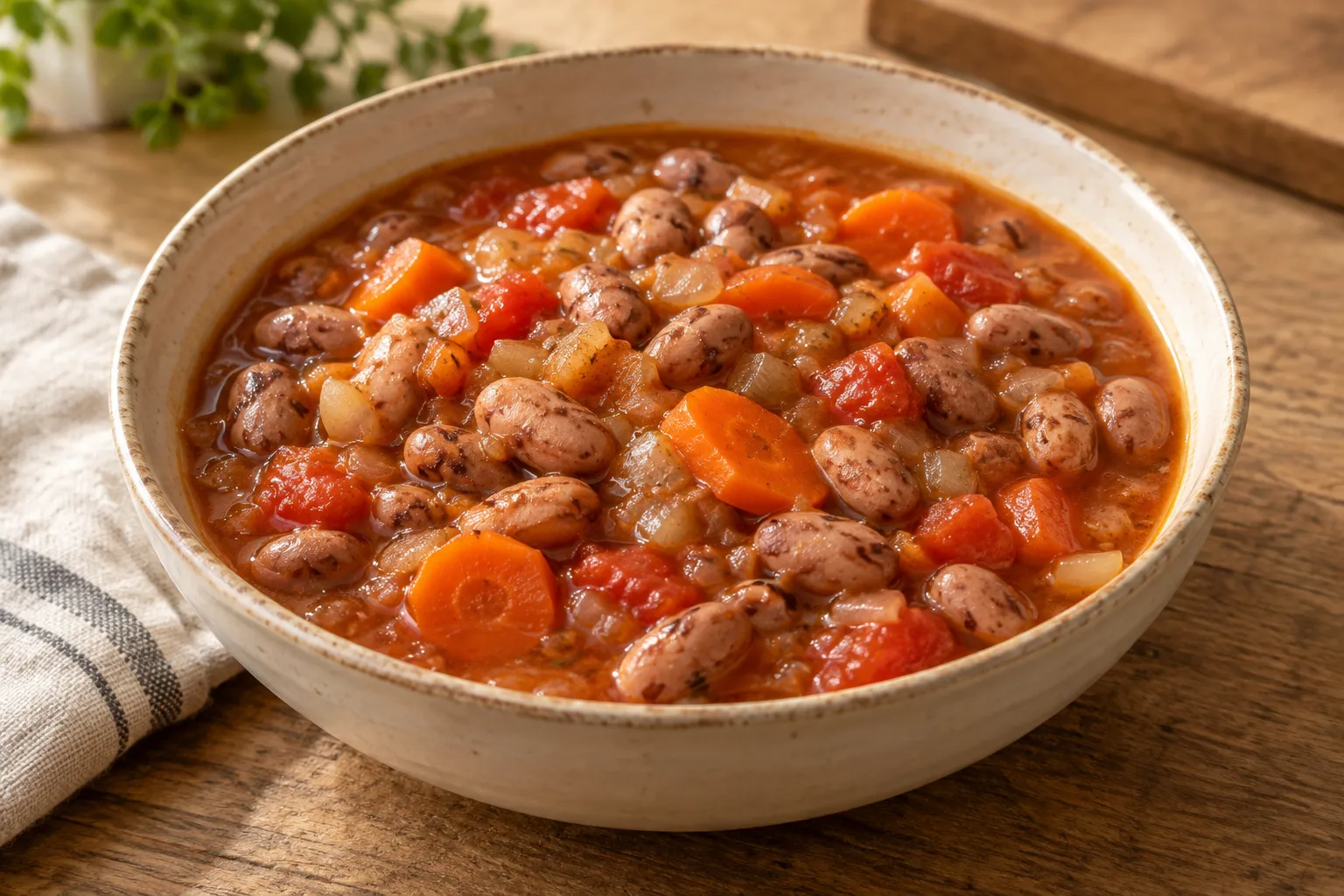
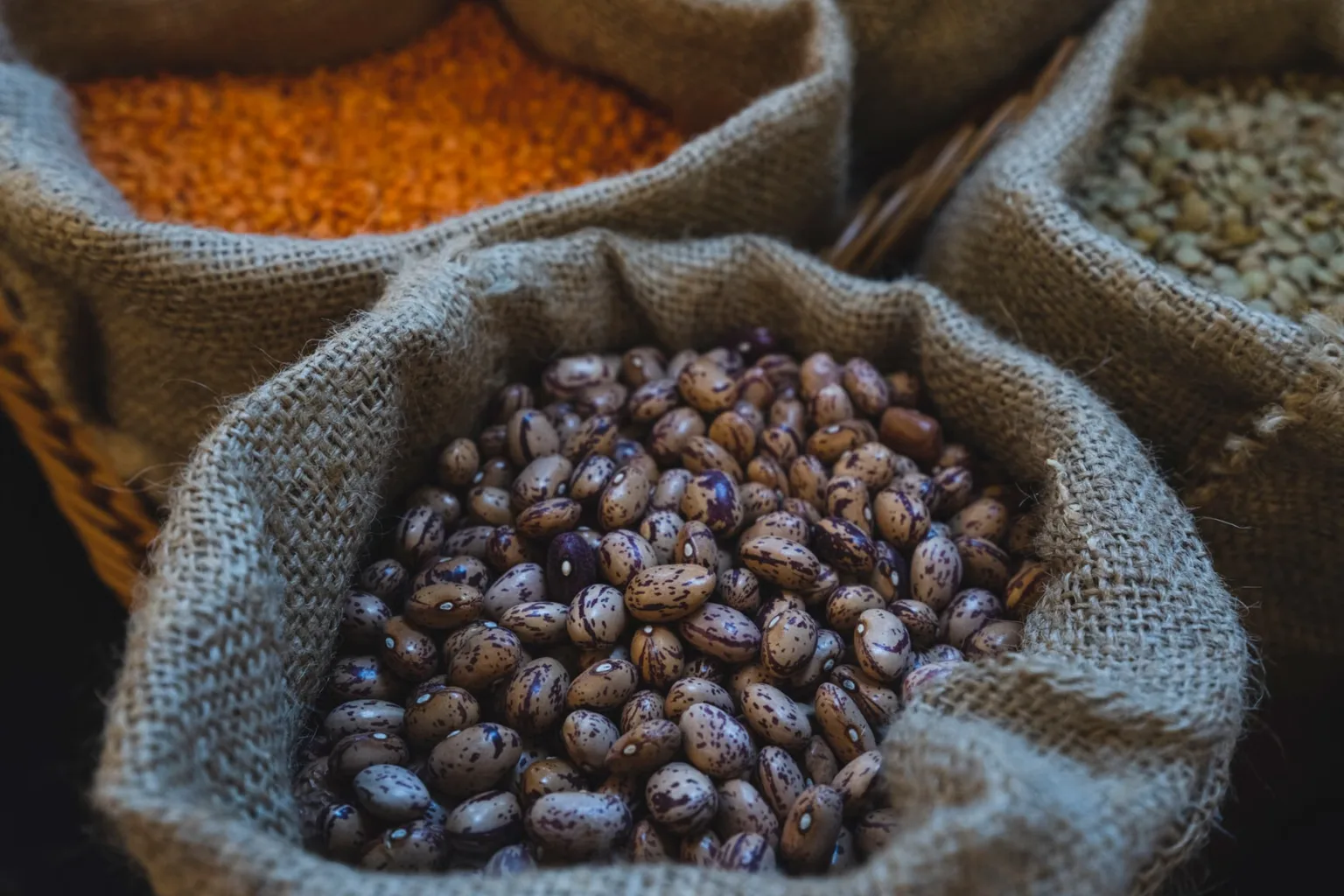
Canned cooked pinto beans are pinto beans that have already been cooked and packaged in a can, so they can be added to a dish without starting with dried beans. They belong to the legume group. The covering liquid, ingredient list and directions can differ between products, so check the label rather than assuming every can has the same contents. In cooking, they can serve as an ingredient in soups, stews, salads and burritos. They are not the same product as green beans, which are eaten as pods.
When to use it
Use them when you want to add cooked pinto beans to a meal without preparing dried legumes. They can go into soups and stews, and can also be used in salads or burritos. If the dish already contains liquid, consider draining the beans to control its consistency; in a salad, draining helps prevent the covering liquid from thinning the dressing. Read the label for the ingredients and any directions specific to that product.
How to use it
Read the label first and check the ingredients and any directions for use. For salads or burritos, you can drain the beans and rinse them if you prefer; one culinary source recommends rinsing canned beans to remove some excess salt and preservatives, but the composition depends on the product. Add them to the dish as the recipe directs. In soups and stews, add them as an already-cooked legume and heat the dish until it is ready to serve, without assuming a particular cooking time. Decide whether to use the covering liquid based on the label and the consistency you want.
Flavour and texture
A culinary source describes cooked pinto beans as mild in flavor and creamy in texture. Firmness can vary between products and with handling, so check their consistency when you open the can and add them to a recipe. Their mild character suits different preparations, including soups, stews, salads and burritos. Do not assume every brand will have exactly the same flavor or level of firmness.
How to choose it
Choose a package whose name clearly identifies cooked pinto beans, and check the ingredient list, net quantity, date and applicable storage or use directions. Label information can vary according to the product and its presentation, so do not assume every canned product has the same ingredients. Confirm that the product suits your recipe and read the label for ingredients you may need to take into account.
Storage
Before opening the package, follow the storage directions printed on it and check the date shown. Once opened, follow the manufacturer’s directions for using and storing the product. There is no single shelf life or storage method that can be applied to every opened can of pinto beans; relevant information depends on the product and its label. If the label does not explain how to store it after opening, consult an official food-safety source.
Substitutions
Other cooked beans can replace them when the recipe allows a different variety; flavor and texture may change. Dried pinto beans are another option, but they must be cooked before being added to the dish, so they are not a ready-to-use substitute. Adjust the amount and liquid to suit the recipe and the consistency you want.
Common mistakes
Do not confuse pinto beans with green beans; they are different products. Avoid adding all the covering liquid without considering that it may change the consistency of a salad or stew. Do not assume every brand has the same ingredients or directions; check the label before deciding whether to drain, rinse or adapt the recipe.
Safety and allergens
Read the label and follow the manufacturer’s directions for storage and use. Applicable information can vary with the food and its presentation, so do not assume there is one universal instruction for an opened can. If you are unsure about storage conditions or safe use, consult the manufacturer’s directions or an official food-safety source.
Culinary uses
- Base vegetal para sopas y guisos
- Ingrediente para ensaladas y burritos
Recommended techniques
- Escurrir y, si se desea, enjuagar antes de usar
- Añadir a sopas o guisos y calentar junto con la preparación
Pairs well with
- Sopas y guisos
- Ensaladas y burritos
Frequently asked questions
Should I rinse canned pinto beans?
You can drain and rinse them if you want to remove some of the covering liquid before use. Check the label, since ingredients and directions can vary between products.
What dishes can I use them in?
They can be added to soups, stews, salads and burritos. Drain them if you want to control how much liquid goes into the dish.
Can I substitute dried pinto beans?
Yes, but cook them first. Dried beans need preparation and are not ready to add directly in the way canned cooked beans are.
Estimated nutrition
- Fat
- 0.65 g
- Saturates
- 0.11 g
- Carbohydrate
- 26.2 g
- Sugars
- 0.34 g
- Fibre
- 9 g
- Protein
- 9.01 g
- Salt
- 0.6 g
Sources and review
Automatically researched, cross-checked and validated content. Sources consulted:
- En el etiquetado alimentario hay algunas menciones que son obligatorias eletiquetadocuentamucho.aesan.gob.es
- Informe sobre Legumbres, Nutrición y Salud aesan.gob.es
- Judía verde | Conservas El Juncal | Verduras naturales conservaseljuncal.com
- Romanica Olomucensia : «¿Qué pinga es esto?». Usos disfemísticos en el español de Cuba doi.org
- Judías verdes: cómo comprar, cocer y cocinar en verano esta legumbre que se consume como verdura huleymantel.com
- Recetas con judías | Recetas.com recetas.com
- Pág. 1 MINISTERIO DE AGRICULTURA, PESCA Y ALIMENTACIÓN DIRECCIÓN GENERAL DE mapa.gob.es
- Vamos a Conservar Alimentos: Judías verdes (habichuelas) extension.psu.edu
- Habichuelas verdes : Center for Agriculture, Food, and the Environment (CAFE) at UMass Amherst umass.edu
- Judías verdes (habichuelas) (Spanish) - National Center for Home Food Preservation nchfp.uga.edu
- Judías verdes (judías verdes) - Spend Smart Eat Smart spendsmart.extension.iastate.edu
- Cultivo de frijoles en huertos familiares | Extensión de la UMN es.extension.umn.edu
- Alimentos: judías. Propiedades, beneficios y su uso en la cocina vitonica.com
- Variedades y recetas de alubias hola.com
- solococinar solococinar.com
- Tipos de Judías Congeladas Liofilizadas | Variedades, Calidades & Abastecimiento B2B Global | Nutrada nutrada.com
- Judías Pintas: La Receta de la Abuela que Nunca Fallará - Cocina Rápida y Fácil cocinalidad.com