- Category
- Vegetables
- State
- Preserved
- Usual unit
- tablespoon
What it is
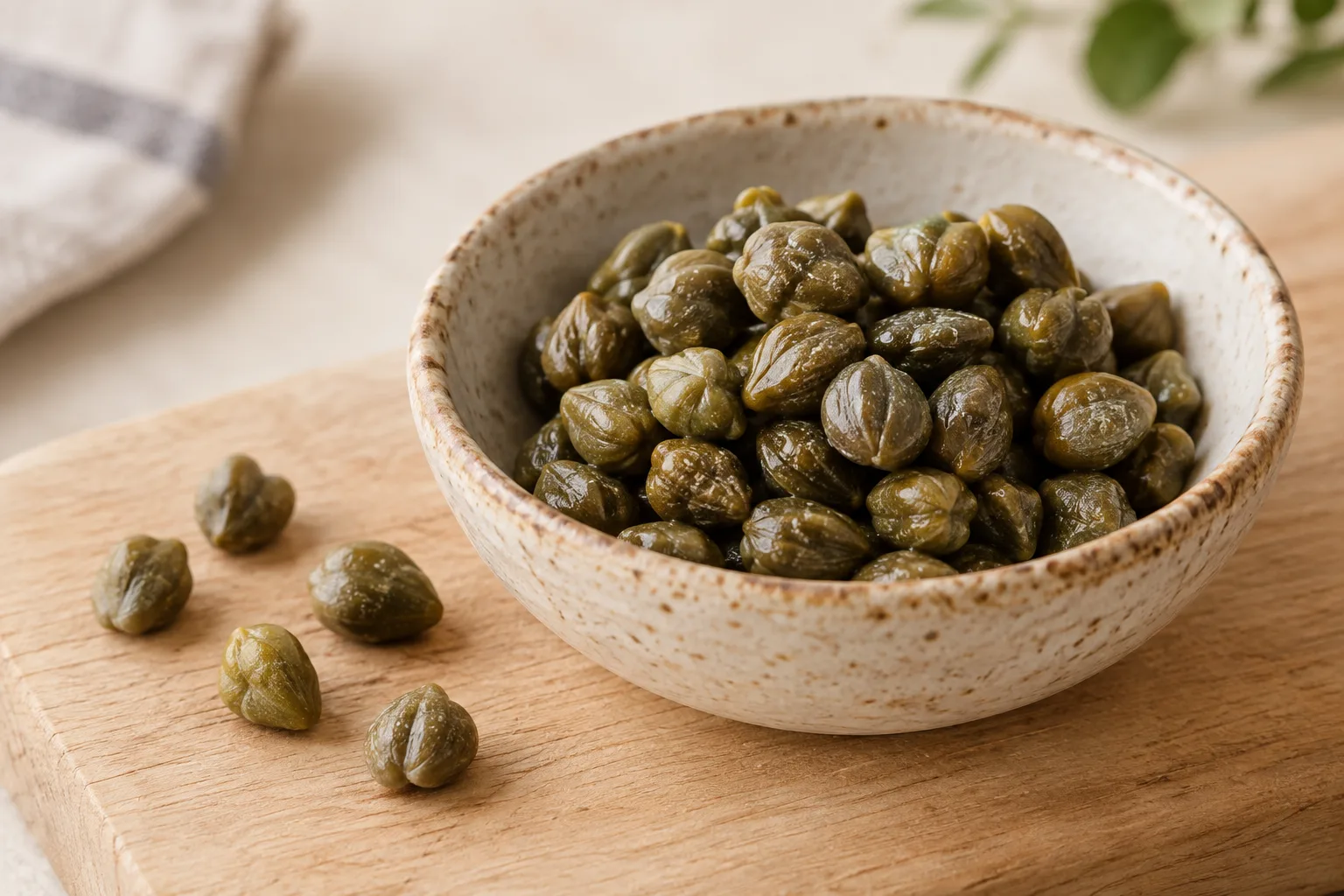
Capers are the immature flower buds of the caper bush, harvested before the flowers open. They are generally sold preserved in salt or vinegar rather than as fresh buds ready to eat. This preservation contributes to their pronounced flavor, which can bring both saltiness and acidity to a dish. Cooks use them as a condiment or garnish, whole, chopped or crushed depending on the preparation. They are not the same as caperberries: those are the immature fruits of the caper bush and are a distinct product, although they may also be eaten in preserved form. Flavor intensity can vary with the preservation method and product, so taste a caper before adjusting the seasoning of a recipe. Their concentrated character makes them useful as a small but noticeable accent.
When to use it
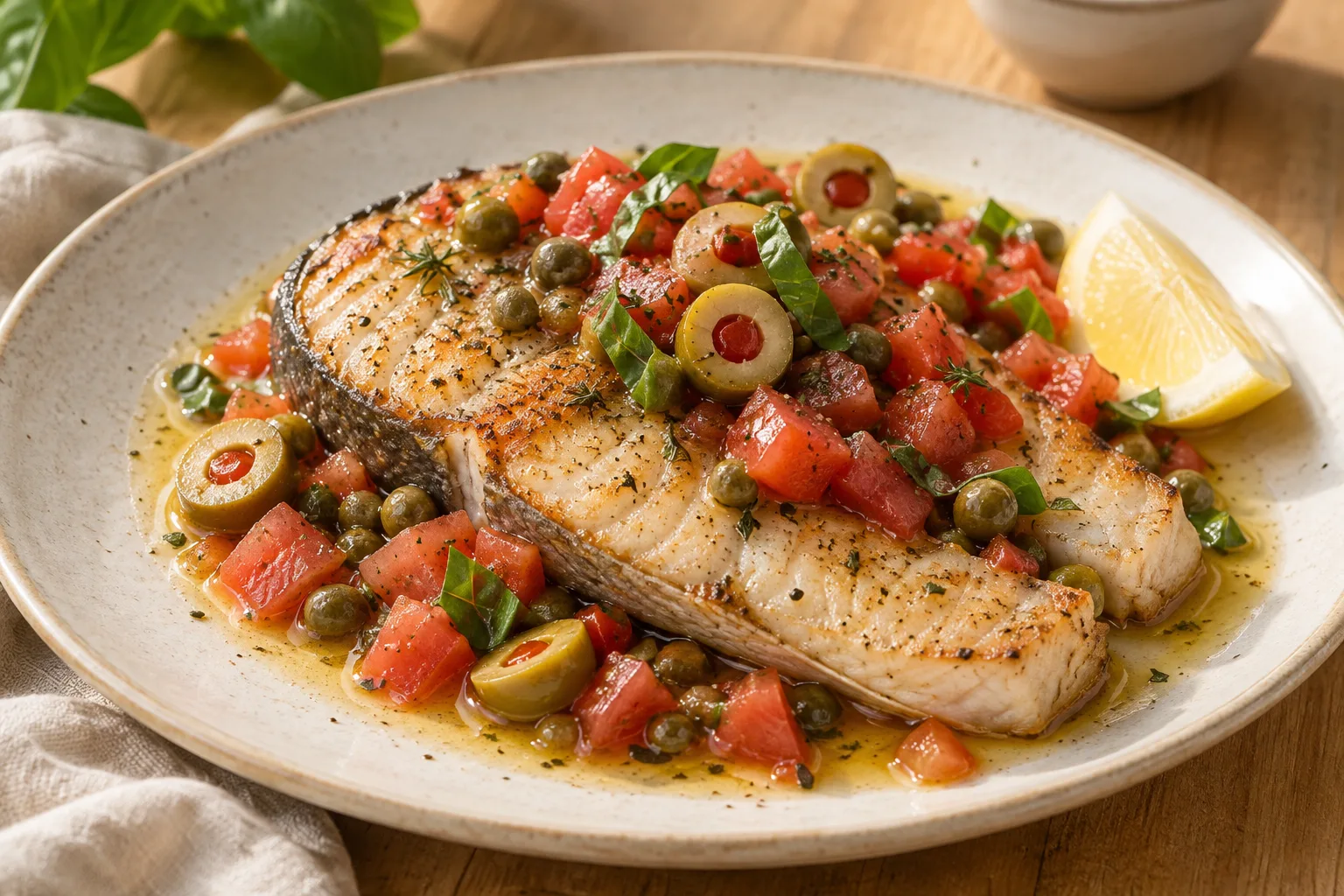
Use capers when a dish needs a salty, tangy counterpoint or a sharp accent among milder ingredients. They work in sauces for fish, preparations with tomato and olives, salads and pasta; they also appear in tartar sauce and tapenade. Because their flavor can be intense, add them gradually and taste before adding more salt. Salt-packed and brined capers are handled somewhat differently: drain those packed in liquid, and consider rinsing salt-packed capers or any product that tastes too strong. Chop them when you want their flavor spread throughout a dish; leave them whole when you want distinct little bursts of flavor. Their seasoning role means the amount should be adjusted to the rest of the ingredients, not treated as fixed.
How to use it
First check how the capers are preserved. Drain capers packed in brine or vinegar; if they taste too salty or sharp for the recipe, rinse briefly and pat dry. Salt-packed capers can also be rinsed to remove some surface salt. Skip rinsing if you want to keep their full intensity, but taste the dish before adding extra salt. Add them whole to salads, pasta or fish preparations, or chop them to distribute their flavor through a sauce. They can also be crushed with olives and other ingredients for a tapenade-style mixture. When adding capers to an already seasoned dish, start with a modest amount and adjust at the end: their concentrated flavor can overwhelm delicate ingredients. After opening, store them refrigerated in their original liquid when that is the product’s stated storage method, and follow the package directions.
Flavour and texture
Capers are typically intense, salty and tangy, with a sharp note that varies according to whether they are preserved in salt or vinegar and whether they have been rinsed. Whole capers give distinct little bursts of flavor; chopped or crushed capers blend more evenly into sauces and spreads. Their preserving liquid can affect the finished dish, so drain them and taste before seasoning. Products and personal preferences vary in intensity.
How to choose it
Look for capers clearly identified as salt-packed or brined, and read the label to check the product’s ingredients and handling directions. Salt-packed capers may taste more concentrated; capers sold in liquid should be drained before use. Check that the container is intact and consult its storage and date information. Do not assume every jar has the same saltiness or acidity: taste a small amount before adjusting a recipe.
Storage
After opening, keep capers refrigerated in their original liquid, as recommended by the culinary sources available. Also follow the manufacturer’s instructions on the label, since products and presentations can differ. There is no need to assume a universal storage period: use the package information and avoid the product if it shows unusual signs or you are unsure how it has been handled. Close the container after each use and use clean utensils when serving.
Substitutions
If you do not have capers, chopped olives can provide a salty accent and work with similar ingredients, although they do not reproduce capers’ acidity exactly. Taste the dish before adjusting its salt or acidic element. Caperberries can also work in preparations that suit a larger preserved condiment; chop them if you want their flavor spread more like capers. Neither option is an exact match, so adjust the amount to the dish.
Common mistakes
Adding salt without tasting first is a common mistake: preserved capers may already be quite salty. It can also be excessive to add them without draining when a recipe does not need the preserving liquid, or to rinse them automatically when you want their full intensity. Taste one, adjust the amount gradually, and decide whether rinsing is needed. Remember that caperberries are fruits, not flower buds.
Safety and allergens
Check the label for the specific product’s ingredients, declared allergens, storage directions and instructions for use. After opening, refrigerate it in its original liquid when that is the stated method, and follow the manufacturer’s directions. Ingredients and labeling can differ between products.
Culinary uses
- Condimento salino y ácido
- Acento de sabor para salsas y platos
Recommended techniques
- Escurrir; enjuagar si se quiere suavizar el sabor
- Picar o machacar para incorporar en salsas y mezclas
Pairs well with
- Pescado
- Tomate y aceitunas
- Pasta y ensaladas
- Anchoas y aceite de oliva
Frequently asked questions
What are capers?
They are immature flower buds of the caper bush, usually sold preserved in salt or vinegar.
Should capers be rinsed before use?
Not always. Drain capers packed in liquid, and rinse if you want to reduce some of their saltiness or tang; taste them first.
How should capers be stored after opening?
The available culinary sources recommend refrigerating them in their original liquid and following the package directions.
Sources and review
Automatically researched, cross-checked and validated content. Sources consulted:
- En el etiquetado alimentario hay algunas menciones que son obligatorias eletiquetadocuentamucho.aesan.gob.es
- Client Challenge doi.org
- Cooking Food Storage | USU extension.usu.edu
- The Essential Glossary of Cooking Terms for the Culinary Arts - Escoffier escoffier.edu
- Revista del comité científico de la aecosan número 24 aesan.gob.es
- Cold Storage Chart & Reference Guide rvpadmin.cce.cornell.edu
- Preserve Smart apps.chhs.colostate.edu
- ^ ^ N^^ ^ ^^ ^ ^^^^ N° 14-67H. Cultivo del alcaparro o tapanera mapa.gob.es
- Pescado a la Veracruzana 1952 (Veracruz-style Fish) - lacocina.utsa.edu
- Michigan Fresh: Using, Storing, and Preserving Asparagus (HNI28) - Michigan Fresh canr.msu.edu
- Alcapurrias - OBSCURA - CUNY obscura.commons.gc.cuny.edu
- Expanded Food and Nutrition Education Program (EFNEP) | Community Nutrition | Extension/College of Agriculture, Health & Natural Resources | University of Connecticut efnep.uconn.edu
- Canning - National Center for Home Food Preservation nchfp.uga.edu
- Introducción a las alcaparras | JUST SPICES® | JUST SPICES ® justspices.es
- Alcaparras. ¿Qué son? Propiedades y usos en la cocina abc.es
- Capparis spinosa - Wikipedia, la enciclopedia libre es.wikipedia.org
- Artes culinarias/Ingredientes/Alcaparra - Wikilibros es.m.wikibooks.org