- Category
- Herbs and spices
- State
- Dry
- Usual unit
- Variable
What it is
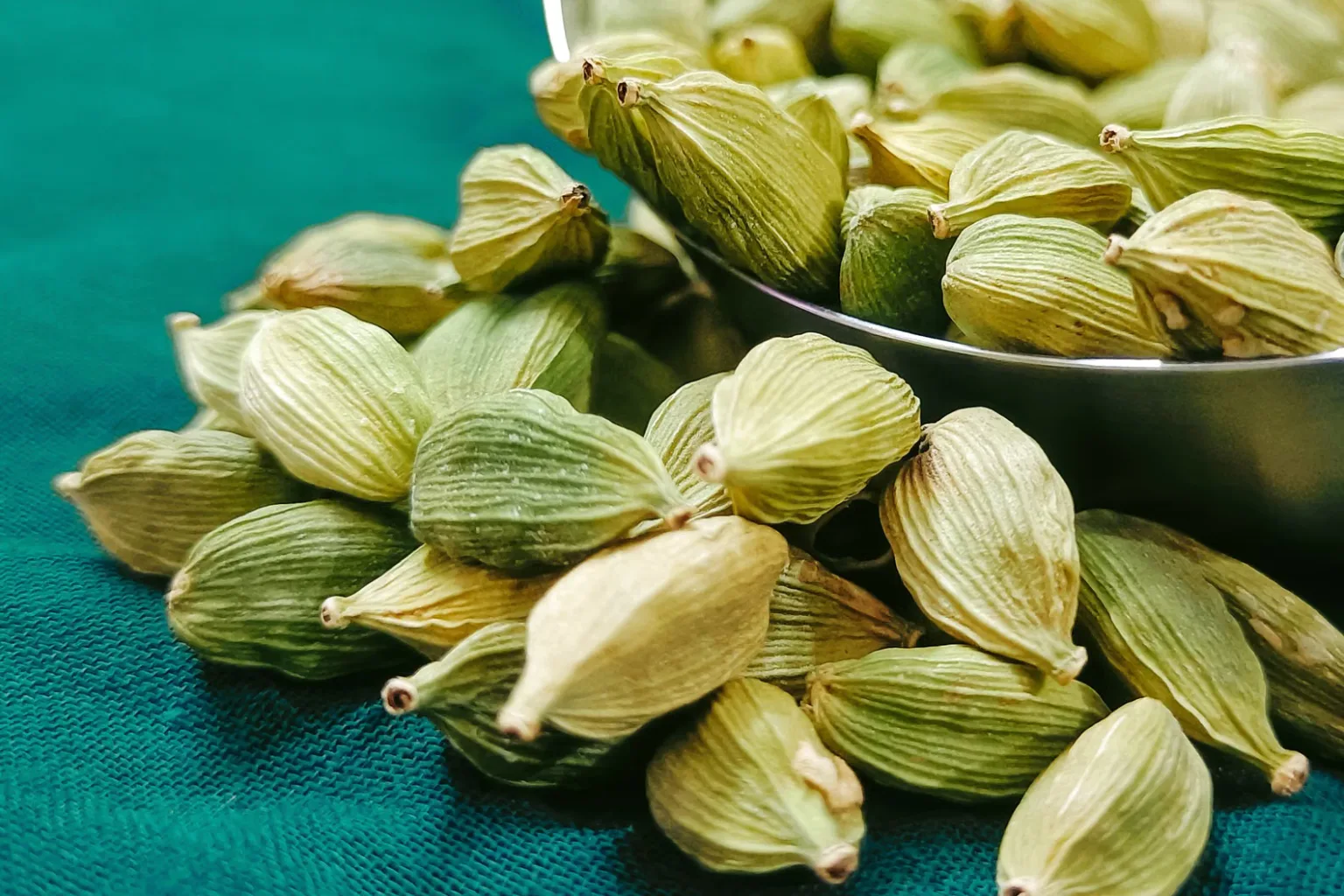
Cardamom is a spice whose aromatic seeds grow inside pods. It is sold in pods, as loose seeds, or ground. This profile focuses on dried seeds: they are hard and can be crushed or ground before being added to food. Green cardamom is a commonly used form, while black cardamom has a different, smokier profile; the name cardamom can therefore refer to products with noticeably different aromas. Its fragrance is described as warm and spicy, with citrus, mint-like, or floral notes depending on the variety and product. Cardamom is potent, so a small amount can be enough to perfume a dish.
When to use it
Use cardamom seeds when you want a distinctive aromatic note, whether or not the dish is sweet. They work in curries, rice dishes, and stews, as well as in breads, buns, biscuits, and other desserts. They can also flavor tea, chai, coffee, and infusions. Green cardamom is often chosen for baking and drinks; the smokier character of black cardamom may suit some savory preparations. Because its flavor is strong, begin with a small amount and taste before adding more.
How to use it
Use the seeds whole to infuse a liquid or flavor a stew, removing them before serving if you do not want them left in the dish. For a more pronounced aroma, lightly crush them before adding. You can also grind the seeds and mix them into cake, bread, or biscuit batter, or add them to a spice blend. For drinks, steep the seeds and strain if you prefer a cup without solids. Bear in mind that whole seeds are hard and concentrated in flavor; they are not a neutral garnish. Adjust the amount to taste and to the type of cardamom you have.
Flavour and texture
Cardamom has an intense, warm, spicy aroma, with notes that may suggest citrus, mint, or flowers. Its profile varies: green cardamom is described as fresher, while black cardamom is smokier and more forceful. Dried seeds are hard. Whole, they flavor food as they infuse; ground, they distribute more evenly through batters and blends. Because their character is pronounced, it is sensible to start with a small amount.
How to choose it
Choose the form for the task: loose seeds for grinding as needed or infusing, and ground cardamom when you want it evenly distributed in a batter or blend. Check that the product is labeled for food use and read the package to confirm whether it is green, black, or ground. Variety matters because aroma and intensity differ. The available evidence does not establish a visual quality standard that would justify recommending a particular color or size for loose seeds.
Storage
Keep dried cardamom in a tightly closed container in a cool, dry place, away from heat and moisture. Keeping pods whole until needed helps preserve aroma better than storing the spice already ground; if you have loose seeds, grind only what you plan to use when practical. Do not leave the container open beside a steaming pot. Also follow the package directions, since products and forms can vary.
Substitutions
Ground cardamom can replace whole seeds when the recipe allows a ground spice and does not rely on removing the solids; add it gradually because its aroma is strong. Cinnamon or ginger can provide a warm, spicy note when cardamom is unavailable, but they create a different flavor rather than an exact match. The best choice depends on whether the recipe needs an infusion or an evenly distributed spice.
Common mistakes
Do not assume every form of cardamom has the same flavor: green and black can differ noticeably. Avoid adding a large amount at once because the aroma is potent. If using whole seeds, remember that they are hard and can be unpleasant to bite; remove them before serving or let diners know they are present. Do not mistake dried seeds for a fresh product.
Safety and allergens
Use only cardamom sold as food and follow the package instructions. When adding it to an infusion, make sure every ingredient is suitable for consumption. The available evidence provides no cardamom-specific safety warning.
Culinary uses
- Aromatic seasoning for sweet dishes
- Aromatic seasoning for savory dishes
- Flavoring for teas and other beverages
Recommended techniques
- Crush the seeds before adding them to release their aroma
- Grind the seeds and mix them into batters or spice blends
- Steep the seeds in a drink or dish, then strain or remove them if desired
Pairs well with
- Cinnamon
- Cloves
- Ginger
- Citrus
- Rice and curries
Frequently asked questions
Do cardamom seeds need to be ground?
No. Use them whole for infusing, crush them to release more aroma, or grind them to distribute the spice through batters and blends.
Can whole cardamom seeds be eaten?
They are hard and concentrated in flavor. If they are only being used to flavor a dish, remove them before serving if you do not want diners to bite into them.
Do green and black cardamom taste the same?
No. Green is often described as fresher, while black is smokier and more intense, so swapping one for the other can change the character of a dish.
Sources and review
Automatically researched, cross-checked and validated content. Sources consulted:
- ¿Por qué la muerte es origen de miedos y tabúes? doi.org
- FSHN13-03s/FS264: De compras para la salud: Las hierbas y las especias ask.ifas.ufl.edu
- Cardamomo: Propiedades y Recetas | Enciclopedia Cocinista cocinista.es
- ¿Qué es el cardamomo? Definición, origen y para qué sirve cardamomocolombia.com
- El ingrediente del mes: el cardamomo – Kitchen Community kitchencommunity.wordpress.com
- Cardamomo, aliado en la sal y el dulce| Recetas Nestlé recetasnestle.com.ar
- Publicaciones de Seguridad alimentaria aesan.gob.es
- Cardamomo : Guatemala es uno de los pocos países que tiene las condiciones ecológicas para su cultivo, y aunque ya lo exporta puede ampliar su producción por el creciente uso y demanda de la semilla - Digital Collections digital-collections.princeton.edu
- CALENDARIO DE ADVIENTO DÍA 8 "CARDAMOMO" cordonbleu.edu
- Ladas Winter Garden Recipes Week 5 pediatrics.columbia.edu
- Té de Hierbas del Jardín | Servicio de Extensión de OSU extension.oregonstate.edu
- Pudín de Chía y Caqui - myLLU - Loma Linda University myllu.llu.edu
- ¿Cómo usar el cardamomo en la cocina? - Blog de La Parada de las Especias comprarespecias.net