- Category
- Sugar and sweeteners
- State
- Dry
- Usual unit
- g
What it is
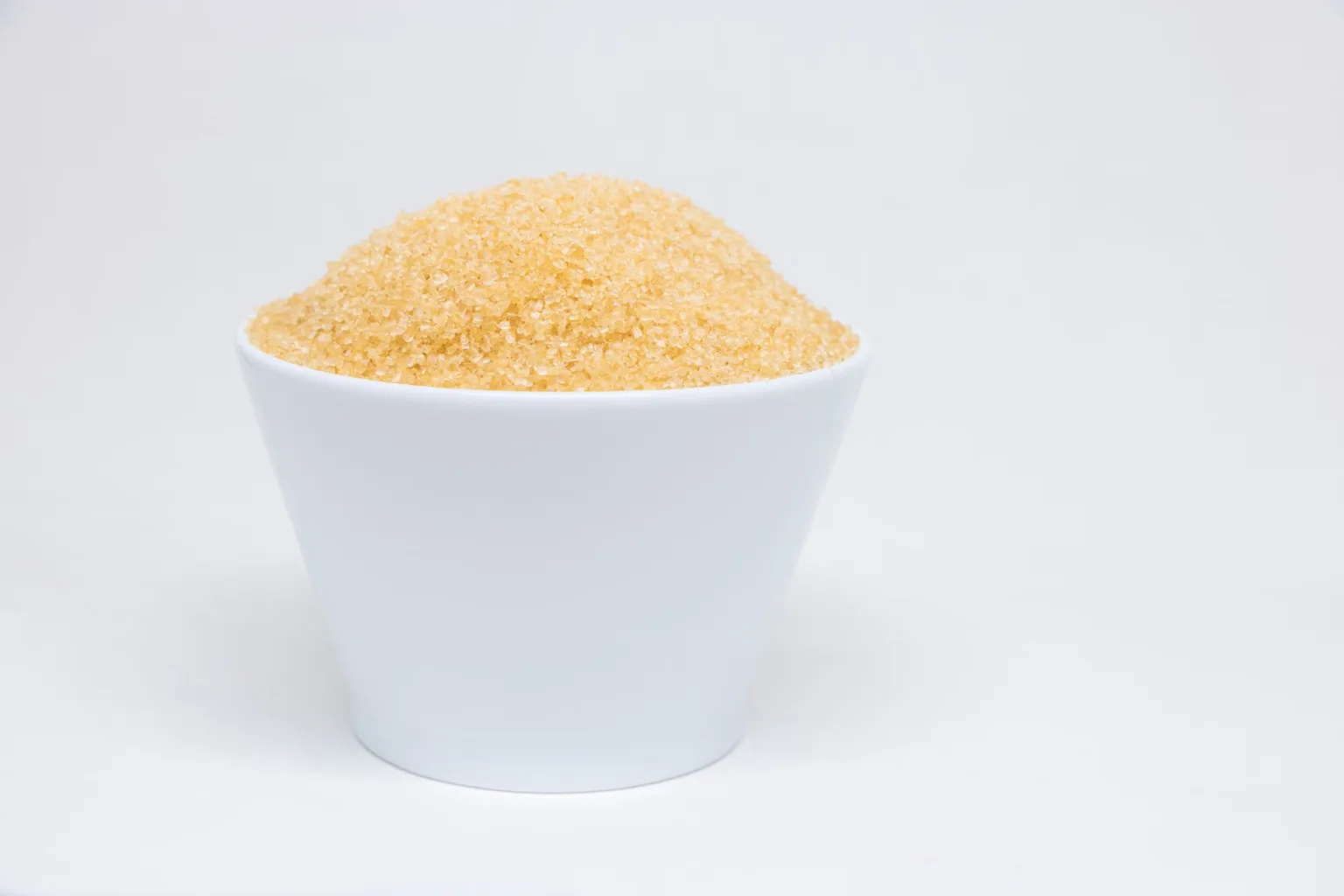
Caster sugar, also called superfine sugar, is white sugar with crystals smaller than those of ordinary granulated table sugar. Its grain sits between standard granulated sugar and powdered sugar, which has been milled to a fine powder. Although caster sugar feels fine, it still consists of crystals and should not be mistaken for powdered sugar. Names and crystal sizes can vary between products and markets, so check the package description. Its smaller crystals help it dissolve more quickly and distribute evenly in certain preparations. It is a useful option for baking and drinks when quick, even incorporation is desired, but it is not an automatic one-for-one replacement for every other type of sugar.
When to use it
Choose caster sugar when you want sugar to dissolve more readily than ordinary granulated sugar, such as in cold drinks, juice, smoothies or slushies. It can also be useful in baking batters and creams where fine, even incorporation matters. Use it in delicate preparations such as meringues when the recipe calls for fine-grained sugar. Do not confuse it with powdered sugar: if a recipe calls for a very fine powder for a coating, icing or texture without noticeable crystals, check which type it specifies. Follow the recipe’s proportions and method, since crystal size can affect how the sugar blends.
How to use it
Measure the amount specified by the recipe and add it at the stated stage; the fine grain helps it dissolve, but is not a reason to change the quantity. For cold drinks, add it to the liquid and stir or blend until incorporated. In batters and creams, add it during the mixing or beating step called for so it distributes evenly. For preparations such as meringues, use the sugar type and incorporation order specified by the formula. If you only have ordinary granulated sugar, use it with the recipe in mind and check that it has dissolved or blended in. Do not swap in powdered sugar without checking, since it is finer and may contain anti-caking ingredients. Products described as fine sugar may not all have the same crystal size, so read the package.
Flavour and texture
Its sweet taste is characteristic of white sugar; the main culinary distinction is crystal size rather than added flavour. The crystals are finer than those of ordinary table sugar but are not as powdery as powdered sugar. This grain size encourages faster dissolving and even blending in liquids, batters and creams. The finished texture also depends on the recipe and how the sugar is mixed.
How to choose it
Look for a product described as caster sugar or superfine sugar, and check that it is not labelled powdered or icing sugar. Commercial names do not always indicate the same crystal size in every country. If a recipe specifies a particular type, compare its description with the product available to you. Check the ingredient list if you need to know whether it contains starch or another anti-caking ingredient: powdered sugar may include these, and is not equivalent by definition.
Storage
Keep solid sugar protected from moisture and temperature fluctuations. Reseal the package after use to limit exposure, and use dry utensils. Follow any storage directions printed by the manufacturer. The available evidence does not establish a specific storage life for every package, so refer to its label rather than assigning a general date.
Substitutions
Ordinary white granulated sugar is the closest alternative by ingredient type, although its larger crystals may take longer to dissolve; check that the preparation is evenly incorporated. Powdered sugar is not an identical substitute: it is much finer, and some products contain starch or another anti-caking ingredient. Use it only where a powder is suitable and check its ingredients. When texture or dissolving behaviour matters, choose the type named in the recipe.
Common mistakes
The most common mistake is treating caster sugar and powdered sugar as the same ingredient: caster sugar still has crystals, whereas powdered sugar is milled into a powder. Do not assume that all white granulated sugars dissolve at the same rate. Do not change the amount merely because the crystals are finer, and do not use powdered sugar without checking whether its ingredients and texture suit the recipe.
Safety and allergens
Handle the ingredient with clean, dry utensils and follow the package directions. If you have an allergy or intolerance, check the label for the specific product and ask for the available product information where it is sold; ingredients and information can vary by product and presentation.
Culinary uses
- Endulzar bebidas frías y calientes
- Aportar dulzor y facilitar una mezcla homogénea en repostería
- Endulzar cremas y preparaciones de textura delicada
Recommended techniques
- Disolver en líquidos
- Incorporar al batir o mezclar masas y cremas
- Mezclar con bebidas frías hasta integrar
Pairs well with
- Zumos, batidos y otras bebidas
- Masas de bizcocho y cremas de repostería
- Merengues y otros postres
Frequently asked questions
Is caster sugar the same as powdered sugar?
No. Caster sugar has small crystals, while powdered sugar is milled to a powder. Some powdered sugar products include starch or another anti-caking ingredient.
What is caster sugar used for?
It is useful when quick dissolving and even blending are desirable, including in cold drinks, batters, creams and some delicate baking preparations.
Can I replace caster sugar with ordinary granulated sugar?
Often, but the larger crystals may take longer to dissolve. Follow the recipe and check that the sugar is properly incorporated.
Sources and review
Automatically researched, cross-checked and validated content. Sources consulted:
- En el etiquetado alimentario hay algunas menciones que son obligatorias eletiquetadocuentamucho.aesan.gob.es
- Client Challenge doi.org
- Del blanco a la panela: los 19 tipos de azúcar más comunes, en qué se diferencian y cómo usarlos en cocina directoalpaladar.com
- Origen y tipos de azúcar - facilisimo.com cocina.facilisimo.com
- Azúcar Extrafino – La vida sabe mejor lavidasabemejor.es
- Sabores refinados: Descubre los beneficios del azúcar extrafino en la gastronomía internacional superlekker.es
- Tipos y variedades de Azúcar que encontrarás en el mercado, apuntes. - Cocina y Aficiones cocinayaficiones.com
- El azúcar: tipos y usos. Parte I - Blog de recetas de María Lunarillos marialunarillos.com
- Azúcar extrafino - EcuRed ecured.cu
- Extrafino – Almacenes Usabiaga almacenesusabiaga.com
- Azucarera Extrafino, especialmente dedicado para mejorar tu repostería - Azucarera Profesionales azucareraprofesionales.es
- Tipos de azúcar: cuáles son y cómo usarlos | Fine Dining Lovers finedininglovers.com
- AZÚCAR BLANCO EXTRAFINO SACO 25 KG | Tienda Duo Harinero tienda-duoharinero.com
- 7 Bebidas y cócteles con Azúcar Extrafino - Absolut Drinks absolutdrinks.com
- Tipos de azúcar y endulzantes en repostería | Escuela de Tartas escueladetartas.com