- Category
- Dairy and eggs
- State
- Fresh
- Usual unit
- Variable
What it is
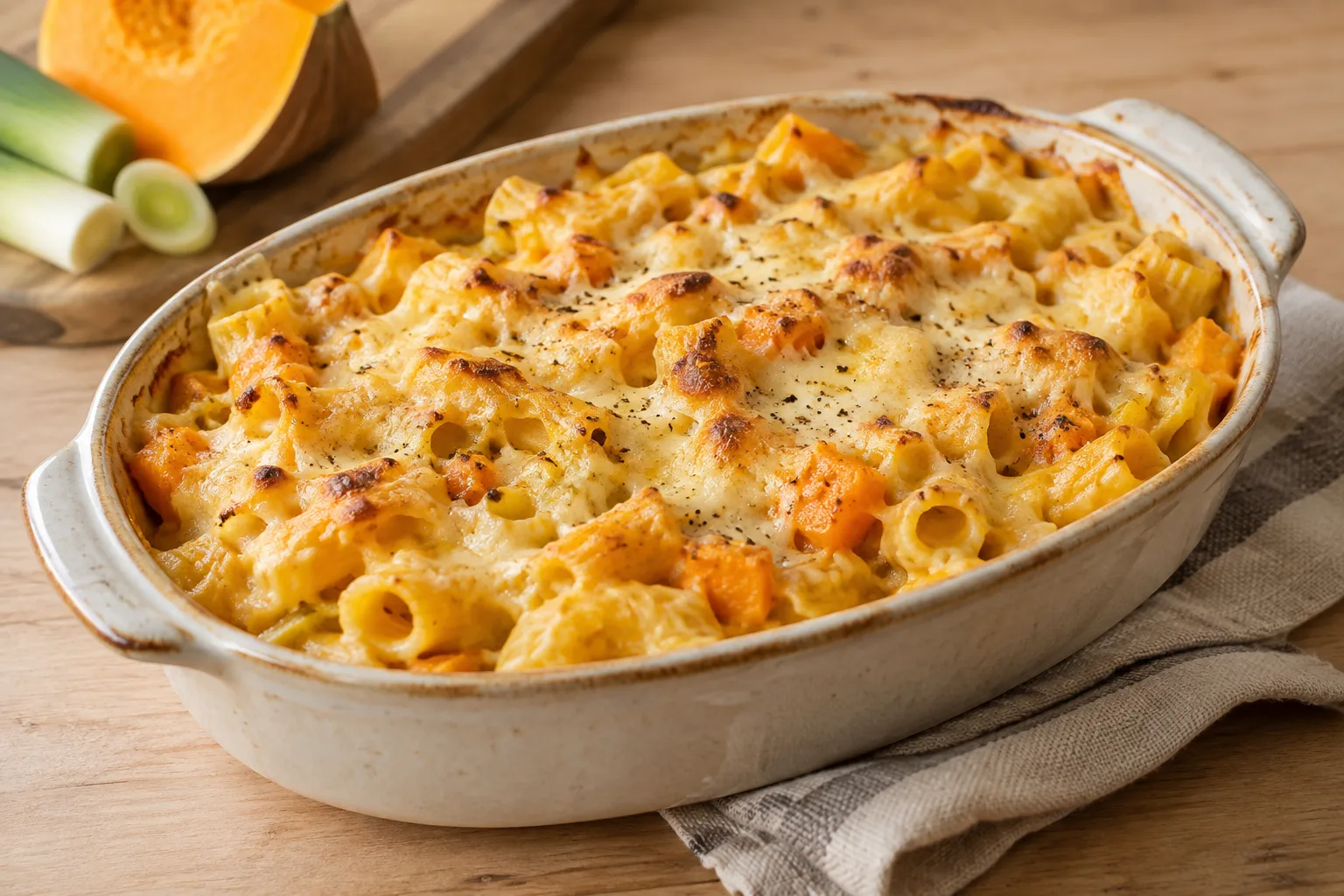
“Cheese for gratinating” describes a culinary use: cheese is placed over a dish and heated until it forms a melted and often browned topping. It does not name one particular variety. Mozzarella, Emmental, Gruyère, Cheddar and Parmesan are among the options, depending on the flavour and texture you want. Some melt readily and become stretchy; others brown quickly and contribute a crisper surface. Moisture level and maturation also affect how each cheese responds to heat. Choose according to the dish and the finish you want, rather than relying only on the words “for gratinating” on a package.
When to use it
Use it when you want a melted or browned cheese layer on dishes finished with heat from above, such as lasagne, cannelloni, baked pasta, pizza, potatoes or vegetables with béchamel. Mozzarella is a familiar choice for a stretchy, melted texture; Emmental or Gruyère can give an even melt and more flavour. Finely grated Parmesan can make a drier, crisper surface and works well with other cheeses. The result depends on the variety, its moisture and its maturation.
How to use it
Grate or shred the cheese so it spreads evenly over the dish; fine shreds make it easier to create a uniform layer. Choose the variety for the finish you want: mozzarella for stretch, Emmental or Gruyère for an even melt, Cheddar for a more pronounced flavour, and finely grated Parmesan for a crisper top. You can combine a good-melting cheese with a little Parmesan for a contrast between creaminess and browning. Finish the dish with strong heat from above and watch as it browns, since cheese can go from toasted to burnt quickly. Follow the recipe and the product instructions as well.
Flavour and texture
Flavour and texture vary with the variety and its maturation. Mozzarella usually gives a mild, stretchy layer; Emmental melts and has a relatively delicate flavour; Gruyère is more assertive, while Cheddar is often more pronounced. Finely grated Parmesan does not form the same strands as mozzarella and can create a crisper surface. Moisture and maturation affect how readily a cheese melts and browns.
How to choose it
Choose cheese according to the finish you want and check the variety named on the package: “cheese for gratinating” may mean a blend or a specific cheese. Consider mozzarella for stretch, Emmental, Gruyère or Cheddar for more flavour, and finely grated Parmesan or a blend for a crisp note. If convenient, buy a piece and grate it when needed, or choose pre-grated cheese. Check the ingredient list and allergen information.
Storage
There is no single storage instruction for every cheese intended for gratinating; requirements can vary with the variety, format and package. Follow the manufacturer’s storage instructions and the date guidance on the label. After opening, check whether the package gives instructions for sealing or storing the product; do not assume that grated blends and whole pieces are handled identically. If instructions are unclear, ask the seller or manufacturer.
Substitutions
Substitute mozzarella when you want a mild, stretchy layer, or Emmental or Gruyère for an even melt with more flavour. Finely grated Parmesan gives a crisper finish but does not replace mozzarella’s stretch; it often works best alone or combined with another melting cheese. Cheddar brings a stronger flavour. Match the substitute to the dish, since cheeses do not all melt or brown in the same way.
Common mistakes
Do not assume every cheese produces the same topping: a cheese that browns quickly may not become stretchy, and one that melts into strands may not form a crisp crust. Avoid spreading the cheese so unevenly that some spots brown before others. Keep an eye on the dish while gratinating, as cheese can burn quickly under strong heat. Also check whether fresh mozzarella needs draining so it does not add excess liquid.
Safety and allergens
Cheese contains milk, an allergen that should be declared in product information. Read the label, especially for blends and grated products, and contact the manufacturer if allergen information is unclear. Follow the storage and safe-use instructions on the package; guidance can differ between products.
Culinary uses
- topping for browned, melted gratins
- flavour and texture component in baked dishes
Recommended techniques
- grating or shredding for an even covering
- browning the cheese under strong top heat
Pairs well with
- pasta, lasagne and cannelloni
- potatoes, cauliflower and other vegetables
- béchamel and other oven-baked dishes
Frequently asked questions
Which cheese becomes the stretchiest when gratinated?
Mozzarella is known for melting into strands. Lower-moisture mozzarella often gives a less wet topping; fresh mozzarella can also be used if it is drained well.
Can I mix different cheeses?
Yes. Combining a good-melting cheese with Parmesan can give both a melted layer and a crisper surface. The flavour and texture depend on the varieties you choose.
Does Parmesan gratinate like mozzarella?
No. Finely grated Parmesan can brown and become crisp, but it does not usually form mozzarella’s characteristic stretchy strands.
Sources and review
Automatically researched, cross-checked and validated content. Sources consulted:
- En el etiquetado alimentario hay algunas menciones que son obligatorias eletiquetadocuentamucho.aesan.gob.es
- Client Challenge doi.org
- Queso: Historia, Variedades y Beneficios Nutricionales — Ibéricos Sofía Luengo ibericossofialuengo.es
- Aesan - Agencia Española de Seguridad Alimentaria y Nutrición aesan.gob.es
- Los Secretos del Queso: Maridajes, Recetas y Tradiciones - Senderuelo senderuelo.es
- Top 5 de los mejores quesos para gratinar - Mandolina mandolina.co
- Quesos que se pueden gratinar: para quesadillas, molletes, pizzas y más cocinadelirante.com
- ¿Cuál es el mejor queso para gratinar? lavanguardia.com
- Guía de tipos de queso y sus usos en la cocina | El Diario Vasco diariovasco.com
- Queso para gratinar es.openfoodfacts.org
- Los mejores quesos para gratinar | Mundo Hogar mondeculinair.com
- Comunidad gastronómica y recetas | Demos la vuelta al día demoslavueltaaldia.com
- Mejor Queso Para Gratinar: Cheddar, Gruyere, Mozzarella Y Parmesano | Queso Destrabilla info.quesodestrabilla.es
- ¿Cuál es el mejor queso para cada uso? | Consumer consumer.es
- Cultura del pan en España - Wikipedia, la enciclopedia libre es.wikipedia.org
- Los mejores quesos para gratinar, según Joseba Arguiñano hogarmania.com
- Cómo lograr un gratinado perfecto: trucos sencillos para un acabado dorado, crujiente y espectacular en tus platos hola.com