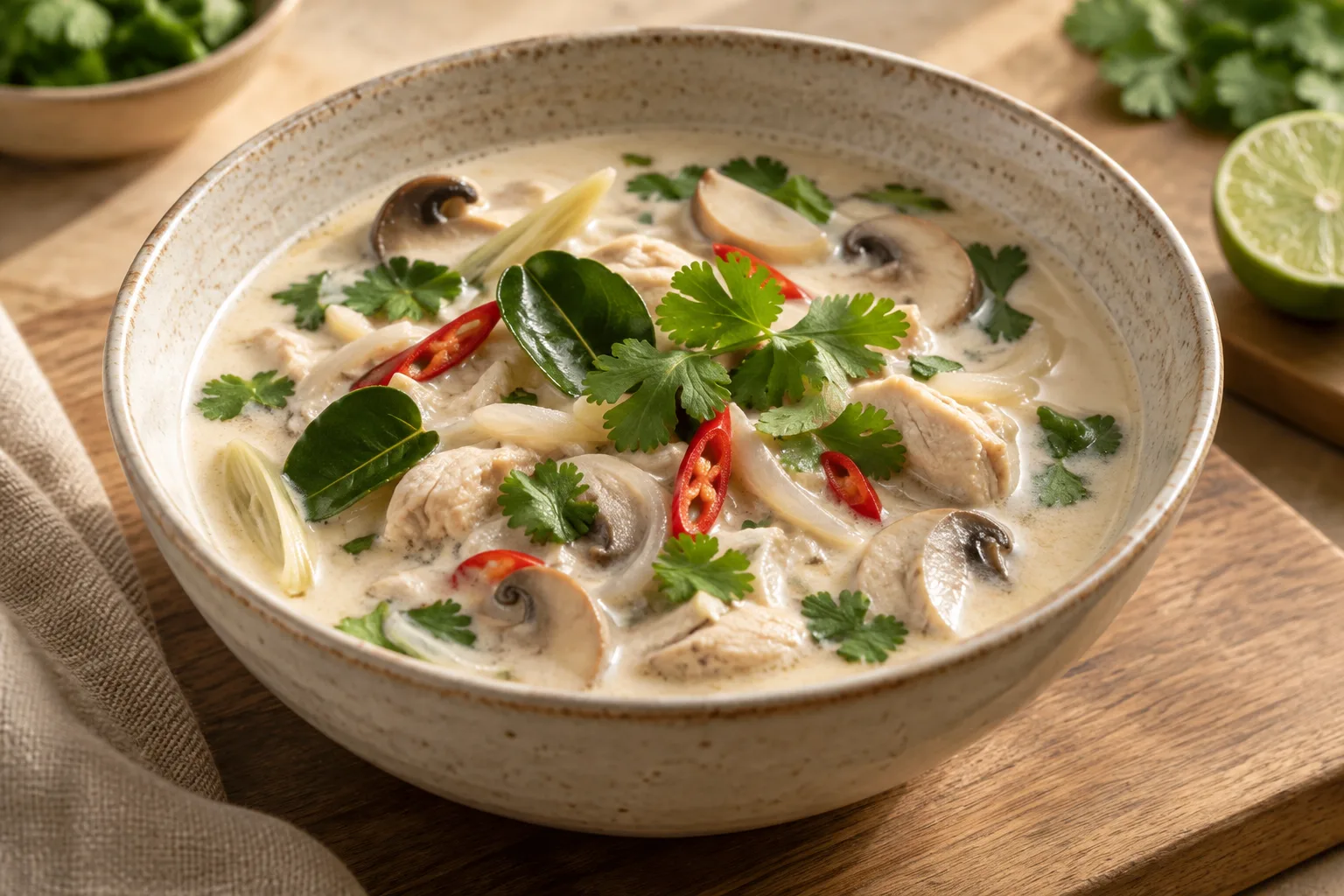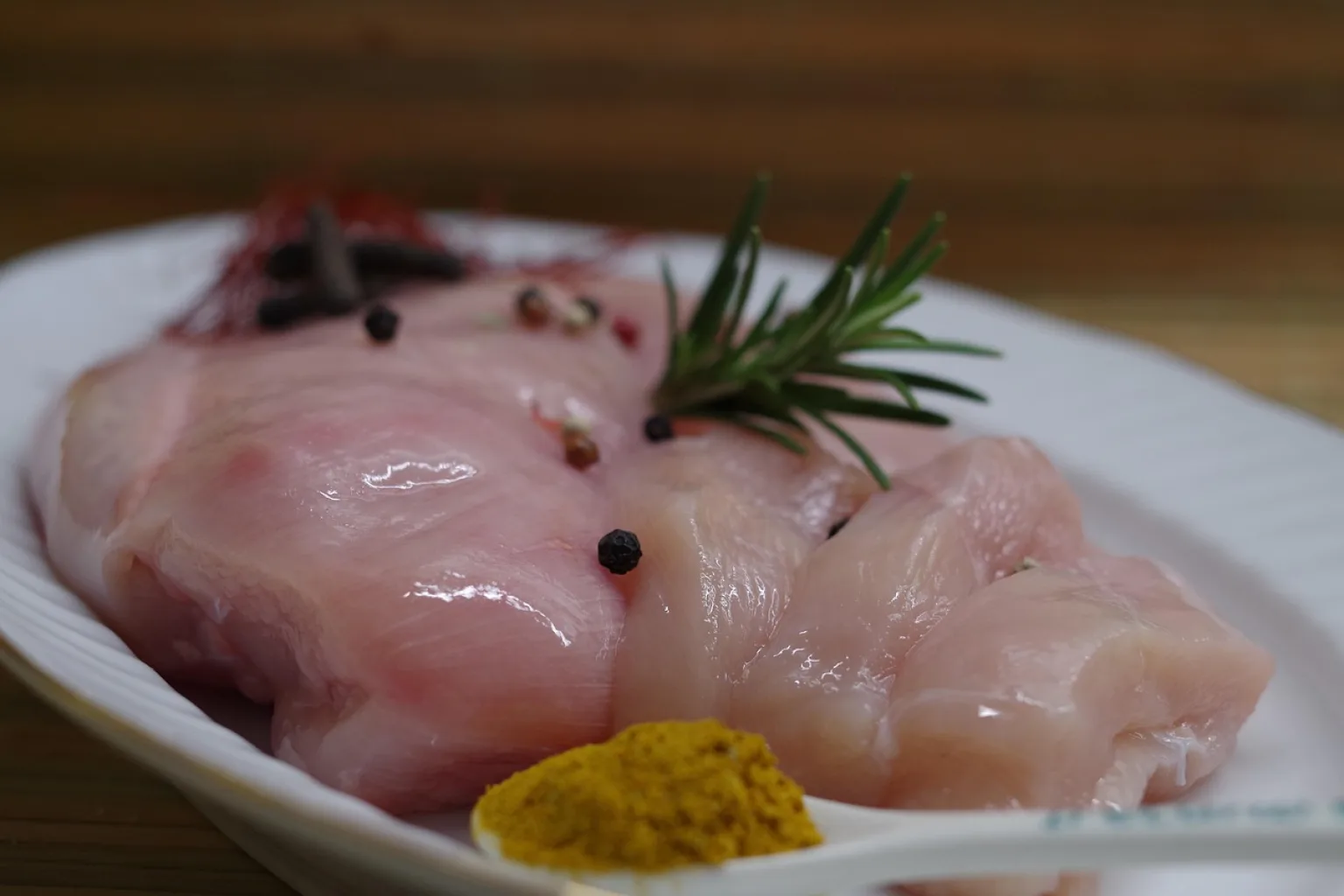
- Category
- Meat
- State
- Fresh
- Usual unit
- g
What it is
Chicken is poultry sold in different cuts, including breast and thigh, and it may also be bought whole or ground. Its flavor is generally mild, so it works with a range of herbs, seasonings and sauces. The cut and cooking method shape the result: chicken can be browned in a pan, baked, cooked in sauce or prepared with a crisp coating. This profile covers fresh chicken. Follow the package directions and keep raw meat separate from other foods while shopping, storing and preparing it.
When to use it
Chicken is useful when you want an adaptable poultry meat for everyday meals, baked dishes or sauced preparations. Breast can be filled and cooked with ingredients such as herbs, cheese or tomato, while thigh is also used in crisp-coated preparations. Choose the cut to suit the dish and cooking method, and balance chicken’s mild flavor with aromatic or citrus ingredients. Plan safe handling from the moment you open the package, and prevent raw juices from contacting ready-to-eat foods.
How to use it
Before cooking, keep raw chicken separate from fruit, vegetables and cooked foods, and use separate utensils and surfaces or wash them thoroughly after contact. Do not wash raw chicken: splashing can spread germs around the kitchen. You can brown pieces in a pan and finish them in sauce, bake filled breasts, or cook pieces with a crisp coating. Garlic, herbs, lemon and lime add contrast; rice, potatoes and vegetables can be served alongside. Check doneness with a food thermometer in the thickest part: poultry should reach 165 °F (73.9 °C).
Flavour and texture
Chicken is described as relatively mild in flavor and can take on character from herbs, garlic, citrus or sauces. The cut and technique affect the finished texture: a preparation may aim for a browned or crisp exterior, while a sauce can contribute moistness. Do not assume that exterior color alone confirms that the inside has been safely cooked.
How to choose it
Choose packages that are intact and not leaking, and check that refrigerated chicken feels cold. Pick up perishable foods near the end of your shopping trip and place raw chicken in a separate bag so juices cannot contact other foods. Take it home promptly and refrigerate it without delay; choose a different package if the one you find is damaged or leaking.
Storage
Refrigerate fresh chicken promptly and keep its package closed, or place it in a container that can catch any juices. Store it apart from ready-to-eat foods to reduce the risk of cross-contamination. Clean up spills and surfaces that have touched raw meat promptly. Refrigeration helps maintain food quality, but it cannot make mishandled food safe; follow the package directions.
Substitutions
Within a recipe, breast and thigh may be exchanged for another chicken cut if the method and size allow; always check that the thickest part reaches a safe doneness. Turkey may work in some preparations intended for poultry, but it is not an exact replacement: adapt the cooking and check the temperature with a thermometer.
Common mistakes
Do not wash raw chicken: splashes can contaminate the sink, surfaces and other foods. Avoid using the same board, knife or plate for raw chicken and ready-to-eat food unless it has been thoroughly washed. A browned exterior does not prove that the inside is done; check the thickest part with a thermometer.
Safety and allergens
Wash hands and clean utensils and surfaces after handling raw chicken. Keep it separate from other foods and do not wash it. Use a thermometer: poultry should reach 165 °F (73.9 °C) in the thickest part.
Culinary uses
- main protein
- ingredient for filled dishes and casseroles
Recommended techniques
- pan-searing
- oven-baking
- simmering in sauce
- grilling
Pairs well with
- lemon and lime
- garlic and herbs
- rice
- potatoes and vegetables
Frequently asked questions
Should I wash chicken before cooking it?
No. Washing can splash germs around the kitchen; thorough cooking is the recommended way to make chicken safe.
How can I check that chicken is cooked?
Use a food thermometer in the thickest part. The stated poultry target is 165 °F (73.9 °C).
How can I prevent cross-contamination?
Keep raw chicken separate, use separate utensils, and clean hands, boards and surfaces after handling it.
Estimated nutrition
- Fat
- 15.6 g
- Saturates
- 4.69 g
- Carbohydrate
- 9.38 g
- Sugars
- 3.12 g
- Fibre
- 0 g
- Protein
- 15.6 g
- Salt
- 2.9 g
Sources and review
Automatically researched, cross-checked and validated content. Sources consulted:
- Client Challenge doi.org
- Food Selection & Storage | Home & Garden Information Center hgic.clemson.edu
- Food Storage for Safety and Quality - El Paso County Extension elpaso.extension.colostate.edu
- Chapter 2: In the Kitchen (Storing and Preparing Food; Preventing Food Waste) – Culinary Medicine opentextbooks.library.arizona.edu
- Agencia Española de Seguridad Alimentaria y Nutrición aesan.gob.es
- Kitchen Companion: Your Safe Food Handbook ucanr.edu
- Food Safety | Eat.Move.Save. | Illinois eat-move-save.extension.illinois.edu
- Taste Test: Learning from Italian Masters | Institute of Culinary Education ice.edu
- - YouTube youtube.com
- Cuando el pollo era el alimento más exótico larazon.es
- Cinco recetas internacionales para realzar el sabor del pollo más insípido eldiario.es