- Category
- Vegetables
- State
- Fresh
- Usual unit
- unit
What it is
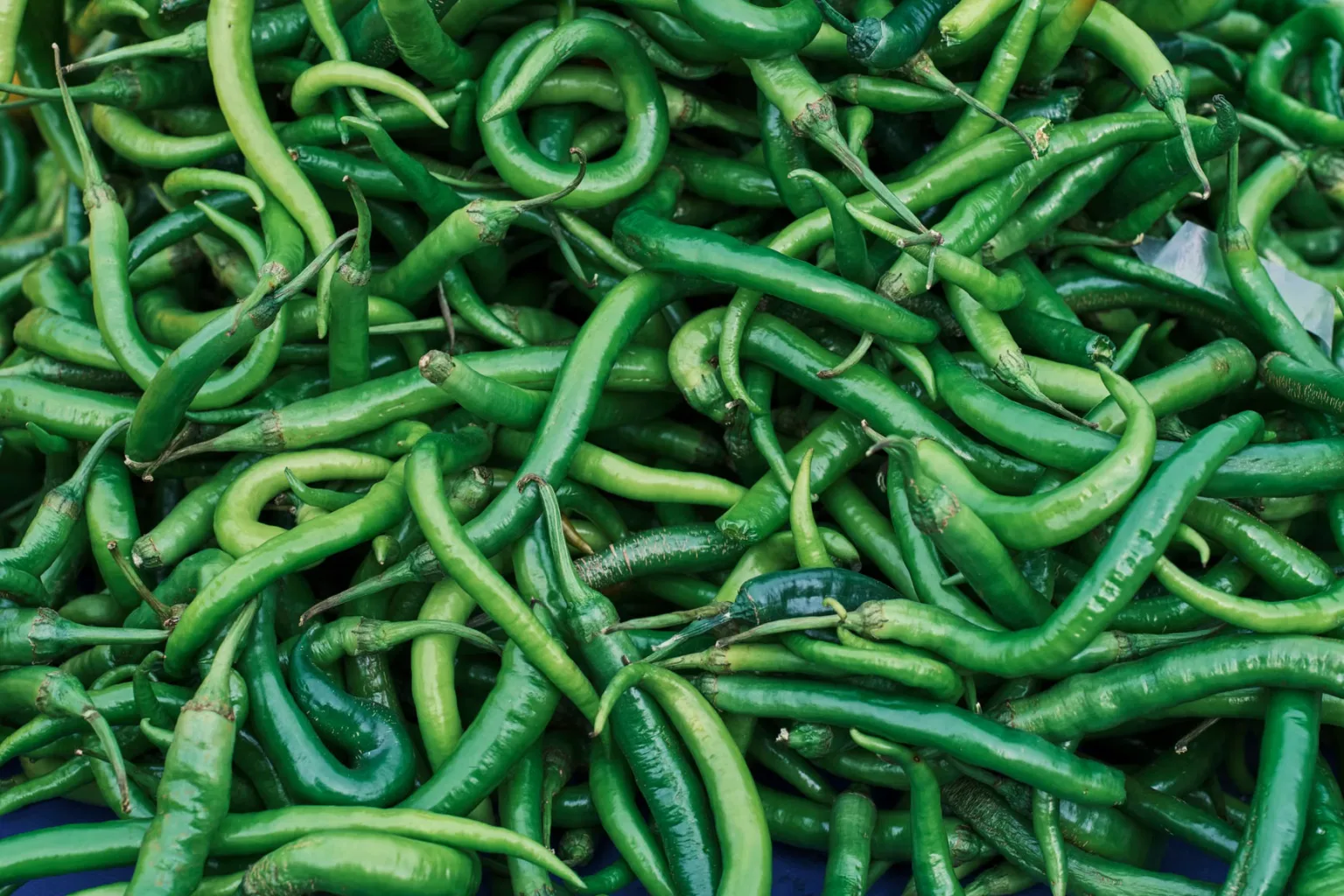
Chilies are fruits of plants in the Capsicum genus, though they are commonly handled as vegetables in cooking. The name covers many varieties that differ in size, shape, color, texture, and heat; not every chili is intensely hot. This profile refers to the fresh ingredient, rather than dried chilies or a prepared sauce. Depending on the variety and recipe, chilies can be used whole or cut, raw or cooked. The inner ribs and membrane contribute to heat, so removing them can reduce it, although the variety also matters. Because intensity varies, taste a small amount before deciding how much to use.
When to use it
Use fresh chilies when you want to add heat, flavor, color, or texture to a dish, from a fresh salsa to a stew. The variety determines how prominent the chili will be: some are mild, while others are very hot, so the generic name alone does not predict intensity. Remove the inner ribs for a milder result, or roast the chili first when you want a toasted note and skin that is easier to remove. Fresh chilies can also be chopped raw, cooked, or fried, depending on the recipe.
How to use it
Wash and dry the chili before cutting it. Chop or slice it for fresh salsas and other dishes, or cook it as part of the recipe. To remove the skin, expose it to direct heat or roast it until parts of the surface blister; let it cool before gently peeling. Remove the inner ribs if you want to moderate the heat. Since intensity differs among varieties and individual pods, start with a small amount and taste before adding more. Handle carefully: hot chilies can irritate skin and eyes. Wearing gloves and washing your hands thoroughly afterward can help prevent accidental contact.
Flavour and texture
Flavor and heat vary widely by variety: chilies can range from mild to very hot, and colors include green, yellow, orange, and red. The flesh is often substantial, and the skin can blister when roasted. The inner membrane and ribs are associated with the sensation of heat. Do not assume that color alone tells you how hot a chili will be.
How to choose it
Choose fresh chilies that are mature, firm, smooth, and heavy for their size, with a fresh appearance and a color appropriate to the variety. Avoid pods that are shriveled, soft, bruised, misshapen, moldy, or damaged. Because heat differs among varieties, choose with the intended dish in mind and ask about heat if the variety is unfamiliar. Appearance can help indicate quality, but it cannot reliably tell you exactly how hot a chili will be.
Storage
Keep fresh chilies clean and refrigerate perishable foods promptly. Store them where they will not be crushed or damaged, and inspect them before use; storage can maintain quality, but it cannot improve produce that was already in poor condition. These suggestions apply to fresh chilies. Roasted chilies need specific cooling and storage guidance rather than the handling used for newly purchased fresh pods.
Substitutions
Sweet pepper can work when you want the vegetable-like flavor and color of the fruit without the same heat, but it will not taste like a hot chili. Dried chili can be used in some stews or sauces, but its form, intensity, and preparation differ. Adjust the amount and taste the dish as you go. There is no universal substitute without knowing the original variety and the role it plays in the recipe.
Common mistakes
Do not assume all chilies have the same heat or that color fully reveals their intensity. A large amount of an unfamiliar variety can overwhelm a dish, so begin with a little and taste. Avoid touching your eyes while handling chilies, and remember that removing seeds is not the same as removing the ribs, which contribute to heat. If roasting and peeling, let the chili cool before handling it.
Safety and allergens
Hot chilies can irritate or burn skin and eyes. Wear gloves when handling hot varieties, avoid touching your face, and wash your hands thoroughly afterward. Take care of steam when opening a container holding freshly heated chilies. Cool and store roasted chilies using reliable food-safety guidance.
Culinary uses
- Aportar picor y sabor
- Dar color y textura a salsas, guisos y otros platos
Recommended techniques
- Usar crudo, picado o en rodajas
- Asar o tostar para ampollar la piel
- Cocinar, freír o secar según la variedad y la receta
Pairs well with
- Salsas y pico de gallo
- Guisos y adobos
- Carnes y platos con queso o crema
Frequently asked questions
Are all fresh chilies equally hot?
No. Heat varies substantially among varieties and can also differ from pod to pod. Start with a small amount and taste.
How can I make a chili less hot?
Removing the inner ribs can reduce heat. Add the chili gradually and taste before adding more.
Do chilies need to be peeled before cooking?
Not always. Roasting and peeling can be useful when a recipe calls for it; peeling may not be necessary if the chili will be finely chopped.
Sources and review
Automatically researched, cross-checked and validated content. Sources consulted:
- Client Challenge doi.org
- Food Selection & Storage | Home & Garden Information Center hgic.clemson.edu
- Processing Fresh Chile Peppers | New Mexico State University - BE BOLD. Shape the Future. pubs.nmsu.edu
- Agencia Española de Seguridad Alimentaria y Nutrición aesan.gob.es
- El chile, ingrediente esencial en la cocina de México - Formacion en Gastronomia formacionengastronomia.com
- How to Preserve Chiles | USU extension.usu.edu
- El CHILE como alimento amc.edu.mx
- Usos del chile y sus variedades en la cocina | Recetas Nestlé recetasnestle.com.mx
- Chile ucanr.edu
- Roasting Chile Peppers | CSU Extension extension.colostate.edu
- Processing Roasted Chile Peppers – Food Smart Colorado foodsmartcolorado.colostate.edu
- Salsa de Chile II (Spanish) - National Center for Home Food Preservation nchfp.uga.edu
- Chile mexicano: origen, variedades y usos en la cocina - Fundación Herdez fundacionherdez.com
- El chile — Canela Limón Chile canelalimonchile.com
- - YouTube youtube.com