- Category
- Vegetables
- State
- Fresh
- Usual unit
- g
What it is
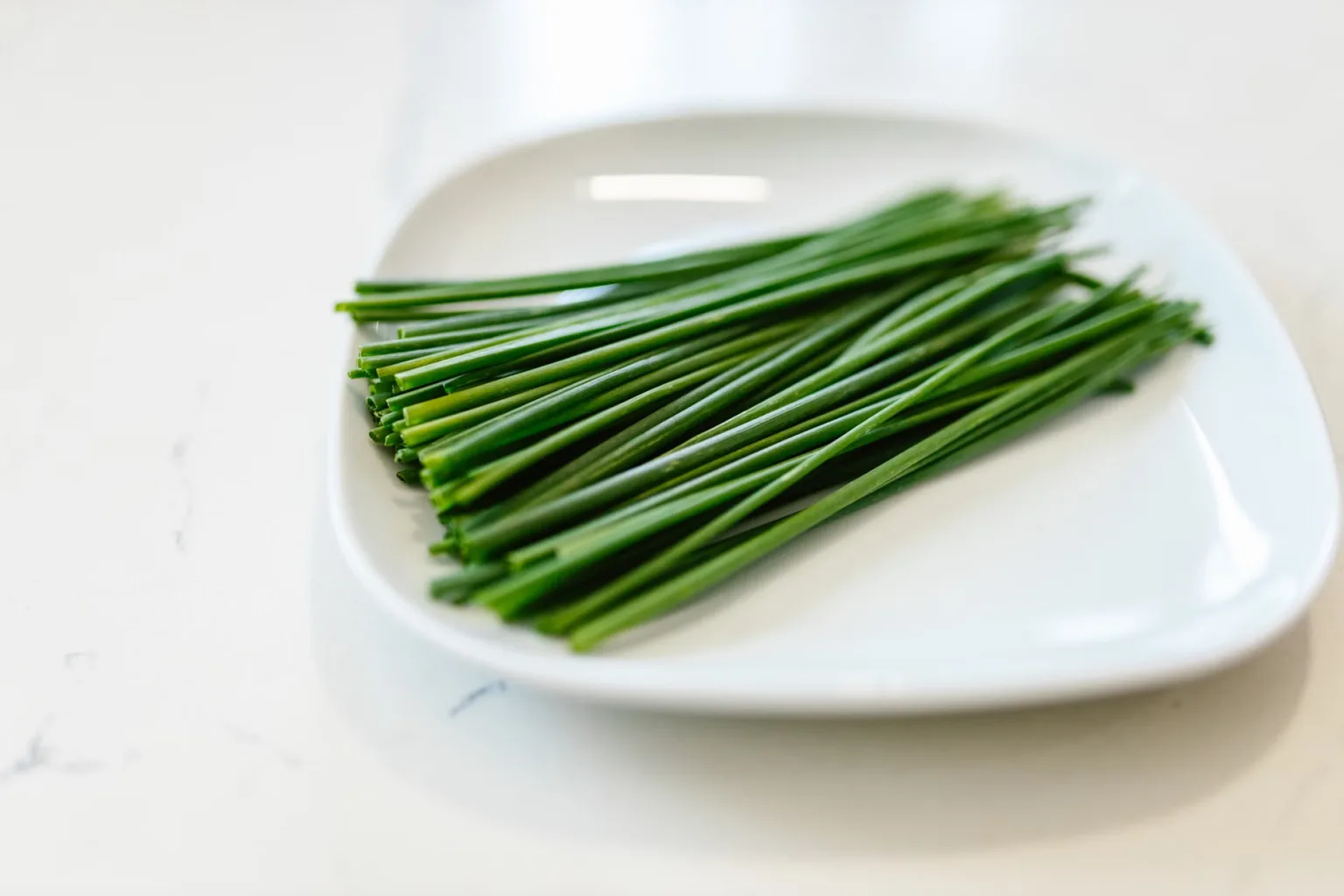
Chinese chives are an aromatic vegetable with long, flat leaves. They are different from Western chives, whose fine leaves are typically hollow: Chinese chives have a more pronounced garlic flavor alongside a fresh, green-onion note. The leaves are the part most often used in cooking, cut into fillings, stir-fries, soups, or noodle dishes. Common names for onion-family greens can overlap, so the flat leaf is a useful identifying feature when shopping. Their assertive flavor means they can contribute more than color or garnish, and they can be served raw or cooked.
When to use it
Choose Chinese chives when you want a fresh, vegetal garlic-and-onion flavor and a more substantial presence than a delicate garnish. They are useful in dumpling fillings with egg, pork, or shrimp, and in stir-fries with bean sprouts. They also bring character to soups and noodles. The leaves can be used raw or cooked; for a vivid green color and a satisfying bite, add them toward the end of cooking and avoid leaving them over heat for too long.
How to use it
Remove damaged leaves, wash the bunch, and dry it before cutting. Slice crosswise into sections for fillings and stir-fries, or chop more finely for a lighter garnish. The leaves can go raw into a filling or be scattered over soup and noodles as a fresh finishing touch. For a cooked dish, stir-fry them briefly: a short cook helps retain their color and texture while releasing their garlic aroma. If some leaves are noticeably thicker than others, cut the firmer pieces smaller so they blend more evenly into the dish.
Flavour and texture
Chinese chives have a clear garlic aroma with a green-onion background and a fresh, herbaceous quality. Their flavor is more assertive than that of Western chives while remaining distinctly vegetal. Raw leaves have a noticeable bite; brief cooking softens them but can leave a pleasant texture.
How to choose it
Look for fresh-looking, green, flat leaves; their shape helps distinguish Chinese chives from hollow-leaf Western chives. Asian grocery stores are one place to look for them. Since common names for onion-family greens can be used inconsistently, check that the leaves are flat and avoid bunches with visibly damaged portions.
Storage
Refrigerate Chinese chives rather than leaving them at room temperature for an extended period; fresh herbs can lose quality. Keeping them in their original wrapping or protecting them with slightly damp paper are described ways to help preserve fresh herbs of this kind. They can also be chopped and frozen for later use. Frozen leaves may have a different texture, so they are best suited to cooked dishes.
Substitutions
Leek, especially the pale green portion, can stand in approximately, but its flavor and texture will differ. Western chives can work when a milder finish is wanted: they bring less garlic character and have a different leaf shape. Adjust the amount to suit the dish, and bear in mind that neither substitute exactly reproduces Chinese chives.
Common mistakes
Do not mistake Chinese chives for Western chives: flat leaves and a stronger garlic note are useful distinctions. Avoid prolonged cooking if you want to keep their color and bite. They are not only a fine garnish; they can also be a substantial ingredient in fillings and stir-fries.
Safety and allergens
The supplied evidence identifies no specific safety warning for this ingredient. Handle it with ordinary fresh-produce hygiene and discard leaves that are visibly spoiled.
Culinary uses
- Verdura aromática para aportar sabor a ajo y cebolla
- Ingrediente de rellenos y salteados
- Guarnición para sopas y fideos
Recommended techniques
- Picar o cortar en secciones para rellenos y salteados
- Consumir crudo como acento aromático
- Saltear brevemente para conservar color y textura
Pairs well with
- Huevo
- Cerdo
- Brotes de soja
- Gambas
- Fideos y sopas
Frequently asked questions
Are Chinese chives the same as Western chives?
No. Chinese chives have flat leaves and a more pronounced garlic flavor; Western chives are usually hollow-leafed and milder.
Can Chinese chives be eaten raw?
Yes. They can be chopped into fillings or used as a fresh aromatic finish, as well as cooked in stir-fries.
What foods pair well with Chinese chives?
They pair especially well with eggs, pork, shrimp, bean sprouts, noodles, and soups.
Estimated nutrition
- Fat
- 17.4 g
- Saturates
- 5.56 g
- Carbohydrate
- 25 g
- Sugars
- 1.39 g
- Fibre
- 1.4 g
- Protein
- 6.25 g
- Salt
- 1.08 g
Sources and review
Automatically researched, cross-checked and validated content. Sources consulted:
- Client Challenge doi.org
- Cebollino o cebollín, la elegante hierba aromática con un suave sabor entre el ajo y la cebolla: qué es y cómo usarlo en la cocina directoalpaladar.com
- Cebollín: qué es, recetas con cebolla china y beneficios finedininglovers.es
- Cebollino chino | Umami Madrid umami-madrid.com
- filling gender gaps: determining how traditional knowledge of experts.esf.edu
- Sevin 16oz Concentrate Label v20 ucanr.edu
- PREHISTORIC & EARLY HISTORIC FOOD CROP DIVERSITY crfs.arizona.edu
- Fresh Produce Recipe Book | Wsu s3.wp.wsu.edu
- PORTADA weedeco.msu.montana.edu
- UNIVERSIDAD AUTÓNOMA DE BAJA CALIFORNIA watermanagement.ucdavis.edu
- Cebollino Chino (Ajo Tierno) — Open Spice Box openspicebox.com